

5-Panel Baseball Caps Supplier: Key Factors to Evaluate Before You Order
2026-09-18
You've got designs ready, but finding the right 5-panel baseball cap supplier is where things often go sideways. Cheap fabric, sloppy brims, inconsistent sizing—none of that shows up in a sample photo. Before you commit, there are a handful of non-negotiables to check. 4ugear has been on the manufacturing side long enough to know what separates a great cap from a disappointing one. Here's what to evaluate before you order.
Fabric Weight and Crown Structure: What Actually Holds Up
When a hat flops instead of stands, most people blame the fabric's thickness. That's only half the story. A dense, heavy wool can still sag if the crown lacks internal support—while a lighter canvas might hold its shape beautifully thanks to a well-placed interfacing or a stiffened buckram frame. The real trick is how the material's weight interacts with the hidden architecture underneath.
Think of the crown as two layers working together: the outer shell you see and touch, and the inner skeleton you never notice. Heavy fabrics like melton or oiled cotton bring natural body, but they also pull downward with their own mass. Without a structured lining or a wire edge, even thick tweed will eventually crease at the pinch. On the flip side, a featherweight linen can stand tall if the crown is reinforced with a crisp, medium-weight fusible or a double layer of starched muslin. The weight alone doesn't decide—it's the conversation between heft and reinforcement that matters.
For hats that need to survive wind, humidity, or a long day of wear, look beyond fabric labels. A mid-weight wool with a full crown insert often outperforms a heavier felt with no internal support. Similarly, a structured baseball cap uses a buckram front panel to keep its dome rigid, while a floppy bucket hat intentionally skips that structure to embrace softness. Choosing the right combination means understanding what actually holds the crown up: not just the fabric on the outside, but the quiet reinforcement stitched inside.
Stitching Stress Points That Reveal Production Standards
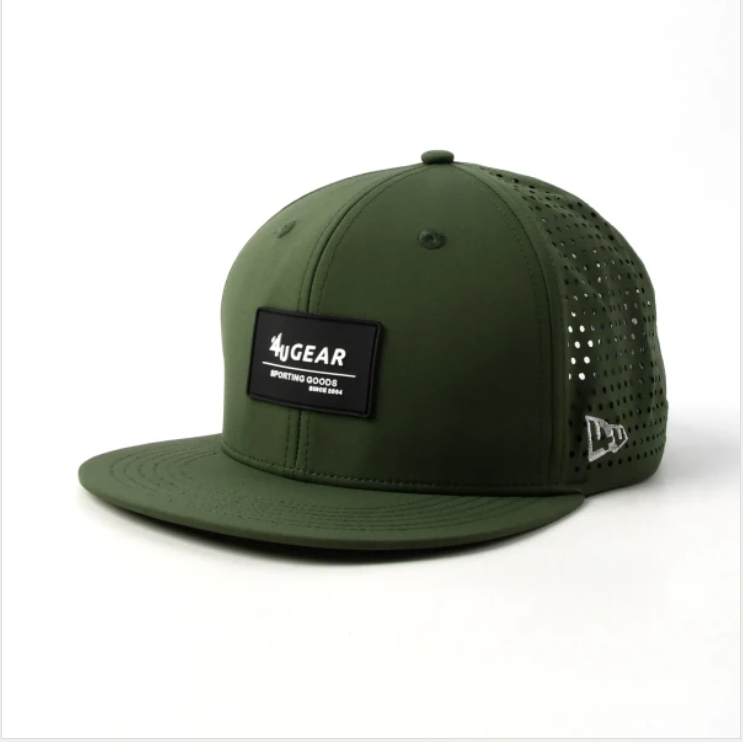
Run your fingers along the inside of a shoulder seam. If the thread lies flat without pulling the fabric into tiny puckers, the sewer took time to balance tension. High-stress areas like armholes, crotch gussets, and waistbands show this first. A well-executed seam will have even stitch length and no skipped stitches, even where the fabric curves sharply.
Cheap production often hides behind dense overlocking or thick topstitching. But flip the garment inside out and look at the seam allowance. Wavy edges, irregular stitch density, or threads that snap when gently stretched suggest the machine was set too fast or the operator rushed. Quality factories trim allowances to different widths for bulkier fabrics, which prevents ridges from showing through on the right side.
Another tell is the bar tack. This small reinforcement, often found at pocket corners or fly openings, should be dense and symmetrical. If it's thin, uneven, or missing entirely, expect the seam to fail after repeated wear. Production standards reveal themselves in these details long before a garment reaches the sales floor.
How Supplier Lead Times Impact Your Seasonal Inventory
Supplier lead times quietly dictate how much risk you carry before a season even starts. When your key material takes eight weeks to arrive, but consumer interest shifts in three, you're not just holding inventory—you're holding yesterday's guess. That lag forces you to place bets months ahead, and if the style or color misses, markdowns eat the margin you planned on.
Longer lead times also push reorder decisions into a blind spot. If a mid-season bestseller runs low, the factory might not deliver a top-up until demand has already faded. The alternative—overbuying early—locks up cash in slow-moving stock and leaves less room for the items that actually take off. Shorter lead times change the math: you can test small, read the signal, and commit deeper only when the data is clear.
It's not simply about speed, though. Consistency matters just as much. A supplier who quotes four weeks but delivers in six creates the same scramble as one who quotes eight. Seasonal inventory planning works best when lead times are predictable enough to build a buffer around, and that buffer is where healthy margins either survive or quietly disappear.
Customization Options Beyond Logo Placement
When most people think of branded merchandise, the logo is usually the first thing that comes to mind. But customization goes far deeper than simply stamping a design on a shirt or mug. The real opportunity lies in tailoring the product itself—its material, shape, finish, and even the way it feels in someone’s hand. A silicone phone case can be given a soft-touch matte coating, or a water bottle can be powder-coated in a gradient that shifts from deep navy to charcoal. These choices convey a level of care that a standard logo placement alone never could.
Functionality can also be customized in ways that surprise and delight. Think of a notebook with pages that alternate between lined and dotted, or a tote bag with an interior zippered pocket sized specifically for a passport. For drinkware, custom lids—like a spill-proof slider or a straw-friendly flip cap—turn a generic item into something tuned to a specific daily routine. Even subtle details like engraving a serial number on the back of a metal pen, or adding a hidden message inside a candle lid, create a sense of discovery that mass-produced products lack.
The most memorable customization often happens where branding is invisible at first glance. A leather journal can be embossed with a pattern inspired by architectural details from a company’s headquarters. A ceramic coaster set might feature the same Pantone swatch as the brand’s primary packaging, tying the physical object to a larger visual identity. These understated touches signal that the item was designed, not just decorated. When every material and mechanism is considered, the customization becomes an experience rather than an afterthought.
Hidden Costs in Minimum Order Quantities
Many buyers overlook the subtle financial drains that come bundled with minimum order quantities. Beyond the obvious per-unit price, you often face inflated warehousing bills, accelerated inventory obsolescence, and the quiet erosion of working capital that could otherwise fund more agile purchasing decisions.
There’s also the human cost: employees spend extra hours managing oversized stock, reconciling discrepancies, and shuffling surplus goods between storage locations. These labor overheads rarely appear on the purchase order but steadily compound across each replenishment cycle.
Perhaps the most deceptive expense is the discount illusion. Suppliers may offer a lower price per piece at higher volumes, yet the true cost per sold unit rises once you factor in shrinkage, damage from prolonged storage, and markdowns needed to clear dead stock. The advertised savings can quickly turn into a margin leak that only becomes visible after several quarters.
Real Factory Audits vs. Polished Websites
A shiny website with high-resolution product photos and quick response times can easily convince a buyer that a supplier is legitimate. But those pages are built to sell, not to prove. Many factories invest heavily in marketing while their actual production floor tells a very different story. The gap between what you see online and what happens inside the facility is where costly mistakes are born.
A real factory audit walks through the workshop, checks machinery, reviews raw material storage, and watches how workers handle orders. It confirms whether the equipment shown on the website actually exists, whether the quality control steps are followed, and whether the workforce can handle your order volume without cutting corners. Polished websites rarely reveal delayed shipments, substandard components, or high defect rates.
Before placing a large order, send someone to the factory or hire a third-party inspection service. A few hours on-site reveal more than months of email exchanges and catalog browsing. The websites are useful for shortlisting, but they should never replace a physical check of the place that will make your products.
FAQ
Focus on the crown fabric, sweatband, and closure. Cotton twill holds shape well but shrinks if cheaply woven. Polyester blends resist fading and dry fast, yet can feel clammy. Ask if the sweatband is cotton or foam-backed polyester—foam degrades quickly. For the closure, metal tri-glide buckles last longer than plastic ones. A supplier who can explain the weave density or fabric weight (e.g., 10 oz vs. 7 oz) typically has better sourcing control.
Request dimensional drawings with seam allowances, not just mockups. Ask for photos of the embroidery or print on an actual curved panel, since flat digital proofs hide distortion. Better yet, have them send a short video rotating the cap under natural light. Also ask which panel stiffener they use—buckram weight affects how crisp your logo stays. A good factory will mention test runs on curved surfaces.
For 1,000–5,000 caps with custom panels, 25–35 days after sample approval is normal. Add 5–10 days for complex embroidery or special washes. Red flags include promising under 3 weeks without explaining their capacity, or charging a rush fee but still missing the date. Ask which stages they handle in-house vs. outsource—outsourced embroidery often adds 4–7 days and increases miscommunication risk.
It comes down to production setup. Factories with automated cutting and multi-head embroidery machines can spread setup costs over smaller runs, so they may accept 100 units. Smaller workshops often need 500+ to justify fabric dyeing and screen setup. Be wary of suppliers who drop MOQ too low without a per-unit surcharge—that usually means they're using leftover fabric or slower manual processes that affect consistency.
Always pay for a sample when ordering over 300 units. Photos hide weak stitching, off-center seams, and cheap sweatband material. A physical sample lets you test fit on multiple head sizes and check how the front panel holds up after a few wears. The $30–$80 sample fee is tiny compared to the cost of rejecting 2,000 flawed caps. Only skip it if you've reordered the exact same spec from the same factory within 6 months.
At minimum, they should do inline checks after cutting, panel sewing, and brim attachment. Ask for a yarn count or stitch density spec (e.g., 8–10 stitches per inch on seams). For final inspection, they should use an AQL standard like 2.5 or 4.0, not just eyeball a few caps. If they can't explain AQL or hesitate to share their defect classification list, move on. Also confirm they check brim curvature with a template.
Packaging alone can add $0.15–$0.80 per cap depending on whether you want polybags, hang tags, or custom boxes. Shipping from overseas often rivals the product cost for small orders—air freight can double your per-unit price under 200 caps. Always ask for a breakdown of FOB vs. landed cost before comparing suppliers. A cap quoted at $2.50 FOB might land at $4.80 after freight, duty, and packaging, while a $3.00 quote might include local delivery but use cheaper bags.
Ask how they align the center front seam with the brim's center notch—misalignment is the most common flaw. Ask about the dart depth on the side panels; too shallow creates puckering, too deep makes the crown look flat. Also question their process for attaching the sweatband without visible glue bleed. A skilled factory will mention using a two-needle topstitch instead of single-needle, and they'll know the difference between a soft crown and a structured crown.
Conclusion
A five-panel cap looks simple until you realize how quickly cheap fabric and a weak crown lose their shape. Before placing any order, ask for the actual fabric weight per square meter and, more importantly, how the front panels are reinforced. A supplier that only lists 'cotton twill' without specifying a weight or backing is likely cutting corners. Stitching stress points are another giveaway. Run your fingers along the seams where the brim meets the crown and where the top button is attached—loose threads or single-needle stitching in those areas will unravel after a season. Lead times deserve just as much scrutiny. If a factory quotes four weeks but has no buffer for fabric sourcing or dye lot changes, your seasonal inventory will arrive late. Ask them to walk you through their production calendar instead of just giving a generic turnaround time.
Customization should go well beyond slapping a logo on the front. Can they adjust the depth of the crown, change the sweatband material, or offer contrast stitching without inflating the price? Those details separate a true five-panel specialist from a generic headwear vendor. Watch minimum order quantities closely, because the hidden costs often hide in the per-unit price breaks. A low MOQ might sound attractive until you see the setup fees, color matching charges, and freight surcharges stacked on top. Finally, don't trust a polished website or a slick catalog. Request a live video tour of the production floor, ask for the names of recent clients in your region, and compare what you see with the certifications they claim. Real factory audits take time, but they prevent the expensive mistake of ordering from a trading company posing as a manufacturer.
Contact Us
Contact Person: Tommy
Email: [email protected]
Tel/WhatsApp: 8613546956008
Website: https://www.4ugearsupply.com/