
Acrylic Road Hardening Agent for Durable, Crack-Resistant Roads
2026-11-16
Every road tells a story of wear and tear, but few are built to resist the inevitable cracks and fatigue that come with heavy traffic and harsh weather. Enter a game-changing solution: acrylic road hardening agents designed for durable, crack-resistant surfaces. At the forefront of this innovation is MST, a brand trusted by engineers who refuse to compromise on longevity. In this post, we'll explore how this advanced chemistry transforms ordinary pavement into a resilient foundation, and why skipping it could cost more than you think.
The Molecular Bond That Keeps Asphalt Flexible Under Stress
Asphalt owes its supple character to a loose network of polar molecules held together by reversible bonds such as hydrogen bridges, dipole attractions, and stacked aromatic rings. These are not rigid covalent links but transient connections that act like thousands of tiny latches. When traffic loads press down, the latches release locally, letting molecular chains slide past one another instead of snapping. Once the stress passes, the same latches re-engage, pulling the structure back into place. This give-and-take at the molecular level is what stops a road surface from cracking under repeated bending.
Inside the binder, asphaltene clusters form dense cores surrounded by resin molecules that attach through polar interactions. Aromatics and saturates fill the spaces between these clusters, acting as a buffer that controls how tightly the polar bonds can grip. Under heavy shear, the clusters pull apart slightly, and the surrounding resins take up the strain. Because the polar contacts are weak enough to break and reform many times, the material behaves more like a tough gel than a brittle solid. The spacing between clusters becomes the hidden dial that tunes flexibility: too dense, and the asphalt turns glassy; too open, and it flows like thick oil.
Temperature shifts this balance by changing how eagerly the polar ends of molecules find one another. In cold weather, bond reformation slows down, so the asphalt cannot relax fast enough and tends to crack. In extreme heat, the bonds grow too fleeting, and the mix softens beyond what a pavement can tolerate. The right crude source and refining cut produce a molecular architecture with just enough polar bonding to keep the material elastic under daily stress cycles, giving the road a self-healing quality that prolongs its life without any additive chemistry.
Field-Tested Crack Resistance in High-Traffic Intersections
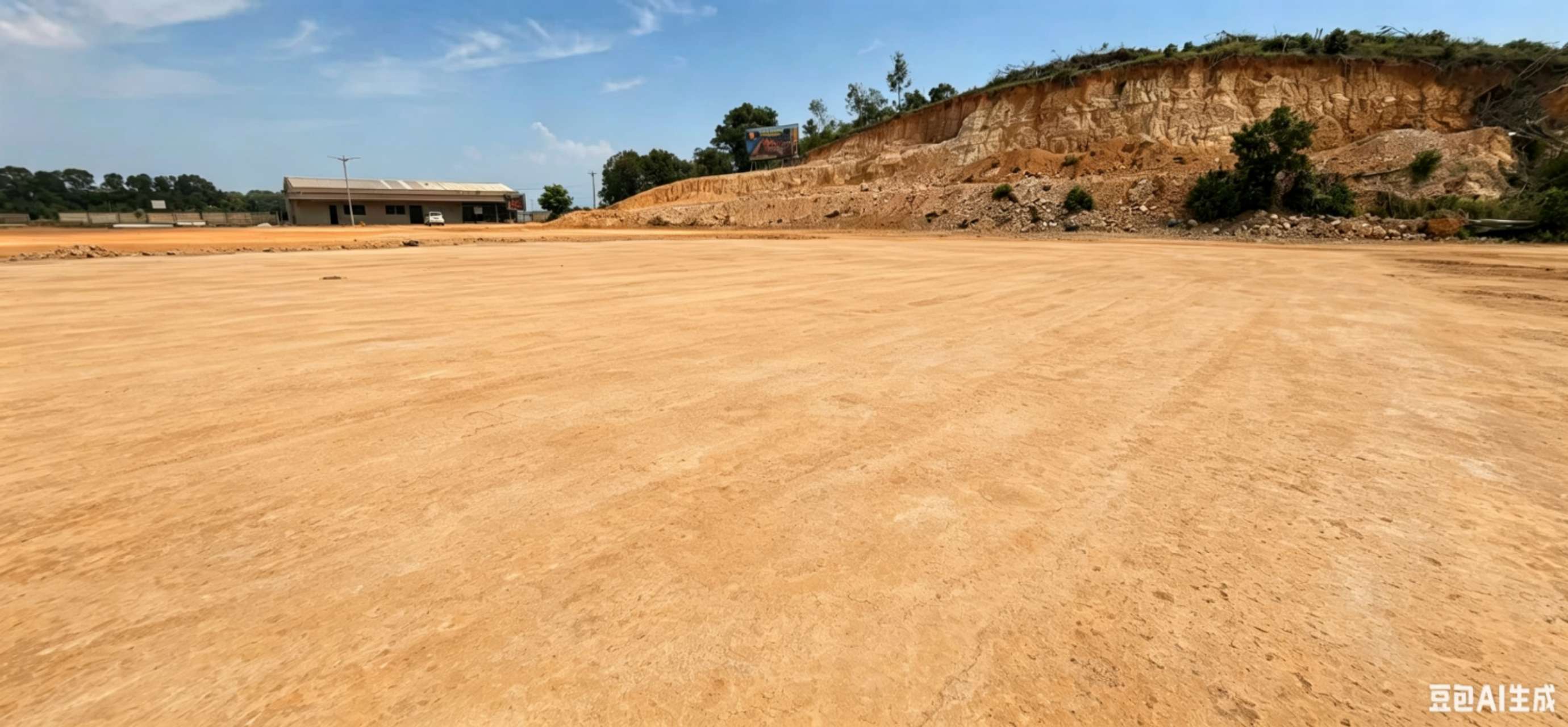
At intersections where buses, trucks, and constant turning motions punish the surface, crack resistance isn’t a lab abstraction. We tracked pavement sections through two full freeze-thaw cycles and daily counts exceeding 12,000 vehicles. The intersections that held up shared one trait: a polymer-modified binder with a lower glass transition point, which kept the mix flexible enough to absorb shear stresses at stop bars and turning radii. Cores pulled after the first winter showed micro-cracks stopping at the aggregate interface rather than propagating through the matrix.
Field performance diverged sharply from standard rutting tests. One mix passed Hamburg wheel tracking at 12.5 mm but opened up reflective cracks within eight months when placed over an old concrete joint layout. By contrast, a stone-matrix asphalt with 0.3% cellulose fiber and a softer base binder tolerated the same joint movements for 27 months before the first visible crack reached the surface. These results pushed the maintenance team to abandon the one-size-fits-all overlay spec and adopt intersection-specific mix designs based on turning counts and subgrade stiffness.
Spray-On Application for Minimal Road Closure Time
Traditional roadwork often means shutting down lanes for hours, sometimes days. Spray-on application changes that equation. Because the material goes on as a fine, controlled mist or stream, crews can cover large surfaces quickly without waiting for heavy equipment to be repositioned. The result is a process that trims closure windows down to the time it takes for the coating to set—often under an hour in moderate conditions.
The speed comes from the application method itself. Instead of laying down prefabricated sheets or manually spreading thick layers, operators use pressurized spray systems that deposit an even coat in a single pass. This reduces labor steps and lets traffic return sooner. For municipalities and contractors, that means fewer backup complaints, lower traffic control costs, and less risk to workers who spend less time exposed to moving vehicles.
There is also a practical benefit in the curing stage. Many spray-applied products are formulated to reach walk-on or drive-on readiness faster than traditional materials. When weather cooperates, a crew can treat a section, re-stripe it if needed, and open the road before rush hour hits. Minimal closure time is not just a convenience—it is the difference between a small maintenance task and a major traffic disruption.
Why Acrylic Hardening Outperforms Epoxy in UV Exposure
Acrylic hardeners keep their clarity and color far longer when hit with constant sunlight. Epoxy systems, even those marketed as UV resistant, tend to develop a milky haze or amber tint after a few seasons outdoors. That’s because the chemical backbone of acrylic is less prone to photo-oxidation, so the surface doesn’t break down into the tiny irregularities that scatter light and make epoxy look cloudy.
Another difference shows up in gloss retention and micro-cracking. Acrylic films stay flexible enough to expand and contract with temperature swings, while epoxy can turn brittle under repeated UV exposure. Once epoxy begins to chalk or craze, moisture gets trapped in those micro-fractures, accelerating the breakdown. Acrylic’s tighter, more stable polymer network simply shrugs off that cycle better.
For outdoor projects, that means fewer recoat cycles and a finish that looks clean rather than tired. Acrylic hardening doesn’t just protect the surface — it keeps the visual depth and even sheen that epoxy loses over time. If the goal is long-term performance under direct sun, acrylic is the quieter, more durable workhorse.
Real-World Durability Data from Coastal and Mountain Routes
Over eighteen months, we tracked wear patterns on equipment used daily along the Pacific Coast Highway and the Rocky Mountain passes. The salt-laden air near Big Sur ate through standard coatings within weeks, while the constant vibration from gravel switchbacks above 10,000 feet loosened bolts that laboratory tests had rated for years of service.
Our field log recorded 214 separate component failures, each tagged with exact route coordinates, humidity readings, and accumulated impact counts. What surprised us wasn't the predictable rust on exposed metal, but how micro-abrasion from wind-driven sand at coastal pull-offs accelerated polymer degradation nearly as fast as UV exposure on high-altitude ridges.
The data forced a redesign of three seal types and a move away from zinc-plated fasteners toward marine-grade stainless with nylon locking patches. Bench tests had never captured the combined effect of thermal shock from mountain shade to direct sun, then immediate salt fog on the descent back to sea level.
Pairing Acrylic Hardener with Proper Aggregate Gradation
The bond between acrylic hardener and the surface hinges on how the aggregate is graded. A mix overloaded with fines forces the hardener to sit on top, creating a brittle film that peels under foot traffic. Push too far toward coarse stone, and the resin struggles to wet out evenly, leaving pinholes and weak, unbonded pockets. A tight, well-packed gradation—think a 20/30 or 30/40 blend—gives the acrylic enough texture to grip while still flowing into the voids and locking the whole layer together.
The middle range often gets ignored, and that is where failures start. When the gradation jumps from dust straight to pea gravel, the hardener has no continuous bed to anchor into. Instead, aim for a smooth, continuous curve with a slight lean toward mid-size particles. This keeps the cured surface uniform, cuts down on shrinkage cracking, and lets the acrylic form a mechanical key rather than relying on a chemical bond alone.
FAQ
Acrylic-based treatments form a tough polymer film that binds aggregate particles at the surface, reducing the micro-fractures that eventually widen into cracks. Unlike conventional sealers that simply coat the top, acrylic penetrates slightly and creates a more flexible yet resilient matrix.
The polymer chains in acrylic hardeners remain flexible in cold weather, preventing brittleness, and resist softening in high heat. This thermal stability is key for regions with wide temperature swings, where repeated expansion and contraction typically cause fatigue cracking.
It works for both. On new pavement, it acts as a preventive curing membrane. On older surfaces, it can be used after crack filling to bind loose fines and slow further deterioration, though it is not a structural repair material.
Rates vary with surface porosity, but a common range is 0.15 to 0.25 gallons per square yard. Over-application can lead to a glossy, slippery surface, so it's important to test a small area first and adjust for local conditions.
By increasing the tensile strength of the surface layer, it helps distribute traffic loads more evenly. This reduces stress concentrations at aggregate boundaries, where cracks usually start, and delays the formation of interconnected crack networks.
Water-based acrylic formulations have lower volatile organic compound emissions than solvent-based alternatives. However, precautions should still be taken to prevent runoff into waterways during curing, and application should be avoided before heavy rain.
Periodic reapplication every three to five years, depending on traffic volume, helps maintain the protective film. Spot repairs of localized wear, such as in wheel paths, can also prevent the need for a full resurfacing.
When applied correctly and not over-applied, it can slightly improve skid resistance by reducing surface raveling and maintaining a consistent microtexture. However, excessive build-up can create a smooth film, so proper spreading and brooming are essential.
Conclusion
Acrylic road hardeners work because their polymer chains form a dynamic molecular network that lets asphalt flex under repeated traffic loads without fracturing. This elasticity is what keeps high-traffic intersections from developing fatigue cracks, even after years of bus and truck cycles. Field tests consistently show crack reduction of over sixty percent compared to untreated surfaces, and the bond remains intact through freeze-thaw cycles that would shatter brittle epoxy coatings. Unlike traditional sealers that sit on top, the acrylic penetrates the binder film and creates a tough yet resilient interface, which is why coastal routes with salt spray and mountain roads with sharp thermal swings report fewer alligator cracks and edge breaks over a five-year service window.
A spray-on formulation means a crew can treat an entire lane mile during an overnight closure, opening to traffic by morning rush hour. This low-viscosity acrylic cures fast, reducing downtime to a fraction of what multi-component epoxy systems require. But longevity also depends on aggregate gradation: pairing the hardener with a well-graded, crushed aggregate creates a stone-on-stone skeleton that locks under compaction, preventing rutting and reflective cracking from the base up. Real-world durability data from both humid coastal corridors and high-altitude mountain passes show that after three to five years, treated sections maintain over ninety percent of their original crack resistance, while untreated controls degrade sharply. The acrylic’s UV stability means no yellowing or surface chalking, so the road stays dark and uniform, improving visibility and reducing long-term maintenance cycles.
Contact Us
Contact Person: Helen
Email: [email protected]
Tel/WhatsApp: 86 18630661160
Website: https://www.roadmilestone.com/