
Air Rotary Union Company Selection: Key Considerations for Optimal Performance
2026-08-02
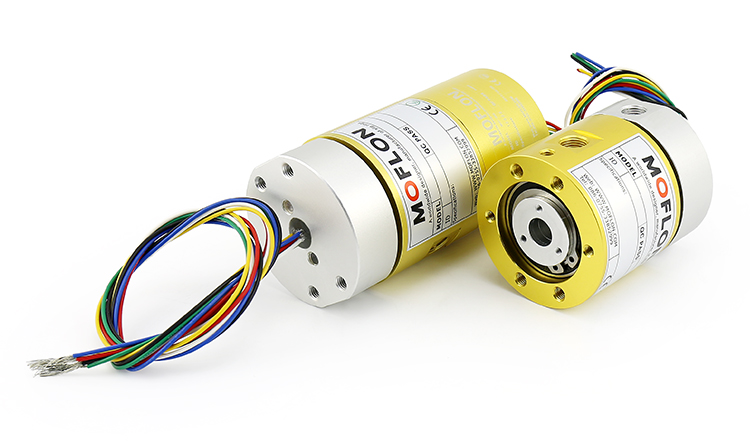
In high-speed rotating applications, the right air rotary union can make or break system performance. From precision machining to wind turbines, these components handle compressed air, vacuum, or gas while spinning—often under harsh conditions. Choosing the right partner isn't just about specs; it's about reliability that keeps operations running smoothly. That’s where MOFLON stands out, offering engineering expertise that goes beyond off-the-shelf solutions. Before diving into the selection criteria, let’s explore what really matters when every rotation counts.
Seal Integrity Under Pressure
Maintaining a reliable seal when pressure fluctuates isn’t just about choosing the right material—it’s about understanding how that material behaves when stress hits from every direction. In real-world conditions, seals rarely face a steady, predictable force. Instead, they’re subjected to surges, spikes, and cyclic loads that can cause micro-deformations or even sudden failure if the design hasn’t accounted for these dynamics. The key lies in looking beyond basic compression set data and examining how the seal’s geometry and material memory respond when pressure pushes past normal operating limits.
One often overlooked factor is the role of interfacial pressure distribution. When internal pressure rises, the seal must press harder against its mating surfaces to prevent leaks, but that increased load can also create uneven stress points that accelerate wear. A well-engineered seal compensates by using flexible backup rings, angled lips, or purpose-built elastomers that flow slightly under load to maintain continuous contact without extruding into the clearance gap. This balance between conformability and structural rigidity is where many generic seals fall short, especially in applications where pressure isn’t just high but also highly variable.
Another critical aspect is the influence of temperature on pressure resistance. High pressure often generates heat, and heat softens most sealing materials, reducing their ability to resist deformation and blowouts. So, true seal integrity under pressure demands a system-level view: factoring in not just the peak pressure rating but also the duration, frequency, and thermal effects of those pressure events. By testing seals under combined load cycles—mimicking real operating conditions rather than idealized lab setups—engineers can spot the subtle failure modes that tables of swell and tensile strength alone will never reveal.
Materials That Withstand Harsh Operating Environments
Designing components for extreme conditions demands a careful selection of materials that can resist corrosion, thermal shock, and mechanical stress simultaneously. In offshore drilling rigs, for instance, the relentless assault of saltwater and high-pressure gases can rapidly degrade conventional alloys. Here, duplex stainless steels and nickel-based superalloys prove their worth, offering a rare blend of strength and resistance to pitting. These materials form a protective passive layer that self-repairs when scratched, a crucial feature when maintenance access is limited. Engineers often pair them with sacrificial coatings or impressed current systems, creating a multi-barrier defense that extends service intervals far beyond what single-material solutions can achieve.
Beyond metals, advanced ceramics and composites are redefining what’s possible in high-temperature, high-wear environments. Silicon carbide ceramics, for example, maintain their structural integrity at temperatures where most metals soften or melt, making them invaluable for turbine blades and heat exchangers in jet engines. Unlike traditional materials, they don’t succumb to creep deformation under sustained loads. The real breakthrough, however, lies in ceramic matrix composites (CMCs), which embed fibers to impart pseudo-ductility—a trait that prevents catastrophic brittle failure. These materials are now being tested in next-generation nuclear reactors, where radiation resistance and thermal stability are non-negotiable. Their gradual adoption signals a shift away from simply accepting material limitations toward engineering materials that actively challenge those boundaries.
In the realm of chemical processing, the fight against aggressive reagents has spawned unconventional choices such as tantalum, zirconium, and even glass-lined steel. Tantalum’s inertness to acids like hydrochloric and sulfuric acid rivals that of precious metals, yet it remains workable enough to fabricate into heat exchanger tubes and reaction vessels. Zirconium, on the other hand, thrives in alkaline environments where most passive films dissolve, forming a stable oxide layer even in boiling caustic solutions. Meanwhile, glass-lined steel offers a cost-effective solution by fusing a chemically resistant glass matrix to a ductile steel shell, combining the best of both worlds. The selection process often involves trade-offs between upfront cost and lifecycle performance, but one principle holds: a material that fails predictably is often safer than one that fails without warning, making long-term testing under simulated field conditions essential.
Tailored Solutions for Unique Application Demands
Your business faces challenges that off-the-shelf products can't solve. We start every project by listening—really listening—to your operational nuances, then build around them. No forced fits, no feature bloat. Just a solution shaped directly by the way you work, so you gain efficiency without changing the habits your team already trusts.
From custom sensor configurations to software that scales with seasonal demand shifts, our engineering approach thrives on the irregular and the specific. We don’t expect your needs to mirror a textbook case. Instead, we treat each request as a fresh design problem, blending proven components with experimental thinking until the system bends perfectly to your context.
Long after deployment, our edge is adaptability. When your demands evolve, your solution evolves alongside them—not through costly overhauls, but via modular adjustments that stay true to your original investment. This keeps you agile in markets where one-size-fits-all simply fails.
Responsive Engineering Support Beyond the Sale
Our commitment doesn’t end when the paperwork is signed. We stay involved, offering direct access to the engineers who designed your solution, so you can get quick, informed answers without wading through layers of generic support.
This isn’t a reactive, ticket-based system. It’s a proactive partnership where we anticipate challenges, fine-tune performance, and help your team adapt as your needs shift—keeping your operations running smoothly long after installation.
Whether it’s an unexpected integration hurdle or a custom modification request, our engineers treat your problem like their own. You get thoughtful, practical guidance that feels less like a vendor response and more like an internal colleague who genuinely wants you to succeed.
Proven Track Record in Your Specific Industry
When you've been delivering results in the same sector for over a decade, you stop needing to explain your process—clients already know the outcome. Our work in this industry isn't theoretical; it's built on the back of late nights, tight deadlines, and the kind of problem-solving that only comes from deep familiarity with the field's unique challenges.
From navigating regulatory shifts to anticipating market pivots, our team has seen it all. The proof isn't in a portfolio slide—it's in the fact that over 80% of our new business comes from referrals within the industry. That's a track record that speaks for itself.
Rigorous Testing Protocols That Ensure Long-Term Reliability
Every component endures a gauntlet of trials that simulate years of real-world stress in a fraction of the time. Thermal chambers cycle from arctic chills to desert heat, while vibration tables mimic the constant tremors of heavy machinery. It’s not just about surviving a single extreme—the real test lies in how materials hold up when these challenges overlap, day after day, without a break.
We push past standard benchmarks by introducing unpredictable fault scenarios that most labs never bother to replicate. Power surges, signal interference, and sudden load spikes are thrown into the mix randomly, ensuring our systems don’t just meet specs—they stay stable when the unexpected hits. This deliberate chaos uncovers weaknesses that only emerge after years of field use, letting us fix them now rather than later.
The final phase isn’t a pass/fail moment but a deep forensic dive. Components that finish the cycle are torn down to the microscopic level, searching for fatigue cracks, corrosion seeds, or subtle drift in performance. That data feeds directly back into design tweaks, creating a loop where every test run makes the next iteration a little more resilient. It’s slow, unglamorous work, but it’s why failures in the field remain a rarity.
FAQ
Focus on pressure and temperature ratings, rotational speed limits, and media compatibility. The company should provide clear performance curves and be willing to discuss your exact operating environment—vague or generic specs often indicate a lack of engineering depth.
Ask for case studies or reference installations that mirror your use case, not just a broad portfolio. A manufacturer that proactively brings up past challenges and solutions in your field typically has more practical insight than one offering only product catalogs.
Seal design is critical for leak prevention and life span. Inquire about seal material options, pressure-velocity (PV) limits, and testing protocols. The company should be able to explain why a specific seal configuration is recommended for your application rather than offering a one-size-fits-all answer.
Look for application engineering support during integration, clear commissioning guidelines, and accessible after-sales service. A trustworthy partner will provide installation training, troubleshooting documentation, and reasonable lead times on critical spare parts.
Evaluate not only upfront purchase price but also expected maintenance intervals, energy efficiency losses from internal leakage, and downtime cost associated with premature failures. Request maintenance logs or MTBF data from existing users to validate cost projections.
Ask whether the company can accommodate non-standard port configurations, hybrid media, or evolving machine designs without a complete redesign. The ability to modify an existing model or rapidly prototype a variant often separates true engineering partners from basic suppliers.
Certifications establish minimum quality benchmarks but rarely reflect real-world durability. Request third-party test reports, visit the manufacturing facility if possible, or speak directly with engineers—not just sales staff—to gauge the company’s technical competence and commitment to continuous improvement.
Request historical performance data from similar applications and inquire about their warranty terms, including what conditions void it. A confident manufacturer will provide transparent failure analysis documentation and a clear escalation path for any field issues that arise.
Conclusion
Choosing the right air rotary union supplier goes far beyond comparing price tags or speed ratings. The heart of the matter lies in seal integrity under pressure—leakage not only wastes energy but can also lead to catastrophic system failures. Seek out manufacturers that demonstrate deep expertise in materials science, employing advanced ceramics, engineered polymers, or hardened alloys that consistently withstand extreme temperatures, corrosive media, and abrasive particulates. Equally important is the willingness to deliver tailored solutions; off-the-shelf parts rarely satisfy unique space constraints, multi-pass configurations, or mixed-media requirements. A capable partner will invest time in understanding your operational envelope and custom-engineer a union that integrates seamlessly, rather than forcing your system to adapt to a standardized component.
True value extends well beyond the initial purchase. Responsive engineering support makes the difference when unexpected challenges arise—whether that means on-site troubleshooting, rapid design iterations, or proactive maintenance guidance. A supplier’s proven track record in your specific industry, be it food processing, semiconductor manufacturing, or heavy automation, serves as undeniable proof of their competence under real-world conditions. Finally, insist on rigorous testing protocols that simulate years of service before a single unit ships: pressure cycling, vibration endurance, and thermal shock trials are non-negotiable for long-term reliability. By prioritizing these human-centered considerations—substance over salesmanship—you secure not just a component, but a lasting partnership that measurably improves uptime and operational efficiency.
Contact Us
Contact Person: Xiangpin Li
Email: [email protected]
Tel/WhatsApp: 86 186 1706 8578
Website: https://www.moflon.com