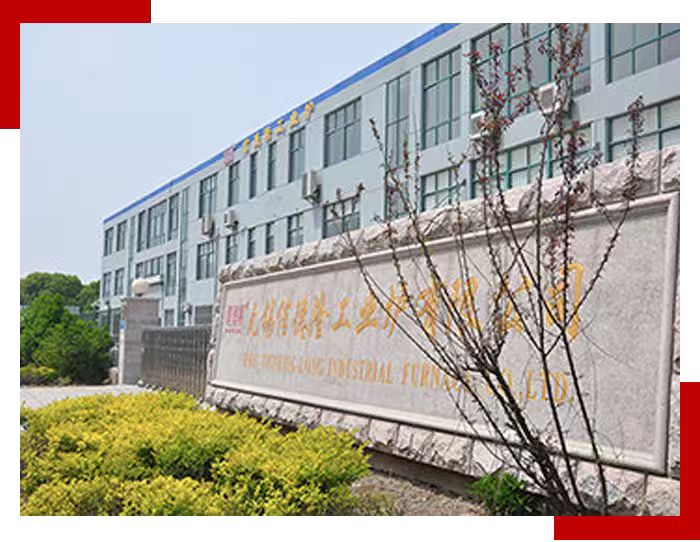

Bell Furnace Factory Operations That Power Precision Manufacturing
2026-08-12
Step inside a bell furnace factory, where controlled heat transforms raw materials into the precise components that drive modern industry. At THINKING-LONG, these operations aren't just about reaching temperatures—they're about mastering the subtle art of thermal uniformity, cycle efficiency, and metallurgical integrity. This blog pulls back the curtain on how our factory floors combine decades of expertise with smart automation to deliver the repeatability that precision manufacturing demands. Whether you're optimizing for aerospace alloys or automotive steels, the secrets to consistent quality start here.
Mastering the Controlled Atmosphere in Bell Furnaces
Achieving a precise controlled atmosphere inside a bell furnace isn't just about setting gas flow rates—it's a subtle art that blends chemistry, thermal dynamics, and a deep understanding of material behavior. The real trick lies in knowing how the protective or reactive gases circulate and stratify under the movable bell, especially during the long soak times typical of these batch operations. Small imbalances in pressure or composition can lead to surface discoloration, uneven case depth, or even decarburization that quietly undermines the final product's integrity. Seasoned operators learn to read the furnace almost intuitively, adjusting flows not by rote but by interpreting subtle cues from sample pieces, oxygen probes, and the sound of the exhaust.
What often gets overlooked is the role of the furnace's physical geometry and the way workpieces are stacked. The bell itself creates a micro-environment where gas movement isn't uniform; dead zones can form in tightly packed loads, trapping moisture or air that no standard sensor will catch. Mastering this means going beyond datasheets—it requires mapping out gas flow patterns for specific load configurations, sometimes using smoke tests or minor tracer gases during trial runs. Once you internalize how a particular bell furnace 'breathes', you can tailor cycle purging strategies that sweep out tramp oxygen before the reduction phase, ensuring the atmosphere remains in its intended dew point sweet spot.
Then there is the nuance of atmosphere switching. Transitioning from one gas mixture to another—say, from nitrogen purge to endothermic carrier gas for carburizing—demands a keen sense of timing. If you switch too early, residual oxygen can react with the new gas and cause sooting or erratic carbon potentials. Too late, and you waste costly atmospheres while risking unwanted oxide formation. Veteran heat treaters often develop their own rule-of-thumb techniques, like monitoring the color change in a sight glass or the subtle dip in temperature as the new gas absorbs heat. It's this kind of hands-on knowledge, refined over countless cycles, that truly elevates atmosphere control from a textbook procedure to a dependable, repeatable process.
From Raw Alloy to Precision Component: The Bell Furnace Journey
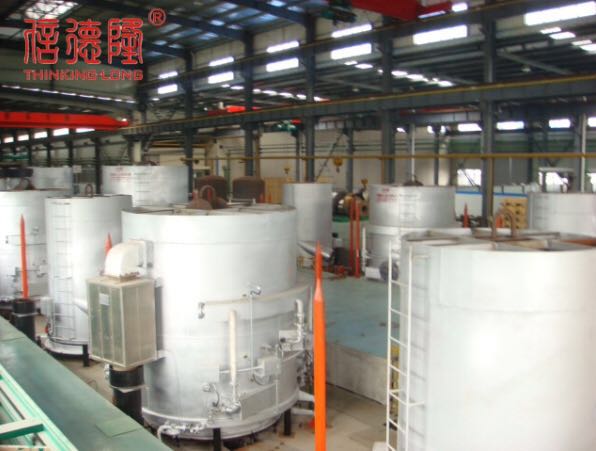
Beginning with carefully selected metal alloys, the bell furnace process transforms raw materials through a meticulous thermal treatment. The alloy is loaded into a protective atmosphere within the furnace, where it undergoes precisely controlled heating and cooling cycles. This stage is not merely about reaching a target temperature; it involves soaking the material to allow uniform heat penetration, ensuring that every molecule realigns optimally. The bell-shaped design itself plays a critical role, creating a sealed environment that prevents oxidation and contamination, thereby preserving the alloy's intrinsic properties while preparing it for the next phase of refinement.
As the heat treatment progresses, the material's internal structure evolves at a granular level. The controlled environment inside the bell furnace facilitates the breakdown of dendritic formations and the redistribution of alloying elements, leading to enhanced homogeneity. This transformation is subtle yet decisive—grain boundaries shift, stresses relax, and the metal’s ductility and strength begin to emerge in balance. Operators monitor atmospheric conditions and temperature ramps with precision, as even minor deviations could compromise the material's integrity. By the time the cycle completes, what was once a crude alloy has adopted the foundational characteristics required for high-performance components.
Finally, the treated material is machined into precise geometries, leveraging its newly acquired mechanical properties. The bell furnace journey doesn’t end at the furnace door; it extends to the workshop floor where the metal is cut, shaped, and finished with tight tolerances. Because the prior thermal processing has stabilized the material, it resists warping and retains dimensional accuracy during these steps. Whether destined for aerospace fasteners or medical implants, the component now embodies the perfect marriage of metallurgical science and thermal artistry—a journey that started as elemental alloys and culminated in a part engineered for exacting demands.
Innovations in Temperature Uniformity for Critical Applications
Precision thermal management now demands more than just hitting a setpoint; it requires actively countering localized hot and cold zones that can compromise sensitive processes. By leveraging multi-zone heating elements paired with high-resolution thermocouple arrays, systems can dynamically adjust output in response to real-time gradients. This feedback-driven approach effectively smooths out thermal discrepancies, ensuring that every square centimeter operates within a narrow, repeatable window. Such control proves essential when scaling from lab prototypes to production batches, where even minor deviations can alter material properties or yield.
Airflow architecture plays an equally vital role, particularly in forced-convection ovens and environmental chambers. Advanced baffle designs and carefully modeled plenum geometries help distribute conditioned air uniformly across the workload, breaking up stagnation zones that static rack placements often create. Some manufacturers have moved beyond conventional perforated panels to incorporate vortex-generating vanes that enhance mixing without raising fan speeds. The result is a quieter, more energy-efficient system that still meets stringent uniformity criteria measured under loaded conditions, not just empty chamber validations.
Beyond hardware, software innovations are redefining what’s achievable. Predictive algorithms now learn from historical cycle data to preemptively adjust heating rates before gradients develop, rather than reacting after the fact. This shift from reactive to anticipatory control minimizes overshoot and reduces the thermal stress on components. In sectors like semiconductor fabrication or pharmaceutical stability testing, where audit trails and repeatability are non-negotiable, these intelligent systems provide the confidence that every run meets specification without constant manual intervention.
Operational Excellence: Minimizing Downtime in Bell Furnace Lines
Achieving operational excellence in bell furnace lines demands a proactive approach to maintenance and process control. Rather than waiting for failures, leading teams deploy predictive analytics that monitor heating cycles, gas flow consistency, and seal integrity in real time. By catching subtle deviations early—like a slight pressure drop or an uneven temperature ramp—operators can schedule interventions during planned pauses, virtually eliminating unexpected stoppages. This shift from reactive to predictive not only preserves equipment but also builds a rhythm of reliability that sustains throughput.
Standardizing work practices across shifts is another silent lever for uptime. When every operator follows the same refined sequence for loading bases, setting retort seals, and executing purge cycles, variability shrinks. Detailed, visually guided checklists embedded in daily routines ensure that potential leak points or worn components are flagged consistently. This clarity removes guesswork and reduces human error, which is often the hidden instigator behind unplanned downtime. Regular cross-shift communication, where crews share observations without blame, turns these standards into a living system that adapts and improves over time.
Finally, strategic inventory management of critical spares can mean the difference between a 20-minute swap and a two-day outage. Rather than stockpiling everything, smart teams analyze failure patterns and maintain a calibrated onsite inventory of items like heating elements, thermocouples, and seal gaskets. They also forge tight relationships with suppliers for just-in-time delivery of larger components, avoiding the capital drag of excess stock while keeping replacement windows short. This preparedness, combined with rapid troubleshooting protocols, ensures that even when an anomaly slips through, the line rebounds with minimal disruption.
The Human Element: Training for Consistent Metallurgical Results
Walk through any foundry or metallurgical lab, and you’ll quickly realize that the most advanced furnaces and analytics mean little without skilled hands guiding the process. It’s the operator who senses a subtle shift in the melt’s color, the technician who knows when to adjust the quenching just by feel—these human instincts are forged through training that no manual can fully capture.
Consistent results don’t come from technology alone; they come from people who understand the “why” behind every step. We invest in immersive, hands-on programs where our team learns to read the metal as much as the data. From recognizing grain structure anomalies to troubleshooting furnace atmospheres on the fly, this deep-seated knowledge transforms variability into repeatable excellence.
Over time, this commitment to human development pays off in ways that spreadsheets can’t measure. Veteran staff mentor newcomers, passing down lessons from decades of heats and tests. The result is a culture where precision becomes second nature, and every batch—whether it’s aerospace alloys or automotive components—bears the quiet signature of a team that knows their craft inside out.
Advanced Monitoring: How Real-Time Data Shapes Modern Annealing
The hum of a modern annealing line is no longer a background note in production—it’s a stream of actionable insights. Advanced sensors tucked into heating zones and quenching baths feed temperature, atmosphere composition, and material feed rate into a central nervous system. This real-time data doesn’t just log history; it actively shapes each cycle. When a thermocouple reports a 2°C drift from the target profile, the system adjusts burner output instantly, preventing a batch of strip steel from missing hardness specs. The result is less scrap, tighter tolerances, and a process that learns as it runs.
Beyond immediate corrections, the data stream enables pattern recognition that human operators might miss. Historical overlays from thousands of cycles reveal subtle correlations—like how a 0.5% oxygen fluctuation in the furnace atmosphere delays grain recrystallization by four seconds. With this knowledge, predictive models can preemptively tweak parameters before a deviation even occurs. Operators move from reactive guesswork to informed oversight, focusing on anomalies flagged by the system rather than scanning endless dashboard screens. The line’s intelligence isn’t just reactive; it’s preemptive, turning variability into a managed variable.
This shift toward real-time responsiveness also unlocks cross-functional benefits. Metallurgists can remotely trace a finished coil’s thermal history down to the second, correlating microstructural outcomes with exact processing conditions. Maintenance teams receive early warnings when a fan vibration pattern edges outside normal bounds, scheduling downtime before a failure halts production. In this connected ecosystem, the annealing process ceases to be a black box; it becomes a transparent, self-correcting flow where each sensor reading helps refine the next. Real-time data isn’t just speeding up decision loops—it’s fundamentally reshaping what’s possible in thermal treatment precision.
FAQ
A bell furnace is a type of heat treatment equipment where a movable cover (the “bell”) is lowered over the workload to create a sealed heating chamber. It's crucial for precision manufacturing because it allows extremely uniform temperature control and protective atmospheres, ensuring parts achieve exact material properties without distortion or contamination.
Consistency comes from rigorous process controls: automated temperature profiling, precise gas flow management, and real-time monitoring systems. Factories also conduct regular calibration and maintenance, and use data logging to trace every batch, ensuring each component meets stringent metallurgical specifications.
Bell furnaces are versatile—they're used for annealing, tempering, or stress-relieving metals like steel, copper, and specialized alloys. Common components include precision gears, bearings, fasteners, and parts for automotive, aerospace, and medical devices where dimensional stability and surface integrity are paramount.
The bell-type design minimizes heat loss because the insulated bell and base form a tight seal, and the workload is stationary—only the bell is lifted between cycles. Modern furnaces also use advanced insulating materials and heat recovery systems, which significantly cut energy consumption compared to traditional continuous furnaces.
It's everything. By precisely regulating the gas mixture inside the furnace—like using nitrogen, hydrogen, or endothermic atmospheres—you prevent oxidation, decarburization, or unwanted chemical reactions on the metal surface. This ensures the final parts have exact surface hardness and cleanliness, often eliminating the need for post-processing.
Safety is built into multiple layers: automated lock-out systems prevent opening while hot, gas leak detectors and flame curtains monitor combustion, and operators undergo extensive training. The bell furnace's design also limits exposure since the heating elements are contained, and remote monitoring allows oversight from control rooms.
Conclusion
Bell furnace operations are at the heart of precision manufacturing, where every thermal cycle is meticulously orchestrated to transform raw alloys into high-performance components. The journey begins with mastering the controlled atmosphere inside the furnace—a delicate balance of hydrogen, nitrogen, or endothermic gases that shields materials from oxidation and decarburization. This protective environment ensures that the metal’s surface integrity and metallurgical properties are preserved throughout the annealing process. As the alloy moves from its coarse, stress-filled state to a refined grain structure, the bell furnace’s ability to maintain exact temperatures and soaking times becomes critical. Innovations in temperature uniformity, such as advanced burner designs and recirculating fans, have eliminated hot spots and gradients, allowing even the most complex geometries to achieve consistent hardness and ductility. This seamless transition from raw material to precision component is what defines the furnace’s role in industries like aerospace and automotive, where failure is not an option.
Operational excellence in bell furnace lines goes beyond the hardware; it hinges on minimizing downtime through predictive maintenance and rapid changeover strategies. Plant teams rely on real-time data from advanced monitoring systems to anticipate coil temperature profiles, adjust cycle parameters, and detect anomalies before they escalate into costly delays. Sensors tracking everything from gas flow rates to cooling curves feed into centralized dashboards, turning the furnace into a data-driven hub. Yet, no amount of automation can replace the human element—skilled operators who interpret trends, troubleshoot with intuition, and ensure consistent metallurgical results shift after shift. Through rigorous training programs, these professionals learn to read the subtle signs of an evolving heat treat, blending science with craft. Together, these operational pillars—technological innovation, data integration, and workforce expertise—forge the reliability that powers precision manufacturing, delivering components that meet the most exacting specifications time and again.
Contact Us
Contact Person: Qian Xijun
Email: [email protected]
Tel/WhatsApp: 8613961736750
Website: https://www.thinkinglong.com/