
Custom Carbonated Beverage Filling Machine: Tailored Solutions for Sparkling Drink Production
2026-10-30
Every successful sparkling beverage line starts with a simple question: can your filling equipment keep up when carbonation levels, bottle formats, or production volumes change? Most standard machines force you to adapt your process to their limitations. A custom carbonated beverage filling machine flips that dynamic. Wanying Machinery builds tailored solutions around your exact product specs—whether you're running high-speed canned seltzers or small-batch glass-bottled sodas. In the sections ahead, we'll break down what custom filling really means and how it can future-proof your sparkling drink production.
The Carbonation Bottleneck Most Off-the-Shelf Fillers Ignore
Most standard fillers handle carbonated product as if it were still liquid, and that's where the trouble starts. The real limitation isn't the drive motor or the number of filling heads; it's keeping CO2 in solution while the container is open to atmosphere. Without precise counterpressure control, beer, sparkling water, or canned cocktails begin to nucleate right at the valve. That flash foaming slows the cycle, forces overfill compensation, and creates messy seaming or capping conditions.
Off-the-shelf systems usually rely on a fixed vent tube or a single pressure setting, which ignores how bottle temperature and dissolved gas vary throughout a run. When product warms by a few degrees or the filler backpressure dips, CO2 breaks out at the nozzle. The bottleneck rarely shows up on a spec sheet because it's not about strokes per minute. It's about the pause needed for foam to collapse, and each speed increase just makes that pause longer unless the filler actively manages degassing and snift timing.
A more effective approach treats carbonation as a process variable rather than a fixed parameter. Pre-evacuation, adjustable counterpressure curves, and staged snift allow the filler to follow the product's solubility curve instead of fighting it. Without that, any so-called high-speed line ends up running slower than a well-tuned machine with fewer heads, because every cycle becomes a foam-control exercise rather than a clean transfer.
Filler Design That Starts with Your Container, Not a Catalog
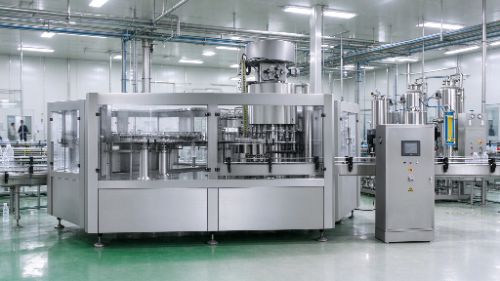
Most fillers are chosen backwards. You pick a machine, then flip through a catalog to see what nozzle or pump might fit, and only afterward wonder if your container can actually handle the fill. That’s the wrong order. When design starts with your container — its neck finish, shoulder slope, base stability, even the label panel’s flex under vacuum — every downstream choice gets easier. A tall, narrow bottle with a tiny opening may need a long-reach nozzle and gentle bottom-up filling. A wide-mouth jar with a thin wall might require clamps instead of vacuum. By letting the container define the constraints first, you avoid forcing a square peg into a round hole.
This approach also changes how you evaluate speed and accuracy. Instead of asking “What’s the fastest filler?” you ask “What does this container tolerate?” Some bottles foam badly if liquid drops more than a few centimeters; others need a dwell time after fill to settle product before capping. When the filler is matched to the container’s physical reality, you stop fighting splashing, dripping, or collapsing sidewalls mid-run. The result is less rework, fewer line stoppages, and a fill weight that stays consistent because the container isn’t being bullied into submission.
Practically, that means measuring your container before looking at any equipment list. Record the neck I.D., the shoulder angle, the total height, the wall thickness at the fill point, and how the container behaves when you squeeze it gently. Run a manual test with a syringe or small pump to see how the product flows in. Then — and only then — talk to filler builders with those numbers in hand. You’ll find conversations shift from “Can you make your standard model work?” to “Here’s exactly what my container needs, what do you have that fits?” That’s the difference between buying a catalog filler and designing the fill around the thing you actually put on the shelf.
Pressure Curves Tuned to Your Exact CO2 Volumes
Carbonation charts usually assume your beer is sitting at a tidy 38°F and that your regulator gauge reads true. The moment your keg warms a few degrees, or your tap line runs through a warmer tower, those printed numbers fall apart. This curve doesn't rely on that fiction. It's built from your actual beer temperature and the precise CO2 volumes you want in the finished pour, so the pressure setting reflects what's happening inside the keg, not what a generic table says should happen.
You don't have to settle for 2.5 volumes because that's the closest column. Dial in 2.3 for a crisp pilsner or 2.9 for a fruit-forward sour, and the curve redraws the pressure-to-temperature relationship around that exact target. Small differences matter more than most brewers expect: half a volume can turn a soft mouthfeel into a sharp bite, or leave a stout feeling thin and watery.
The curve also accounts for local atmospheric pressure, which matters if you live well above sea level. A gauge reading of 12 psi in Denver doesn't deliver the same dissolved CO2 as 12 psi in Miami. By adjusting for your elevation, the pressure curve keeps your pours consistent whether you're pulling a pint in a mountain taproom or a coastal garage.
Dosing Modules You Can Reconfigure Between Flavors
The dosing modules snap in and out without tools, so moving from vanilla to hazelnut takes seconds rather than a full teardown. Each module keeps its own calibration, which means the machine remembers the exact flow rate and portion size for every flavor you load.
Because the modules are sealed and self-contained, there’s no cross-contamination between strong and delicate profiles. You can run a dark roast followed by a light fruit infusion and still get clean, distinct results. Swapping flavors mid-service doesn’t force you to reset the whole system.
If you want to experiment, the module layout invites mixing. Run one flavor on the left and another on the right, then blend them at the dispense point. The reconfigure step is physical but simple: pull one module, push in another, and the system picks up the new profile automatically.
No Dead Legs: Sanitary Welds and Sloped Surfaces
The term dead leg refers to any section of piping where fluid can stagnate, creating a breeding ground for bacteria and compromising product purity. In hygienic processing environments, even a slight crevice or rough weld seam can trap residue, forcing costly cleaning cycles and risking contamination. Sanitary welds eliminate this problem by fusing pipe interiors into a continuous, smooth bore. Orbital welding, performed under controlled conditions, produces a uniform bead with no pits or undercuts, leaving nowhere for microbes to hide.
Sloped surfaces work hand in hand with sanitary welds to keep lines fully drainable. A pipeline that runs perfectly horizontal or, worse, sags between supports will hold liquid after a cleaning cycle or product changeover. By maintaining a consistent slope—commonly 1/8 to 1/4 inch per foot—toward drain points, gravity does the work of emptying the line completely. This design principle applies not only to long runs but also to short branches, instrument tees, and valve bodies, where trapped moisture could otherwise support biofilm growth.
When sanitary welding and proper sloping are combined, the system achieves what engineers call clean-in-place readiness without excessive manual intervention. Each weld bead is inspected and polished to a specified surface finish, typically 20 to 32 microinches Ra, reducing adhesion of product soils. Sloped piping then ensures that rinse water and cleaning chemicals reach every inch of the interior, leaving no dead volume behind. For processors handling dairy, pharmaceuticals, or personal care products, these details are not optional extras—they are the baseline for consistent quality and audit-ready hygiene.
Adding a Second Size or Speed Without Replacing the Line
Many packaging lines already have the mechanical backbone to handle a second container size or belt speed. The trick is usually in the adjustable components: rails, guides, star wheels, and timing screws can be repositioned or swapped in minutes if the original design allowed for it. Instead of installing a brand-new conveyor or filler, operators can use quick-change fixtures and calibrated settings to shift from one format to another without dismantling the line.
The payoff goes beyond saving the cost of a second machine. When you add a size or speed without replacing the line, you keep the same footprint, the same electrical connections, and the same crew training. Downtime drops from weeks to hours, and you avoid the headache of revalidating an entirely new system. For plants with limited floor space or tight capital budgets, this approach turns an existing asset into a more versatile workhorse.
A practical path starts with a thorough audit of the current line's motors, drives, and control logic. Many modern servo-driven systems can be reprogrammed for a faster cycle or a different product dimension with minimal hardware changes. Older lines may need upgraded sensors or a new set of change parts, but that is still a fraction of the cost and disruption of a full replacement. Involving the maintenance team early helps identify which adjustments can be made on the fly and which require a scheduled shutdown.
FAQ
A custom unit is built around your specific container shapes, carbonation levels, and line speed needs. Instead of forcing your product into a fixed design, the filler is matched to your bottle neck diameter, fill temperature, and pressure stability requirements.
We look at your expected hourly output, the mix of cans and bottles, and any seasonal spikes. Then we calculate the number of filling valves, conveyor width, and CO2 dosing capacity so the line runs comfortably at peak demand without wasting energy during slower periods.
Yes, with quick-change star wheels and adjustable filling heads you can switch between PET bottles, glass bottles, and cans in under 30 minutes. The control system stores separate recipes for each container so operators simply select the format and the machine adjusts fill height and pressure automatically.
You can specify precise CO2 volumes from lightly sparkling to highly carbonated drinks. The filler can include in-line carbonation monitoring, temperature-controlled product tanks, and pressure feedback loops that keep gas content stable even when line speed changes.
By minimizing oxygen pickup and pressure shocks during filling. For oxygen-sensitive drinks we add pre-evacuation or nitrogen purging, and the filler’s gentle handling reduces foaming and aroma loss, which keeps the final product fresher for longer.
Start with a clear idea of your container types, fill volumes, target shelf life, and available floor space. Also think about future formats or recipes, because adding a little extra flexibility now can save a costly retrofit later.
Absolutely. You can combine syrup dosing, deaeration, carbonation, and filling into one skid. This reduces transfer losses and ensures consistent taste from the first bottle to the last, especially for low-calorie or preservative-free sparkling drinks.
Usually 12 to 20 weeks from design approval to installation, depending on the level of automation and any special materials required. We run factory acceptance tests before shipping, then on-site commissioning usually takes one to two weeks with your team.
Conclusion
Most off-the-shelf carbonated fillers treat every product as if it were the same flat water or soda, assuming a standard bottle shape, a fixed gas profile, and a one-size-fits-all fill cycle. If your container has an unusual neck, a thin wall, or a demanding carbonation level, that generic approach quickly shows its limits: foam overflow, uneven fills, oxygen pickup, and constant operator adjustments. A custom machine starts from your actual container dimensions and your target CO2 volumes, not from a catalog spec. Pressure curves are tuned to your recipe, so gas stays in solution where it belongs, and fill levels stay consistent even at higher carbonation. The result is a line that runs your sparkling drink instead of forcing your drink to run on someone else's line.
Beyond the fill itself, the machine is built to change as your product range changes. Dosing modules are reconfigured between flavors without a full teardown, so a switch from citrus to botanical or cola doesn't drag on for hours or risk carryover. Sanitary design isn't an afterthought: welds are smooth, surfaces slope toward drainage, and there are no dead legs where syrup or rinse water can stagnate. And when you need a second bottle size or a faster line, the frame and controls already account for that growth—new formats and higher speeds can be added without scrapping the entire filler. What you get is not just a machine, but a filling platform that matches how your sparkling beverage actually behaves, cleans, and scales.
Contact Us
Contact Person: Tyson
Email: [email protected]
Tel/WhatsApp: +8613396971296
Website: https://www.wanyingmachinery.com