

Custom Quartz Crucible Design Tips for Optimal Thermal Performance
2026-10-26
When it comes to high-temperature processes, the quartz crucible is more than just a container—it's the silent partner in your thermal performance equation. Yet many engineers overlook how custom design choices can dramatically shift heat distribution, thermal shock resistance, and overall lifetime. Whether you're fine-tuning crystal growth or pushing the limits of semiconductor manufacturing, the geometry and material purity of your crucible matter more than you think. At Semicorex, we've seen how small tweaks in wall thickness, bottom profile, and surface finish turn a standard crucible into a precision thermal instrument. In this post, we'll unpack practical design tips that help you avoid common thermal bottlenecks and get the most from every run—no guesswork, just measurable gains.
Why Wall Thickness Matters More Than You Think
Most people assume a thicker wall means a stronger part. That’s not wrong, but it misses the bigger picture. In injection molding and 3D printing alike, overly thick sections tend to cool unevenly. The outside skin solidifies while the core is still molten, leaving behind sink marks, voids, and internal stress. These flaws don’t always show up immediately—sometimes they only appear after the part has been in service for a while.
Uniform wall thickness matters more than raw bulk. A part with a consistent 2 mm wall often outperforms one with sections swinging between 1 mm and 5 mm, even if the latter feels more rigid on paper. That’s because sudden transitions create stress concentrations and warpage. Every time the melt flow has to squeeze through a thin gate and then balloon into a thick rib, the material’s molecular chains get pulled in different directions. The result is a part that’s weaker exactly where you thought you were adding reinforcement.
There’s also a cost angle people rarely talk about. Thicker walls mean longer cycle times, more material, and higher energy bills—without a proportional gain in strength. In many cases, ribs or slight geometry tweaks can add stiffness more effectively than simply adding wall thickness. Once designers start seeing wall thickness as a balancing act between cooling rate, flow length, and structural need, they stop overbuilding and start making parts that actually hold up.
Shaping the Base for Even Heat Spread
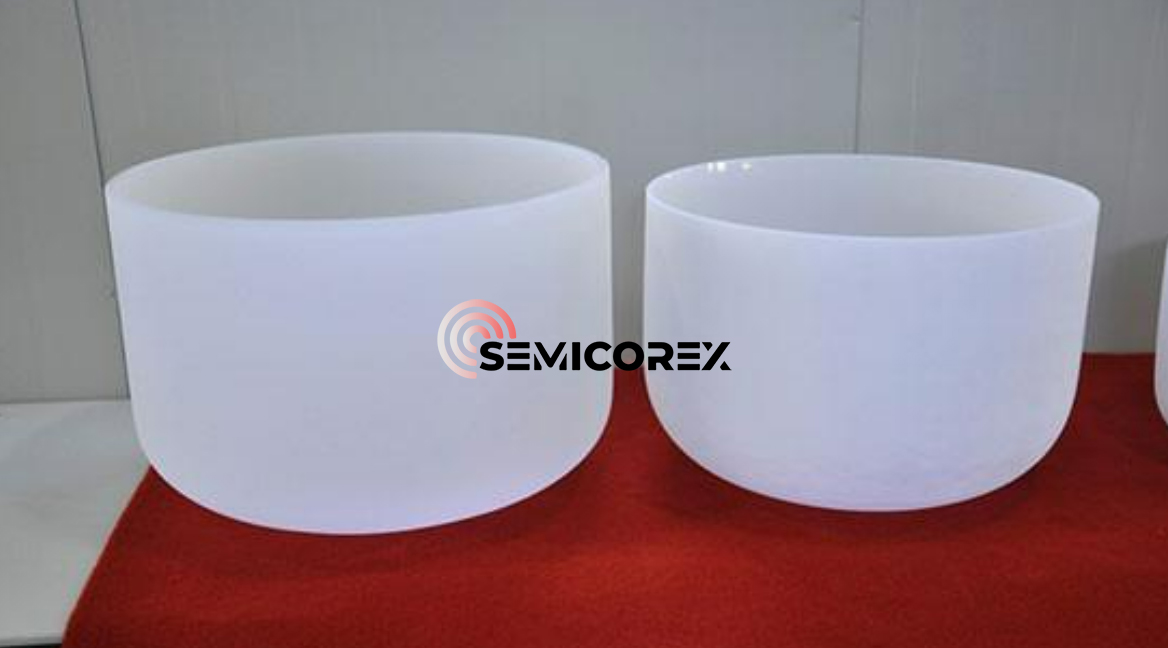
A cookware base is rarely a simple flat disk. Subtle convex or concave profiles are machined into the bottom before assembly so that when the pan heats up, thermal expansion pulls the metal into a more perfectly flat shape. This pre-compensation prevents hot spots where the center bows away from the burner.
Beyond geometry, the internal layering does the heavy lifting. A thick aluminum or copper core sandwiched between stainless steel spreads heat laterally across the base, while a slightly thicker rim around the edge holds more mass to counteract faster cooling at the sides.
The result is a base that reacts evenly to flame or induction, so butter melts at the same rate in the center as near the walls, and searing leaves consistent color instead of patchy browning.
Material Purity and Its Quiet Effect on Heat Flow
Trace impurities rarely announce themselves, yet they reshape how heat moves through a material in ways that catch even seasoned engineers off guard. A few parts per million of dissolved oxygen in copper, for instance, can scatter phonons enough to drop thermal conductivity by ten percent or more. The effect is not dramatic in the moment—it accumulates quietly across grain boundaries and lattice mismatches, turning what should be a clean thermal pathway into a subtle maze.
What makes purity so tricky is that it is never uniform. A single crystal pulled from a high-grade melt may look flawless under standard inspection, but residual gases from the crucible wall or a slightly uneven cooling rate will leave behind vacancy clusters that act as thermal bottlenecks. These aren't the kinds of defects that show up on a spec sheet, because they don't change electrical resistivity enough to trigger alarms. Instead, they nudge mean free paths downward, and the material simply runs warmer than anyone predicted.
In practice, chasing higher purity often means accepting trade-offs that aren't obvious on paper. Zone-refining a metal to remove the last traces of iron can introduce new strain patterns from the repeated heating passes. Ultra-high-vacuum processing strips away contaminants but also changes grain growth dynamics, sometimes leaving a texture that resists heat flow in one direction while improving it in another. The quiet effect is that designers who rely on bulk thermal conductivity tables may find their real-world assemblies drifting by a few watts per meter-kelvin—not enough to fail a test outright, but enough to shorten component life over years of steady load.
The Overlooked Role of Surface Finish
Discussions about machining quality often fixate on dimensional accuracy, hardness, or material composition, but the surface finish quietly dictates how a part performs in the real world. Two components machined to the same tolerance can behave completely differently if one has a finely honed finish and the other carries microscopic ridges from a rough pass. These tiny irregularities—measured in microns or even nanometers—affect friction, sealing, fatigue life, and even how a surface resists corrosion. In many applications, the finish is not a cosmetic afterthought; it is the functional boundary where the part meets its environment.
The influence of surface finish becomes especially apparent in dynamic systems. A shaft running inside a bearing, for instance, relies on a controlled finish to hold a lubricant film. Too rough, and the asperities break through the film, causing wear; too polished, and the surface may not retain enough oil, leading to stick-slip or seizure. Similarly, gaskets and O-rings need a specific roughness to bite into the mating surface and create a reliable seal. Even static components benefit: a smooth finish on a medical implant reduces bacterial adhesion, while a deliberately textured finish on a turbine blade can alter airflow and improve efficiency.
Common surface finish parameters like Ra, Rz, and Rq give engineers a numerical shorthand, but they rarely tell the whole story. A surface with the same Ra can have drastically different peak distributions or directionality, changing how it wears or reflects light. Practical experience shows that chasing a “mirror” finish is not always the right goal—sometimes a controlled lay pattern or a fine-ground texture outperforms a polished surface by orders of magnitude. The overlooked role of surface finish, then, is not just about meeting a callout on a drawing; it is about understanding the true functional requirements and choosing a process that shapes the surface, not merely removes material.
Designing the Rim to Reduce Thermal Stress
A well-designed rim cross-section avoids abrupt thickness changes. Tapering the transition from the tire bead seat to the barrel spreads heat conduction more evenly, while sharp inner corners are replaced with generous fillets at the web-to-rim junction. Reducing material near the bolt circle lets the brake disc expand without pulling the rim out of round, lowering the stress concentration factor during repeated thermal cycles.
Material selection works hand in hand with geometry. Low-expansion alloys or composites minimize the strain mismatch between hot brake components and the rim. If cooling perforations are required, they should be positioned away from primary load paths, with elliptical openings oriented tangentially to reduce stress concentration compared to circular holes. A final stress-relief heat treatment after casting or forging removes residual stresses that would otherwise amplify thermal loads.
Matching Crucible Mass to Your Furnace Load
A lot of foundry issues that get blamed on burner tuning or alloy quality actually start with a simple mismatch: the crucible is either swallowing heat that should be going into the metal, or it is so undersized that every pour becomes a gamble. The mass of the crucible directly affects how long the furnace takes to reach a stable working temperature, because the crucible itself must be heated before the charge inside can melt efficiently. If you are running a small melt and using a heavy, thick-walled crucible, you are paying for fuel to heat ceramic instead of metal. On the other hand, pushing a near-capacity load into a lightweight crucible may save energy on paper, but it shortens crucible life and increases the chance of a cracked wall mid-pour.
There is no universal ratio that works for every shop, but a practical starting point is to look at the volume of your typical charge and choose a crucible that leaves roughly 20 to 30 percent freeboard after the metal is molten. That extra space is not waste; it gives the melt room to expand slightly and gives you a margin for stirring or adding late alloying elements. Many small foundries make the mistake of sizing the crucible to the exact weight of the metal, ignoring that different alloys have different densities and that scrap shapes can trap air. A crucible that looks right on a spreadsheet can end up too full when you load bulky scrap, leading to spills or a struggling furnace.
Pay attention to how your furnace behaves during the first few heats after a crucible change. If the melt takes noticeably longer to reach pouring temperature than it did with a previous setup, the new crucible is probably too massive for the load. If you see frequent thermal cracks near the top rim or the walls are thinning fast, the load may be too heavy or the freeboard too small. Adjusting the crucible mass is not a one-time decision; it changes when you switch alloys, alter your average pour weight, or even when you change scrap suppliers. Small adjustments based on actual melt times and crucible wear will get you closer to an efficient setup than any fixed chart.
FAQ
Wall thickness is one of the first variables to revisit. A uniform sidewall heats faster and reduces internal stress, but most real processes benefit from a slight taper; a heavier rim resists chipping during handling, while a slightly thicker base supports the melt or powder load. Going too thick anywhere increases thermal lag and can encourage devitrification at sustained high temperatures, whereas too thin a wall risks sagging once the quartz softens.
The base is more than a flat platform. A rounded or contoured bottom reduces sharp corner stress and helps the charge heat more evenly, especially when the furnace element sits below. A slight convexity can direct melt flow toward the center, while a concave design may improve drain-out for certain materials. Matching the base profile to the heating zone often does more for temperature consistency than changing the overall diameter.
Surface finish affects nucleation, sticking, and ease of cleaning. A flame-polished inner wall gives fewer microscopic sites for deposits to latch onto and reduces the chance of crack initiation. However, over-polishing can make the surface so smooth that certain coatings or melts wet differently. The practical sweet spot is usually a smooth but not mirror-like interior, with extra attention paid to the corner where the wall meets the base.
Cylindrical crucibles maximize usable volume and give a straight sidewall for uniform radiation exposure, but removing a solidified ingot can be difficult. A slight conical taper, often just a degree or two, breaks the vacuum or friction lock during unloading and simplifies cleaning. For top-loading furnaces, a cone also tends to distribute convection currents more evenly. If you are not removing a solid mass after each run, straight walls usually win on thermal symmetry.
The rim is the most mechanically abused part of the crucible. A thickened, fire-polished lip reduces chipping when tongs or lids come into contact. Adding a pouring spout or a slight outward bevel helps direct flow during transfer and cuts the chance of a wetting film creeping over the edge. Custom rims also seal better with a mating lid, which keeps volatiles in and oxygen or moisture out during sensitive heating steps.
Quartz has a low expansion coefficient, but gradients still create localized strain. In multi-zone furnaces, the zone boundaries are often where cracks start because one section expands while the adjacent section lags. A custom design can soften these transitions with longer radii, a thinner wall near the upper zone, or a slight change in diameter. Fixtures should never clamp the crucible tightly; there needs to be enough clearance for the quartz to move as the furnace ramps.
Purity is not just a certificate. Hydroxyl content alters the softening behavior and can lead to earlier devitrification when the crucible is cycled for long periods. Trace metals can catalyze surface crystallization, which shows up as a frosted appearance and eventually weakens the wall. Bubbles and inclusions act as stress raisers. For demanding thermal work, selecting the right grade of fused quartz—whether electric fusion or flame fusion—often matters more than the nominal silica percentage.
A custom shape makes sense when standard sizes force you to compromise on load size, heat-up rate, or furnace fit. If the gap between the crucible and heating element is uneven, you lose more energy than you save by buying stock. Custom designs also allow you to reduce wall mass in non-critical areas, shorten cycle times, and add features like a drain hole or a stepped rim. For repeated high-temperature runs, the cost is usually recovered through fewer replacements and less rework.
Conclusion
When specifying a custom quartz crucible, the instinct is often to focus on dimensional accuracy alone, but thermal behavior is decided long before the first firing. Wall thickness is a prime example: a slightly thicker sidewall can slow heat penetration and create a thermal gradient that, if ignored, leads to uneven melting or even fracture during rapid ramps. Equally critical is the base profile. A flat, uniform bottom rarely matches the actual heat flux from your furnace; blending a subtly thicker center into a tapered edge encourages a more even spread, preventing the center from becoming a hot spot. Material purity works behind the scenes as well. Trace metallic impurities or hydroxyl groups change the way quartz absorbs and transmits infrared energy, so a nominally identical crucible can shift heat flow just enough to affect yield. And while surface finish is often treated as cosmetic, it has real thermal consequences: a polished inner wall reflects more radiation than a frosted one, altering how heat reaches the melt, while a rough outer surface can change emissivity and create localized temperature differences.
The rim deserves careful attention too. Sharp corners or abrupt transitions concentrate thermal stress, especially during repeated heating and cooling, so a generously radiused rim or a slightly thickened lip helps distribute expansion forces and reduces the chance of cracking. Finally, the crucible’s total mass must be matched to the furnace load. A heavy crucible provides thermal stability but slows response time and wastes energy; one too light may heat quickly but struggle to hold even temperatures when charged. By tuning wall thickness, base geometry, purity, surface condition, rim shape, and mass together, you create a crucible that does more than survive the process, it actively steadies heat delivery and improves repeatability from run to run.
Contact Us
Contact Person: Svenja Wei
Email: [email protected]
Tel/WhatsApp: +8613567891907
Website: https://www.semicorex.com