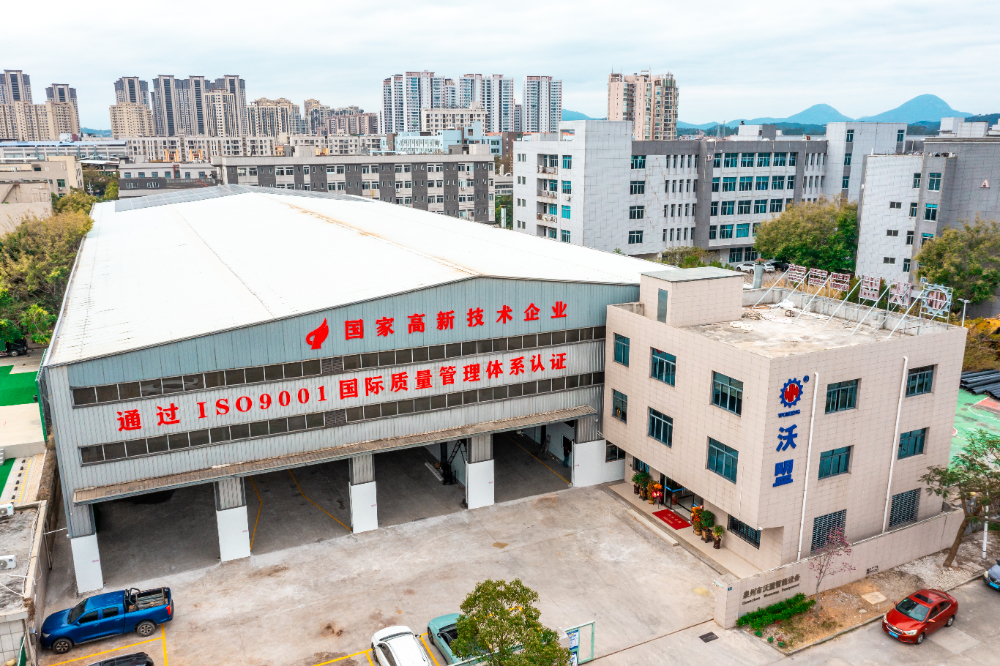

Diaper Machinery Factory: Revolutionizing Hygienic Product Manufacturing Worldwide
2026-05-07
Behind every high-quality diaper on the shelf is a manufacturing process that demands precision, speed, and reliability. As global demand for hygienic products continues to surge, the factories producing them face mounting pressure to deliver more with less. This is where Womeng steps in — reimagining diaper machinery from the ground up to meet the challenges of modern production. From intelligent automation to energy-efficient design, our innovations are not just keeping pace with the industry; they’re setting new benchmarks. Join us as we explore how a new generation of equipment is transforming production floors worldwide and what that means for the future of hygiene manufacturing.
How Our Factory Redefines Diaper Production Efficiency
Traditional diaper manufacturing often treats speed as the only goal, but we've learned that true efficiency comes from eliminating hidden downtime. Our lines are designed with quick-change modules that allow size transitions in under three minutes, not hours. That flexibility means we run smaller batches without sacrificing output, adapting instantly to real demand.
We've embedded predictive sensors throughout the production flow, which feed data to a central system that spots micro-trends before they become breakdowns. Instead of reacting to a stalled machine, we schedule maintenance during natural pauses, keeping the line moving almost continuously. This alone has pushed our overall equipment effectiveness well past industry norms.
Efficiency also extends to resource use. Our closed-loop water system and heat recovery from the drying ovens cut energy per diaper by a third. Smart material unwinding reduces splice waste to near zero. The result is a factory that runs leaner, cleaner, and consistently hits output targets without burning out machines or people.
The Engineering Behind Ultra-Thin, High-Absorbency Diapers
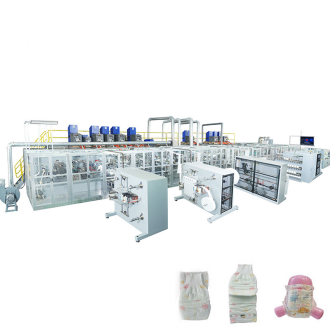
Modern diaper design is a delicate interplay of material science and fluid dynamics. The core challenge lies in creating a product that locks away moisture instantly while remaining whisper-thin against a baby's skin. This is achieved through a layered architecture: a soft, hydrophobic top sheet channels liquid inward, where it meets a blend of superabsorbent polymers and fluff pulp. The superabsorbent particles—often cross-linked sodium polyacrylate—swell into a gel upon contact, trapping fluid even under pressure. Meanwhile, strategically placed acquisition layers distribute moisture evenly, preventing sagging and ensuring a dry surface feel.
Beyond absorption, structural integrity is paramount. Engineers employ ultrasonic bonding to weld layers without adhesives, reducing bulk and potential skin irritants. Elasticized leg cuffs and stretchable back panels are crafted from spandex-blown films that maintain elasticity over hours of movement. Breathable backsheets made from microporous polyethylene let heat and humidity escape while holding liquid in, striking a balance between comfort and leak protection. Every seam and fold is tested under dynamic conditions that mimic a crawling baby, refining the fit down to millimeter tolerances.
The real magic happens in the lab, where moisture-wicking rates and absorption speeds are measured with precision robotics. Manufacturers simulate wetness using synthetic urine at varying flow rates, analyzing how the diaper redistributes fluid across its core. Advanced CFD models predict gel blocking—a phenomenon where swollen polymer clumps hinder further absorption—and guide the spacing of polymer granules. The result is an engineering feat that can hold many times its weight in liquid, yet feels almost intangible to the touch, redefining what a diaper can be.
Sustainable Manufacturing: Reducing Waste Without Compromise
Reducing waste in manufacturing often conjures images of cutting corners, but true sustainability demands a different path. It’s about rethinking processes from the ground up—not just swapping materials, but redesigning products to use fewer resources while enhancing durability. For instance, some companies are adopting modular designs that allow individual components to be replaced or upgraded, slashing the need for full product teardowns. This approach preserves quality and performance, proving that waste reduction and excellence can coexist.
Digital tools are playing a quiet but powerful role in this shift. Real-time monitoring systems catch inefficiencies humans might miss, like a machine using more energy than necessary or a slight miscalibration that leads to material scrap. By tapping into data analytics, manufacturers can forecast demand more precisely, avoiding overproduction—a major source of waste that often gets overlooked. The result is a leaner operation that doesn’t sacrifice output standards, just the excess.
Partnerships across the supply chain are also reshaping the landscape. Instead of treating waste as an afterthought, companies are collaborating with suppliers to create closed-loop systems where offcuts or byproducts from one process become raw materials for another. A textile factory might send its fabric scraps to a packaging producer, for example. Such synergies require creative thinking and trust, but they turn potential landfill into ongoing value—keeping quality intact while shrinking the environmental footprint.
Smart Automation: The Future of Hygienic Product Assembly
Picture a production floor where machines don't just execute commands but actually sense and adapt. That's where hygienic product assembly is headed. Advanced robotics, coupled with real-time sensor arrays, now handle delicate materials like nonwovens and superabsorbents with a kind of intuition. They adjust force, speed, and positioning on the fly—whether the task is layering a diaper core or wrapping medical gauze—which drastically reduces waste and ensures each item meets precision specs without constant human tinkering.
Beyond the physical build, smart systems connect every stage of assembly into a single, transparent workflow. Data streams from ultrasonic welders, vision checkpoints, and packaging units feed into a central brain that spots anomalies the moment they crop up. This means a subtle variation in a seal or a slight misalignment triggers an instant correction, not hours later during quality audits. Operators get clear, actionable alerts rather than cryptic error codes, turning troubleshooting into a quick nudge rather than a headache.
What's often overlooked is how automation changes the human role for the better. Instead of repetitive, injury-prone tasks, workers oversee multiple lines from an iPad, dig into performance analytics, and fine-tune recipes for new product variants without writing a single line of code. The factory becomes a place where creativity and oversight go hand in hand, and where a new size of feminine pad or a different type of surgical drape can be introduced in hours rather than days. It's not about replacing people—it's about giving them the tools to work smarter.
Custom Solutions for Diverse Global Market Needs
Every market speaks its own language, not just linguistically but in consumer habits, regulatory landscapes, and cultural expectations. Off-the-shelf approaches rarely bridge these gaps effectively. We dig into local nuances to shape solutions that feel native to each region—whether that means adapting product dimensions to fit smaller retail spaces in Tokyo or integrating preferred payment gateways for bustling street markets in Lagos. Our process starts with listening, not prescribing, so the final output aligns seamlessly with how people actually live and work.
Flexibility sits at the core of our development cycle. Instead of forcing a one-size-fits-all model, we build modular frameworks that accommodate regional variations without reinventing the wheel every time. A European client’s strict GDPR requirements can coexist with an Asian partner’s need for super-app integrations, all within a single cohesive system. This adaptive design eliminates costly rework and speeds up deployments, giving you the ability to pivot quickly when new trends emerge or unexpected regulatory shifts happen.
The real measure of a tailored solution isn’t just in its launch metrics but in the everyday ease it creates for its users. When a delivery driver in Mumbai can navigate your app intuitively under monsoon rains, or a boutique owner in Medellín can manage inventory without internet access, the design has done its job. We obsess over those small, often overlooked interactions—the friction points that generic solutions miss—turning them into moments of reliability. And as your footprint grows, the architecture stretches naturally with it, shaped by ongoing feedback loops that keep the human at the center.
Quality Control Systems That Guarantee Every Diaper’s Performance
From raw material intake to the final package, our quality control systems monitor every detail that affects a diaper's performance. We start by testing the absorbent core, elastics, and outer fabrics in our on-site lab, rejecting any batch that doesn't meet strict tension and fluid-holding benchmarks. Real-time sensors on the production line then track bonding strength and alignment, instantly flagging deviations before they become defects.
Statistical process control charts guide our operators, but it's the hands-on checks that really make the difference. Every hour, samples are pulled for physical tests—stretching the waistbands, pouring saline into the core, rubbing the inner layer to ensure it stays soft. These aren't just checkbox routines; the team discusses what they see, adjusting heat settings or adhesive spreads right away if something feels off.
Finished diapers go through one more hurdle: a random survival test where we simulate a baby's movements—twisting, sitting, crawling—while measuring leakage and shape retention. Only batches that pass this dynamic trial get shipped. This loop of digital data and human judgment keeps consistency tight, so every single diaper performs exactly as promised, without surprises.
FAQ
Instead of just selling equipment, they work closely with manufacturers to design lines that fit specific production goals. Their engineers regularly visit sites to tweak machine settings for local materials, which isn't common in this space.
They offer compact, modular machines that can start with as little as 50 diapers per minute and scale up. This lower entry barrier has let regional brands in Southeast Asia and Africa launch without massive upfront investment.
Yes, and that's been a focus lately. They redesigned the tension control and adhesive systems to run bamboo fiber, plant-based backsheets, and thinner cores—materials that used to tear or clog older equipment.
Sensors track everything from humidity in the fluff pulp to bond strength, and the system flags deviations before they create waste. One plant cut scrap rates by about 7% just from reacting to those alerts in real time.
A South American customer struggled with absorbent core shifting at high speed. The factory developed a vacuum-assisted forming drum that stabilized the core even at 800 pieces per minute, which became a standard feature later.
They built simple touchscreen interfaces with animated guides, and their technicians stay on-site for the first two production weeks. Some factories run 24/7 within a month after installation, which surprises a lot of plant managers.
Instead of reactive repairs, they use a subscription model with remote monitoring. When a critical part nears end of life, a replacement gets shipped before anything breaks. It's not just selling machines, it's guaranteeing uptime.
Conclusion
At the core of global hygienic product manufacturing, a new benchmark in diaper production has emerged, driven by an unrelenting focus on efficiency and precision. By rethinking traditional workflows, our factory has achieved a seamless blend of speed and reliability that redefines what's possible on the production floor. Advanced engineering techniques allow us to create ultra-thin diapers with exceptional absorbency, employing multi-layer materials that lock away moisture instantly while keeping the wearer dry and comfortable. This is not simply about thinner products but about smart structural design that maximizes performance without adding bulk.
Sustainability is deeply woven into our operations—we’ve reduced waste through closed-loop material recovery and energy-conscious processes, all without sacrificing the high standards that families expect. At the same time, intelligent automation orchestrates every stage of assembly, from raw material handling to final packaging, minimizing human error and enabling real-time adjustments. Our modular machinery adapts effortlessly to diverse market requirements, whether for ultra-soft covers, extra-large sizes, or region-specific features, giving manufacturers the flexibility they need to serve local preferences. Behind it all, rigorous quality control systems analyze each diaper at critical checkpoints, using high-speed vision and sensor data to ensure consistent absorbency, fit, and integrity. The result is a factory ecosystem that doesn’t just build machines—it elevates the entire industry, setting a new global standard for speed, sustainability, and tailor-made excellence.
Contact Us
Contact Person: Jessie Lai
Email: [email protected]
Tel/WhatsApp: 86-188594442931
Website: https://www.wm-machinery.com