

Drying Machine Factory: How Modern Manufacturing Drives Industrial Efficiency
2026-06-11
Behind every crisp snack and perfectly preserved ingredient lies a critical step most overlook: drying. But not all drying processes are created equal. At MINGDE, our factory redefines industrial drying with advanced manufacturing that slashes energy waste and boosts throughput—without compromising product quality. Curious how the right machine can transform your production line from bottleneck to powerhouse? Let’s explore what truly drives efficiency in today’s competitive food industry.
The Hidden Role of Drying Technology in Streamlining Production Lines
Drying technology often operates behind the scenes, so its impact on production speed and consistency is easily missed. While many focus on the more visible stages like assembly or packaging, the drying step quietly shapes the entire workflow. It's not just about removing moisture—it’s about setting the rhythm for downstream operations.
A smart drying system does more than heat or air-blast materials. It adapts to different input conditions, keeping product quality steady without forcing the line to slow down. This flexibility prevents bottlenecks that can ripple through a plant, turning what could be a chokepoint into a seamless part of the process. Operators spend less time adjusting controls and more time optimizing overall throughput.
When drying is tightly woven into automation frameworks, it pulls its own weight in resource management. Heat recovery features, for example, cut energy use while maintaining throughput. Over the long haul, these savings compound, and the production line becomes less temperamental—handling shifts in material or output volume with minimal fuss. That kind of reliability only emerges when drying is designed as an integral link, not an afterthought.
Precision Engineering: How Smart Factories Redefine Moisture Control
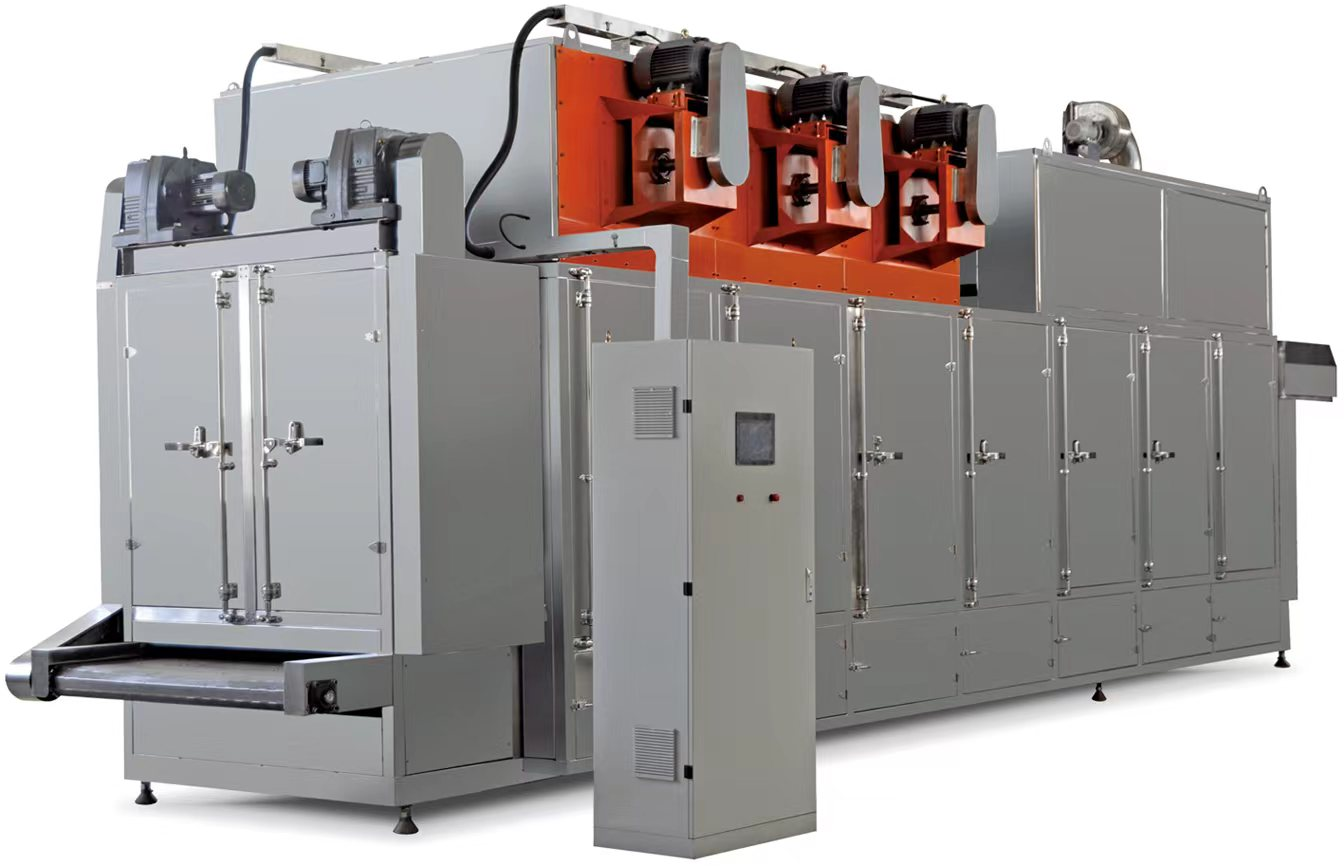
In smart factories, moisture control has evolved from a reactive adjustment to a proactive, precision-driven process. Embedded sensors continuously monitor humidity at multiple points along the production line, feeding real-time data into adaptive control systems. These systems don’t simply toggle dehumidifiers on and off; they analyze trends, anticipate fluctuations, and adjust airflow, temperature, and desiccant regeneration cycles in tandem. The result is an environment where moisture levels remain within a razor-thin tolerance, safeguarding materials that are sensitive to even minor changes—think pharmaceutical powders, lithium battery components, or microelectronic substrates.
What sets this approach apart is the integration of digital twins and machine learning. A digital replica of the physical humidity system runs simulations in parallel, testing thousands of “what-if” scenarios to optimize setpoints without disrupting actual production. Over time, the system learns the unique moisture behavior of each material batch, adjusting its strategy to account for ambient weather patterns, machine-generated heat, or even the hygroscopic nature of packaging materials. This level of granularity means that instead of a generic “dry room” standard, each zone in the factory gets a custom moisture profile that dynamically evolves.
Crucially, precision moisture control also feeds into broader sustainability and quality goals. By modulating energy-intensive dehumidification only when and where needed, factories cut power consumption dramatically while extending the lifespan of moisture-sensitive equipment. Defect rates drop because condensation, corrosion, or electrostatic discharge risks are practically eliminated. In high-stakes sectors like aerospace composites or advanced optics, this engineering finesse translates directly into higher yield and product reliability, proving that excellence in moisture management is a quiet but formidable competitive advantage.
From Energy Waste to Resource Optimization: The Evolution of Dryer Design
In the early days of dryer design, energy consumption was rarely a primary concern. Machines were built to simply blast heated air through tumbling clothes, often venting that warm, moisture-laden air straight outdoors. This approach wasted enormous amounts of thermal energy, and the crude timer-based controls had no way to sense when fabrics were actually dry, leading to over-drying that zapped even more power and wore out garments prematurely.
A quiet revolution began once manufacturers turned their attention to what they had been discarding. Heat pump dryers emerged, recycling hot air through a closed loop and turning moisture into water that could simply be drained away. Alongside this, sophisticated sensors started monitoring humidity and fabric temperature in real time, allowing the machine to stop precisely when drying was complete. These shifts redefined the dryer from a brute-force energy spender into a calculated system that tweaks every kilowatt for maximum effect.
The latest designs treat the dryer not as an isolated appliance but as part of a smarter home ecosystem. Integration with solar panels, time-of-use energy pricing, and even textile recognition through built-in cameras lets the device choose the gentlest, most efficient cycle automatically. What was once a predictable energy drain is now a dynamic node that can respond to both the clothes inside and the grid outside, proving that even the most mundane household tasks can become exercises in thoughtful resource management.
Customization at Scale: Tailoring Drying Solutions for Diverse Industries
Every production line has its own rhythm, and the materials that move through it bring unique drying challenges. A pharmaceutical powder demands gentle, precise moisture removal to safeguard its potency, while a food product requires strict hygiene and rapid throughput without compromising texture. Across sectors, from ceramics to chemicals, the “one-size-fits-all” dryer simply doesn’t exist. Instead, what works is a methodical translation of process needs into engineering parameters—residence time, airflow pattern, temperature profile, and material handling—shaped by real-world testing and deep domain insight.
True customization goes beyond tweaking a standard design. It often means starting with a blank sheet, combining modular components like fluid beds, spray nozzles, or belt conveyors into a configuration that respects both the material’s sensitivity and the plant’s footprint. For instance, a battery-material producer might need an inert atmosphere and ultra-low moisture endpoints; a distiller’s spent grain requires durability and energy recovery. By co-developing with clients, drying systems evolve into seamless extensions of their operations—achieving target moisture, preserving product quality, and fitting existing upstream and downstream equipment.
The real test of scaling customization lies in maintaining consistency from pilot batches to full production. It’s not uncommon to validate a process at lab scale and then replicate it across multiple identical lines in different geographies. This requires rigorous modeling, instrumentation that adapts to feedstock variations, and controls that keep critical parameters locked in despite fluctuating ambient conditions. When done right, tailored drying solutions become a quiet competitive advantage—reducing waste, energy use, and downtime while helping manufacturers bring novel products to market with confidence.
The Ripple Effect: Faster Drying, Leaner Inventories, and Just-in-Time Delivery
Fast drying processes do more than just shorten production cycles—they ripple through the entire supply chain. When materials dry faster, work-in-progress moves swiftly, reducing the need for large buffer stocks. This shift naturally leans out inventory levels, freeing up cash and space once tied up in semi-finished goods.
With fewer items sitting idle, manufacturers can embrace just-in-time delivery with greater confidence. Instead of building to stock and hoping demand aligns, they respond to actual orders in near real time. Suppliers adapt too, syncing smaller, more frequent shipments that keep everyone moving without the drag of surplus.
The combined effect transforms how factories operate. In place of rigid schedules and oversized batches, teams work with a smooth, pull-based rhythm. Rework drops because products spend less time exposed to shop-floor dust or handling damage. What begins as a simple improvement in drying speed can quietly reshape an entire production culture, making it more responsive and resilient.
Future-Proofing Manufacturing: Sustainable Practices in Drying Machine Innovation
The shift toward sustainable manufacturing has placed industrial drying processes under intense scrutiny. Conventional drying machines, while effective, often consume vast amounts of energy and rely on non-renewable resources. Innovators are now rethinking core designs—integrating heat recovery systems, hybrid energy sources, and advanced moisture-sensing controls—to drastically reduce carbon footprints without compromising throughput.
Material science plays a pivotal role in this transformation. For instance, new composite desiccants and hydrophilic coatings enable lower-temperature drying, preserving product quality while slashing energy demands. Additionally, manufacturers are exploring closed-loop systems that reclaim water vapor and repurpose latent heat, turning waste into a resource rather than an emission.
Beyond hardware, data-driven optimization is reshaping how drying operations are managed. Real-time analytics combined with predictive maintenance algorithms allow machines to self-adjust for humidity, load variance, and energy pricing, ensuring peak efficiency moment by moment. This marriage of sustainability and smart technology doesn’t just future-proof factories—it redefines what’s possible in lean, eco-conscious production.
FAQ
They lean heavily on integrated automation and real-time data monitoring, which slashes downtime and tightens production cycles. Older plants often relied on manual adjustments and isolated workstations, leading to bottlenecks and inconsistent output.
Techniques like laser cutting and robotic welding ensure tighter tolerances and uniform assembly. This eliminates many of the weak spots that used to crop up from hand-fabricated parts, giving the machines longer service lives and steadier performance.
Automation handles everything from raw material handling to final testing. Conveyors, pick-and-place units, and automated inspection cells keep the line moving without human lag, while also catching defects far earlier than manual checks ever could.
Even small misalignments in a dryer’s drum or airflow channels can cause uneven drying, wasted energy, or premature wear. Precision engineering locks in the exact geometries needed, so every batch comes out with consistent results and the machine runs within its design limits.
A lot of it comes from smarter factory layouts and energy-recovery systems. For instance, heat generated by welding stations might be repurposed for other stages, and motion-sensing lighting combined with variable-speed motors on machinery cut idle consumption dramatically.
Beyond standard dimensional checks, factories now use thermal imaging to spot hot spots in prototypes, vibration analysis during run-in tests, and accelerated life testing that simulates years of operation in days. This catches latent issues before a single unit ships.
Embedded sensors and IoT connectivity let dryers self-adjust heat and rotation based on moisture levels in the load. This shifts the design focus toward modular electronics bays and software-driven controls, making the machines both more adaptive and easier to service.
They accelerate throughput while using less power per cycle, and their predictive maintenance alerts prevent unexpected shutdowns on the factory floor. When a dryer can signal its own bearing wear two weeks ahead, the whole production schedule stays intact.
Conclusion
Drying machines, often overlooked, are pivotal in accelerating production across industries. Modern factories embed smart sensors and AI-driven controls to maintain precise moisture levels, eliminating the trial-and-error of older systems. This shift from energy-intensive, fixed-cycle dryers to adaptive designs not only slashes utility costs but also reclaims valuable floor space, turning what was once a bottleneck into a seamless stage of manufacturing. Engineers now prioritize closed-loop heat recovery and predictive maintenance, ensuring every kilowatt serves a purpose and downtime becomes a rarity.
Tailored solutions are equally critical, with manufacturers engineering dryers for niche applications—from delicate pharmaceuticals to rugged minerals—without sacrificing throughput. The downstream impact is dramatic: faster, more uniform drying shrinks work-in-progress buffers, enabling leaner inventories and reliable just-in-time deliveries. Looking ahead, factories are weaving sustainability into the fabric of machine design, using recyclable materials and zero-discharge systems to align with circular economy goals. In this way, the drying machine factory becomes a quiet engine of industrial agility, turning basic moisture removal into a strategic advantage.
Contact Us
Contact Person: LILY SUN
Email: [email protected]
Tel/WhatsApp: 0086-13969103791
Website: https://www.snackfoodmachinery.com/