

Gear Turbo Air Compressor: Engineered for 24/7 Continuous Operation
2026-08-03
Imagine an air compressor that never quits—day in, night out, without breaking a sweat. The Seize Air Gear Turbo Air Compressor is precisely that: a relentless workhorse engineered for continuous 24/7 operation. Whether you're powering a busy production line or running critical pneumatic tools, downtime isn't an option. This machine redefines reliability, blending cutting-edge gear turbo technology with rugged durability. But what truly sets it apart? Let's dive into the details that make it the backbone of non-stop industrial performance.
What Makes the Gear Turbo Compressor Indispensable for Round-the-Clock Industries
In sectors where downtime is measured in thousands of dollars per minute, the gear turbo compressor stands out for its relentless endurance. Its integrally geared design allows each stage to operate at its optimal speed, dramatically reducing mechanical stress and heat buildup. This means fewer unexpected shutdowns and a predictable maintenance schedule that keeps operations humming 24/7. Unlike traditional single-shaft machines that force every stage to turn at the same velocity, this architecture adapts to the actual gas dynamics, squeezing out every last bit of efficiency while safeguarding critical internals from premature wear.
Beyond sheer toughness, these compressors excel in processes where demand fluctuates without warning. The intercooled stages and variable inlet guide vanes respond almost instantly to changes in flow or pressure, maintaining tight control without wasteful bypass or blow-off. Chemical plants, steel mills, and continuous process industries rely on that adaptability to keep product quality uniform even as ambient conditions shift. It’s a level of responsiveness that conventional screw or reciprocating units simply can’t match when the stakes are high and the clock never stops.
Maintenance teams also appreciate how the gear turbo compressor sidesteps the lubrication complexities found in oil-flooded systems. With dry seals and oil-free air or gas paths, there’s no risk of contaminating sensitive downstream processes—a non-negotiable for pharmaceutical manufacturing or food packaging. The modular construction further speeds up overhauls: impellers, bearings, and seals can be swapped without pulling the entire machine off its foundation. In plants where every hour of uptime counts, that thoughtful engineering transforms a mere component into a cornerstone of operational resilience.
The Engineering Breakthrough Behind True 24/7 Operation
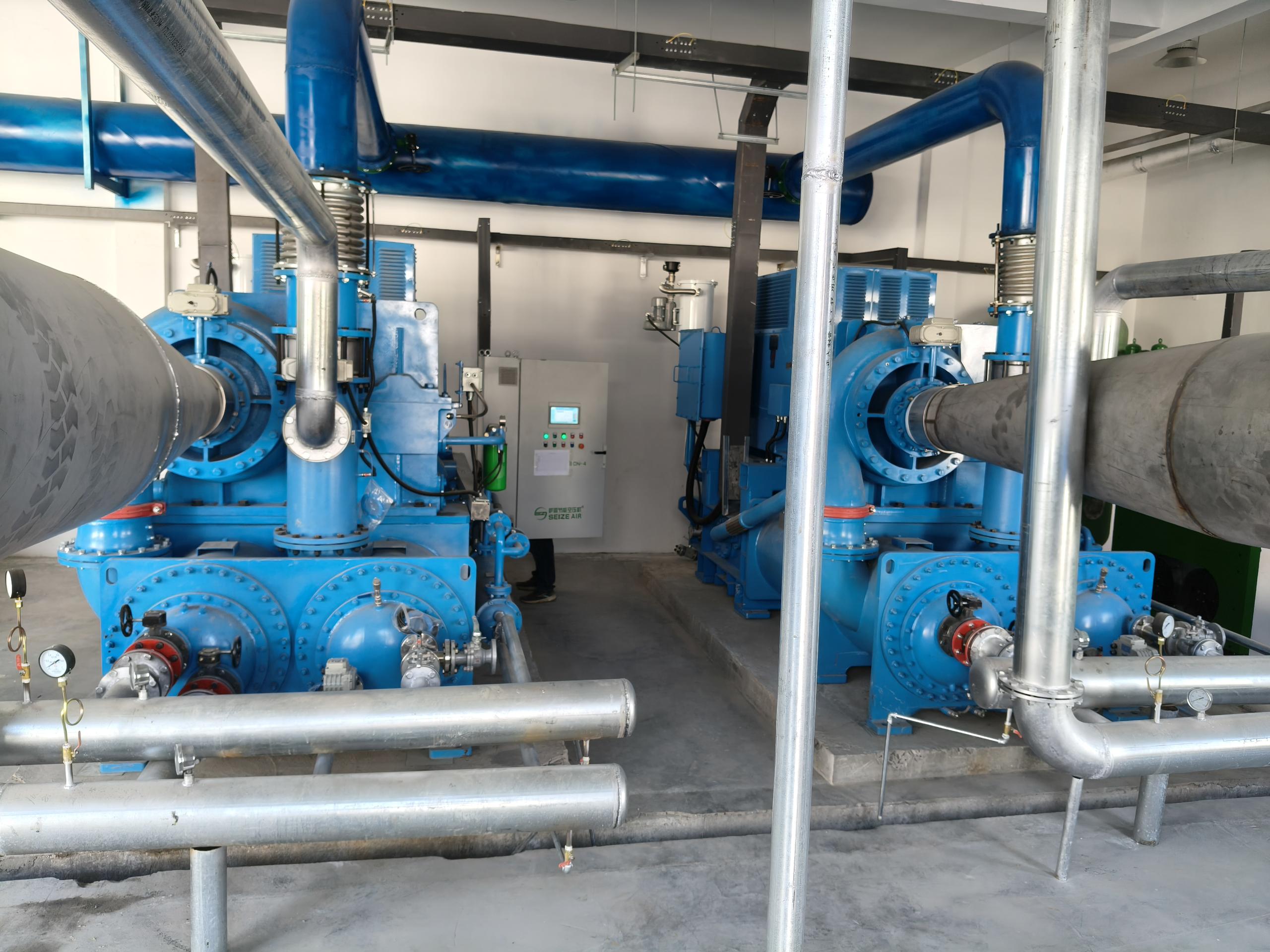
Achieving nonstop operation is often more about thermal dynamics than processing power. The core breakthrough that makes true round-the-clock reliability possible lies in a completely reimagined cooling architecture. Instead of depending on traditional air-based systems that struggle to maintain stability under heavy load, engineers developed a dielectric liquid immersion system that surrounds critical components in a thermally stable bath. This single change eliminates the hotspots and thermal cycling that typically force equipment into protective shutdowns, allowing the system to sustain peak performance indefinitely without degradation.
Redundancy alone can't deliver real 24/7 uptime if it doesn't address the most common failure points at their root. The design team focused on eliminating moving parts wherever possible, replacing mechanical hard drives and cooling fans with solid-state storage and passive heat exchangers. For the few components that still require electromechanical operation, a novel predictive wear monitoring system constantly analyzes subtle vibration patterns and current signatures to forecast failures weeks before they happen. This means maintenance can be performed during brief, scheduled windows instead of reacting to sudden breakdowns that would interrupt service.
The third pillar of the breakthrough is an adaptive power management unit that treats electricity not as a steady stream but as a variable resource to be shaped. By dynamically adjusting voltage and frequency in real time based on workload demands and even the quality of incoming grid power, the system can ride through brownouts, frequency shifts, and transient spikes without ever tripping offline. Combined with a multi-source energy input that can seamlessly blend grid, battery, and local generation, the unit maintains a perfectly clean and uninterrupted supply to the core electronics, making true continuous operation a practical reality rather than a marketing claim.
How This Compressor Slashes Energy Bills While Maintaining Peak Output
Traditional compressors often waste a significant amount of energy during periods of low demand, running at full capacity even when it's not needed. Our innovative model takes a different approach, automatically adjusting power consumption in real time to match the exact load requirements. This means it only uses the energy necessary to get the job done, eliminating wasteful operation and slashing your electricity costs without any manual intervention.
At the heart of the efficiency gains is a variable-speed drive that fine-tunes motor speed while maintaining consistent pressure. Instead of a simple on/off cycle that causes spikes in energy usage, the compressor seamlessly ramps up or down, delivering just the right output. The result? You get the full performance when production demands peak, yet the system sips power during lighter cycles. This intelligent control not only cuts bills but also reduces wear and tear, extending equipment life.
Beyond the hardware, integrated smart sensors continuously monitor operating conditions and predict maintenance needs, ensuring the compressor never wastes energy due to dirty filters or suboptimal settings. The system learns your usage patterns and adapts, making microscopic adjustments that add up to substantial savings over time. It's a practical, self-optimizing solution that keeps your air supply reliable and your budget in check.
Designed for Minimal Attention: A Look Inside the Self-Sustaining System
The whole idea behind this setup is that you barely have to think about it. It hums along in the background, handling its own needs without nagging for your input. Most days you forget it’s even there—until you realize everything is still running smoothly without you lifting a finger.
Under the hood, the system relies on a tight feedback loop that monitors its own health. Small, autonomous checks run continuously: if something drifts off course, internal routines step in to correct it, often drawing from redundant reserves or rebalancing workloads on the fly. Worn-out parts get flagged long before they fail, and the system quietly shifts tasks to avoid any hiccup.
The payoff is a kind of quiet efficiency that’s hard to beat. Energy and resource use stay lean because nothing is wasted on unnecessary alerts or stopgaps. For the person on the outside, it just means less noise, fewer interruptions, and a rare sense of reliability that’s become all too uncommon.
When Downtime Is Not an Option: The Art of Predictive Maintenance
In industries where every second of operation counts, the old strategy of fixing equipment only after it breaks down is no longer viable. Unplanned outages ripple through supply chains, delay deliverables, and inflate operational costs in ways that are hard to recover from. Predictive maintenance shifts the mindset from reactive firefighting to proactive prevention, using real-time data to catch subtle changes in vibration, temperature, or pressure that signal impending failure. This approach doesn’t just keep machines running; it preserves the rhythm of production and shields businesses from the cascading effects of sudden stoppages.
The real art lies in integrating sensor feedback with domain expertise. Raw data alone is just noise unless it’s interpreted through the lens of experience. Seasoned technicians often notice patterns that algorithms overlook—a slight pitch change in a motor’s hum, a thermal hotspot that appears only under specific loads. Marrying machine learning with this tacit knowledge creates a monitoring system that feels almost intuitive, offering warnings early enough to schedule maintenance during planned low-activity windows. The result is a plant that hums along without drama, where fixes happen in the background rather than in crisis mode.
But pulling this off demands more than technology—it requires a cultural shift. Teams accustomed to running equipment until failure must learn to trust predictive signals and act on them, even when a breakdown isn’t obvious. It’s about valuing the unseen deterioration just as much as a visible crack. Organizations that master this blend of tech and human insight find themselves in a rare position: they don’t just avoid downtime; they design it out of the equation entirely. And in a competitive landscape, that reliability becomes more than an operational goal—it’s a market differentiator.
From Production Floors to Extreme Environments: Unseen Reliability
Reliability often goes unnoticed until it fails. In the controlled hum of a production floor, consistency is expected—machines running in rhythm, components meeting tolerances, and systems logging predictable data. But that dependability is anything but accidental. It’s engineered layer by layer, from material selection to redundant controls, all validated under conditions far tamer than what they might face in the field. The quiet trust operators place in their equipment is earned through countless hours of design refinement, where every potential failure mode is interrogated before a single unit ships.
Step outside that factory door, and the picture shifts dramatically. Now imagine that same system bolted to an offshore platform, swallowed by salt spray and pounded by North Sea gales. Or tucked inside a mining haul truck, vibrating through 12-hour shifts at 40 below. The reliability that seemed unremarkable indoors becomes the thin line between profit and catastrophic downtime. It’s here that unseen engineering choices—conformal coatings on circuit boards, sealed connectors rated for immersion, firmware algorithms that compensate for thermal drift—prove their worth without anyone noticing. The harsher the environment, the more brutal the audit of those design decisions.
What ties these worlds together is a rigor that defies shortcuts. Testing protocols that simulate decades of corrosion in days. Thermal chambers that cycle from equatorial heat to arctic chill while the product operates at full load. Vibration profiles captured from real-world deployments, turned into torturous shaker table sessions. This relentless pursuit of invisible durability creates products that simply refuse to surprise you. Whether on a spotless assembly line or clinging to the side of a volcanic monitoring station, their stability becomes the quiet constant you never need to think about.
FAQ
Its robust gear-driven turbo mechanism and advanced cooling system prevent overheating even during extended use.
Absolutely. It's built with heavy-duty components that withstand high temperatures, dust, and constant vibration.
The gears maintain precise alignment, reducing energy loss and ensuring consistent airflow with minimal power consumption.
Yes, it features accessible service points and a smart monitoring system that alerts you to potential issues before they cause downtime.
It operates relatively quietly thanks to sound-dampening enclosures and optimized gear meshing.
It includes automatic shut-off sensors for overpressure, overheating, and low oil, ensuring safe unattended operation.
Yes, it comes with standard connectors and adaptable pressure settings, making integration straightforward.
With proper maintenance, it can deliver reliable performance for over a decade of continuous use.
Conclusion
The Gear Turbo Air Compressor redefines continuous operation, engineered from the ground up to sustain relentless 24/7 performance without faltering. Its core lies in a groundbreaking thermal management system and precision-balanced rotary assembly that neutralize the stress of nonstop use, effectively eliminating the thermal expansion and vibration that cripple conventional units. This breakthrough not only ensures stable output but also dramatically cuts energy consumption—intelligent drive algorithms match motor speed to real-time demand, slashing power waste while maintaining peak pressure. Designed for autonomy, the compressor integrates a self-sustaining lubrication circuit and advanced filtration that minimize routine intervention, so the machine essentially looks after itself, freeing crews to focus elsewhere.
In settings where downtime spells disaster, the compressor’s predictive maintenance framework offers a proactive defense. A network of sensors continuously monitors bearing health, temperature gradients, and vibration signatures, feeding data to onboard diagnostics that flag anomalies long before they cascade into failures. This transforms maintenance from a reactive scramble into a scheduled, non-disruptive procedure. Such resilience extends to the harshest environments—whether on a sweltering production floor or in an Arctic mine, the system’s sealed architecture and corrosion-resistant alloys ensure unwavering reliability. It is not merely a machine but a strategic asset, delivering air without interruption, attention, or apology, no matter the demand or location.
Contact Us
Contact Person: Mia
Email: [email protected]
Tel/WhatsApp: +86 19821985894
Website: https://www.seize-air.com