

How Electric Vehicle Charger Factories Are Powering the Future of Sustainable Mobility
2026-11-16
Every electric vehicle on the road owes its silent, clean momentum to a network of charging stations that most drivers never think twice about. Behind those stations is a quiet revolution in manufacturing, where speed, precision, and sustainability converge. At the center of this shift, BEILIN is reengineering how EV charger factories operate—turning them into agile, high-output hubs that don’t just meet demand but actively shape the future of mobility. This is the untold story of the hardware making the electric dream viable, and why the factory floor matters more than ever.
Inside the Assembly Lines Driving the EV Revolution
Walk into a modern EV assembly hall and the first thing that feels off is the silence. The deafening roar of internal combustion engine testing has been replaced by the low hum of conveyor belts and the precise click of robotic arms. Instead of exhaust extraction systems snaking down from the ceiling, you'll spot technicians quietly marrying battery packs to skateboard platforms—a process that looks more like precision surgery than traditional auto manufacturing. The line moves at a different rhythm, too; without the weight and complexity of an engine and transmission to install at a single station, the workflow breaks into smaller, more modular tasks that often happen in parallel rather than in a rigid sequence.
Beneath that quiet surface, though, the data is screaming. Every torque wrench, dispensing valve, and alignment jig is networked, feeding live measurements into a digital twin of the vehicle being built. A slight temperature variation during battery module bonding or a micron-level deviation in body panel fit isn't caught after the car leaves the line—it's flagged instantly, sometimes even before the next component arrives. This constant feedback loop lets engineers adjust machine parameters on the fly, but it also creates a new kind of manufacturing culture where line operators act less like assembly workers and more like system monitors, trained to interpret dashboards and anticipate failures rather than simply repeating tasks.
Yet the real shift isn't all high-tech. It's physical. The floor space once dominated by fuel tank installation and exhaust routing now houses enormous battery conveyor systems and dedicated “marriage stations” where the body is lowered onto the pre-assembled electric drive unit in one choreographed motion. Retooling isn't just about swapping components; it's about rethinking material flow from the ground up. Some plants have turned former engine machining areas into cleanrooms for stator winding or cell-to-pack assembly—spaces that demand a level of dust and humidity control the old building never imagined. This quiet, rewired landscape tells the real story of the EV transition: it's not just about swapping a powertrain, but about reinventing the very logic of how a car comes together.
Where Smart Manufacturing Meets Clean Transport Ambitions
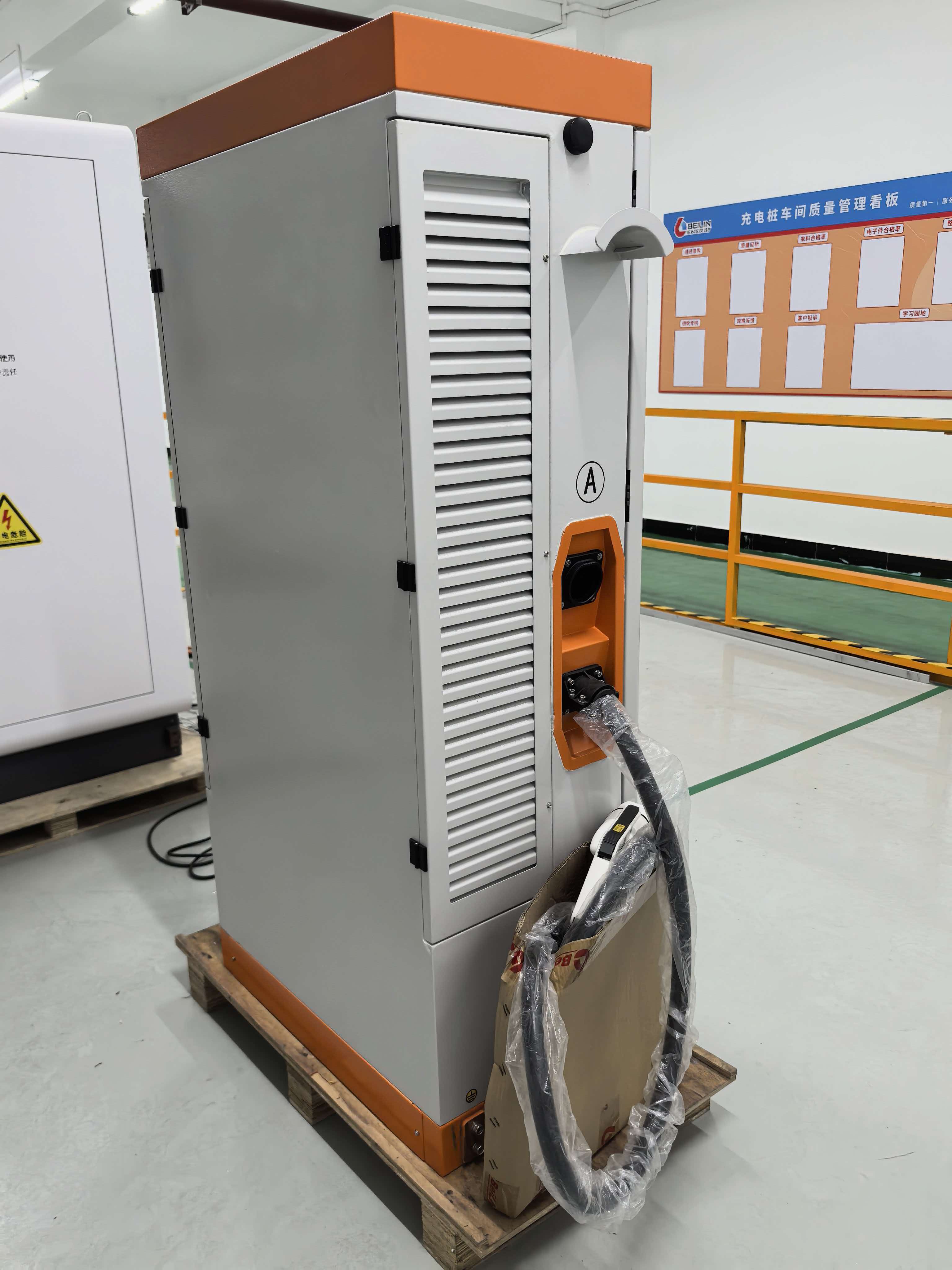
The hum of automated assembly lines now syncs with the silent torque of next-gen electric drivetrains. Factories once defined by robotic arms welding steel chassis have evolved into digital orchestration hubs, where real-time sensor data from gigafactories fine-tunes battery module placement with micron-level precision. This isn't just automotive production—it's a closed-loop intelligence ecosystem that ensures every zero-emission vehicle rolling off the line carries the embedded efficiency of its own manufacturing DNA.
The convergence goes deeper than machinery. Advanced analytics pulled from smart production cells feed directly into vehicle design, enabling lighter, more energy-dense battery packs and powertrains that learn from their own assembly anomalies. When a connected factory detects a micro-variance in motor winding tension, it doesn’t just flag a defect—it triggers an adaptive ripple back through the supply chain, recalibrating material specifications for the entire clean transport fleet. This seamless feedback loop makes sustainable mobility smarter at its source, not just at the tailpipe.
What truly sets this fusion apart is the shared ambition of clean, autonomous progress. The same edge-computing infrastructure that prevents thermal runaway in a freshly assembled battery module also optimizes the charging curve for a fleet of electric buses in Oslo. The very digital thread that ensures traceability of cobalt-free cells winds its way into lifecycle carbon accounting, making every vehicle a testament to transparent, responsible innovation. Here, the factory floor and the open road are no longer distinct chapters; they’re consecutive sentences in the same story of industry decarbonized.
Scaling Production Without Sacrificing Grid Stability
Ramping up manufacturing output often feels like walking a tightrope between meeting demand and keeping the electrical infrastructure from buckling. The real trick isn't just adding more solar panels or battery racks—it's designing production rhythms that sync with grid availability rather than fighting against it. Some of the smartest factories now stagger their most energy-hungry processes to coincide with off-peak hours, using real-time price signals and on-site storage to decouple production schedules from the grid's stress points. This shift turns energy from a fixed cost into a flexible lever, letting you pull more product through the line without ever having to explain a brownout to the local utility.
Beyond scheduling gymnastics, the hardware itself is quietly transforming. Modern manufacturing lines are being equipped with adaptive power management systems that can shed non-essential loads in milliseconds when frequency dips, then gently ramp back up without tripping protective relays. It's the difference between a sudden brake slam that jolts the entire grid and a smooth, almost unnoticeable deceleration. Combined with bidirectional EV fleets that double as mobile battery buffers, these setups create a production environment where energy scarcity is engineered out of the equation. You scale because you've built a microcosm that manages its own breathing room, not because you're hoping the wires outside can keep up.
The conversation is finally shifting from 'renewable enough' to 'smart enough.' It's not about how many megawatts you can consume, but how deftly you can dance between load and supply without stepping on anyone's toes. The facilities getting this right treat grid stability as a design parameter from day one, embedding flexibility into everything from motor drives to HVAC sequencing. The result is a kind of operational stealth: production volumes climb, yet the grid sees a calmer, more predictable partner on the other end of the line.
The Material Science Breakthroughs Reshaping Charger Design
The shift from silicon to wide-bandgap semiconductors like gallium nitride (GaN) and silicon carbide (SiC) has flipped charger architecture on its head. These materials can handle far higher voltages and switching frequencies with minimal energy loss, allowing engineers to strip away bulky heat sinks and shrink components to a fraction of their old footprint. A 65W GaN charger now slips into a shirt pocket while running cooler than its clunky silicon ancestor did at half the wattage—more of a quiet physics hack than a simple upgrade.
Thermal interface materials and nanocomposite encapsulation are quietly solving the heat bottleneck that once forced chargers into brick-like proportions. Instead of relying on passive metal spreaders, designers now use graphene-enhanced films and phase-change materials to draw heat outward and dissipate it almost instantly. The result is not just compactness but a surprising reliability: fewer hot spots mean electrolytic capacitors last years longer, letting everyday chargers survive stuffed in laptop bags or buried under cushions without slowly cooking themselves to death.
From Local Workshops to Global Charging Networks
It starts in a cramped garage, a shared fabrication space, or even a university lab — a handful of engineers soldering circuit boards, tweaking firmware, and rethinking how power flows into electric vehicles. In these early days, the focus isn’t on scale but on stubborn problem-solving. Prototypes are hand-built, software is patched overnight, and every successful charge feels like a minor miracle. The team learns fast, breaking things and rebuilding them, their ambitions far larger than the workshop’s rented square footage.
Soon, the small workshop becomes a node in a wider — and wilder — network. Partnerships with energy providers and automotive brands start to form, sometimes over email, sometimes over coffee at industry meetups. Charging stations pop up in unexpected places: a repurposed parking lot in Lisbon, a solar canopy in Nairobi, a highway rest stop in Thailand. Each installation brings new lessons in grid compatibility, weatherproofing, payment systems, and user behavior. The technology evolves from a clever box on a wall into a connected platform, where software updates roll out across continents and usage data quietly reshapes the hardware design.
Before long, those scattered pilots harden into a transnational backbone. Manufacturing scales from dozens of units to hundreds of thousands, and the supply chain stretches from Shenzhen to Stuttgart. Quality control becomes as vital as innovation. What once seemed like a patchwork of independent projects now hums as a cohesive charging network, silently delivering energy in dozens of countries, balancing loads in real time, and welcoming millions of drivers into an increasingly electric world — all traced back to that first cramped space where it all began.
Rethinking Factory Logistics for a Circular Energy Ecosystem
The shift toward a circular energy ecosystem demands that factory logistics move beyond linear models of raw material intake and waste disposal. Instead of simply routing components to assembly lines, logistics networks must now orchestrate the continuous recovery, refurbishment, and reintegration of energy assets like battery modules, power electronics, and rare-earth magnets. This means warehouses become sorting and diagnostic hubs, forklifts transport end-of-life products back into the value stream, and inventory systems track not just new parts but the remaining service life and carbon handprint of every returned unit. The physical layout of a plant evolves to host reverse-flow lanes, modular disassembly stations, and buffer zones where second-life components wait for new assignments—turning the factory floor into a living loop rather than a one-way conveyor.
FAQ
From precise circuit board assembly to the molding of rugged enclosures, the factory combines automated robotic welding with skilled technician calibration to ensure each charging unit operates reliably in extreme weather.
They do more than just assemble hardware; they are driving the energy transition. By localizing production to cut emissions from parts shipping and adopting smart energy management systems, the facilities themselves become microgrids, using rooftop solar to power assembly lines.
Balancing thermal management with power density. Engineers must design structures that can deliver high power continuously without overheating, which requires repeated testing through fluid dynamics simulations and novel heat-dissipation materials.
Through a modular platform design. The same production line can swiftly switch to manufacture variants compliant with CHAdeMO, CCS, or GB/T standards, with firmware customized and flashed according to regional requirements.
They have established joint inventory monitoring with semiconductor partners, locked in capacity for critical IGBTs and silicon carbide wafers well in advance, and even developed in-house control chips to reduce dependency on specific suppliers.
They handle anomaly resolution and quality arbitration. While robotic arms work around the clock, when the visual inspection system flags a potential defect, an experienced technician steps in to decide whether to rework or scrap the unit.
Conclusion
Electric vehicle charger factories are no longer just assembly points; they are the nerve centers where the EV revolution gains its momentum. Walking through modern production halls, you witness more than robots piecing together circuit boards and power modules—there is a quiet calibration happening between hardware precision and cleaner transport dreams. Material breakthroughs are quietly reshaping the units themselves, replacing rare or brittle components with gallium nitride semiconductors and recycled-copper windings that deliver faster charging and longer lifespans. These advancements flow directly from laboratories onto the line, turning chargers into smart devices that can modulate their own power draw, ease stress on grids, and even talk to vehicle batteries in real time. It’s a shift from building simple dispensers to engineering adaptive energy gateways.
\nBut the real story unfolds when these devices leave the factory floor. Scaling output has forced manufacturers to rethink almost everything—from on-site energy storage that buffers production spikes and keeps the local grid stable, to logistics networks that treat end-of-life charger parts not as waste but as raw materials for the next cycle. What began in cramped local workshops has sprawled into globally connected supply chains, yet the best factories are quietly reversing that sprawl. They co-locate refurbishment and recycling hubs, use predictive analytics to steer shipments, and design packaging that folds back into the assembly loop. The charger that arrives at a highway station or a city parking lot is not just a product; it is a node in a closed-loop system. That’s how these factories are quietly powering sustainable mobility—not only by building equipment, but by reshaping the industrial metabolism that sustains it.
Contact Us
Contact Person: Jason
Email: [email protected]
Tel/WhatsApp: 8615876017548
Website: https://www.bei-lin.com/