

Inside a Fusion Splicer Factory: Precision Manufacturing Insights
2026-08-04
Step into the world of fusion splicing, where hair-thin optical fibers meet microscopic precision—a realm where every micron counts. At the heart of this technology lies a manufacturing process that blends artistry with engineering rigor. Recently, we went behind the scenes at a state-of-the-art facility to uncover how DVP crafts its renowned splicers, transforming raw components into instruments that reliably connect the world’s data highways. From climate-controlled cleanrooms to automated alignment systems, the journey reveals a fascinating fusion of innovation and quality control that sets new industry benchmarks.
The Cleanroom Ballet: Where Dust Particles Are Public Enemy Number One
Inside a cleanroom, every movement is choreographed with the precision of a ballet dancer. Technicians glide across the floor in full bunny suits, their steps deliberate and slow, because even a brisk walk can stir up an invisible blizzard of contaminants. The air itself is constantly filtered, exchanging hundreds of times per hour, yet a single flake of dead skin or a stray eyelash can bring a multi-million-dollar production to a grinding halt. It’s a world where the tiniest speck—invisible to the naked eye—holds the power to ruin semiconductor wafers or contaminate sterile pharmaceuticals.
The irony is palpable: these are spaces designed to be the cleanest on Earth, yet they’re teeming with human presence, the very source of most particulates. Every glove snap, every careful turn of a screwdriver is executed with a heightened awareness of the enemy lurking on every surface and in every breath. Workers train for months to master the art of moving without disrupting the laminar flow, a silent river of purified air that sweeps particles away from sensitive zones. It’s less about fighting dust and more about coexisting with it in a carefully orchestrated truce, where one wrong move could breach the delicate equilibrium.
What makes this environment so fascinating is how it transforms ordinary tasks into high-stakes rituals. Wiping down a tool isn’t just cleaning—it’s a methodical dance of pre-saturated wipes and validated solutions. Even entering the space requires a ritual of successive gowning stages, each designed to shed another layer of contamination from the outside world. In the cleanroom, the true product isn’t just the microchip or the vial of medicine—it’s the absence of disorder, a silent testimony to human discipline against the relentless chaos of the natural world.
Micron-Level Alchemy: How Core Alignment Defines Performance
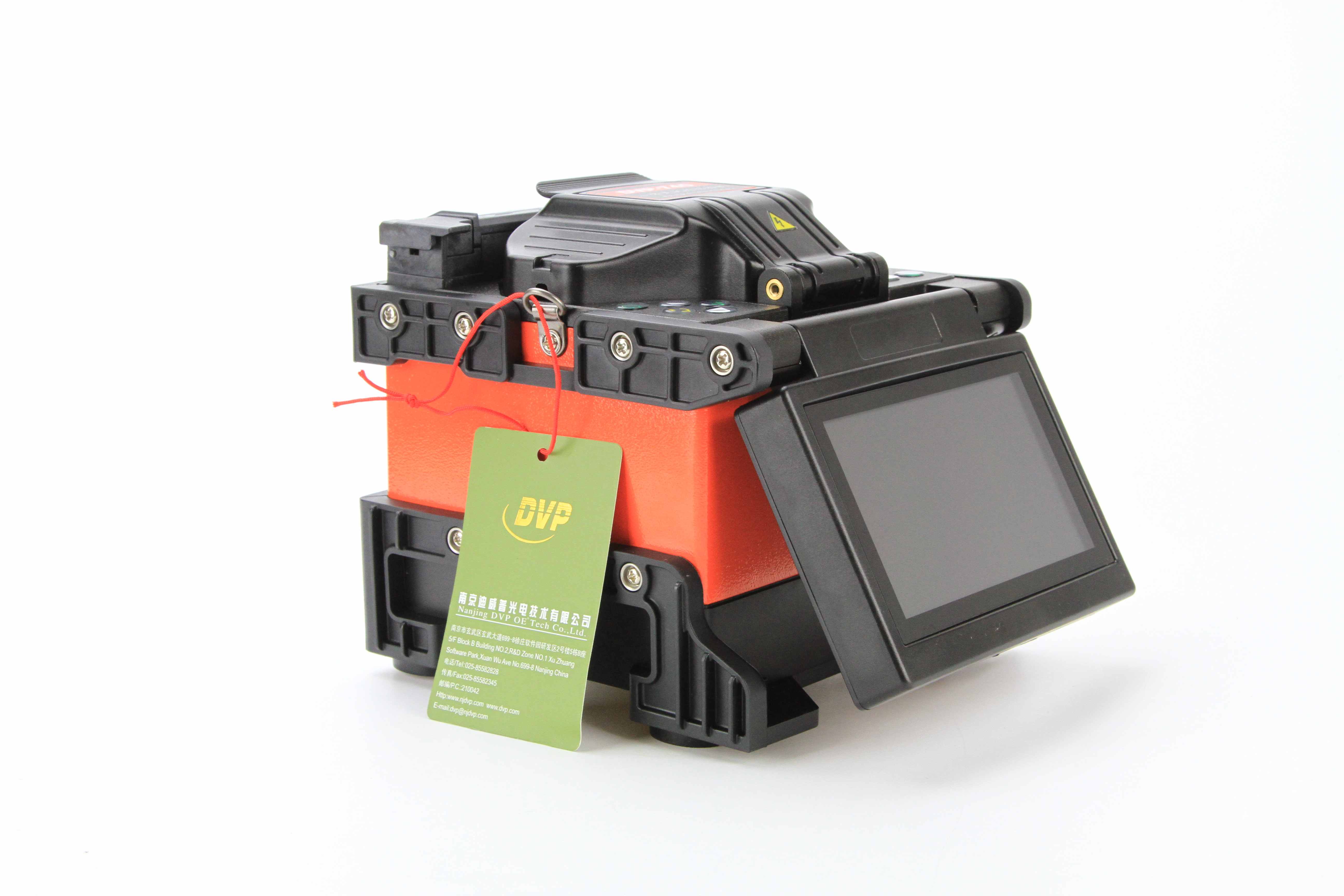
Precision at the micron scale is not just engineering—it’s a modern form of alchemy. When two cores are aligned to tolerances smaller than a human hair, the ordinary becomes extraordinary. Light flows without scatter, electrons move with minimal resistance, and signals stay pristine. This hidden ritual transforms raw components into devices that define our connected world.
In fiber optics, core alignment is the silent gatekeeper of bandwidth. A single-mode fiber’s 9-micron core demands sub-micron matching to avoid insertion loss that can cripple a network. Even a 0.5-micron offset can slash signal power by half. The same rule governs laser coupling, where misalignment of a pump diode and crystal can turn a brilliant beam into a flicker. Performance lives or dies by this invisible seam.
Achieving such alignment is a dance of physics and ingenuity. Active alignment systems hunt for peak power using piezoelectric actuators, nudging components in nanometer steps. Passive techniques rely on etched V-grooves or lithographic markers, turning chaotic assembly into deterministic art. The latest breakthroughs pair computer vision with real-time feedback, letting machines “see” and correct for thermal drift. It’s a quiet revolution where microns become the currency of quality.
The Calibration Labyrinth: Ensuring Every Splice Meets Zero-Tolerance Standards
Walking the calibration labyrinth isn't a single check—it's a relentless procession of micro-adjustments. Each splice point gets interrogated by laser micrometers and vision systems that measure gap, alignment, and concentricity down to fractions of a micron. If a reading drifts by even a hair, the entire line pauses. There’s no averaging out a bad splice; zero tolerance means exactly that. Operators learn to read the subtle drift patterns on the monitors, catching a misalignment before the machine flags it. It’s a ritual where human intuition and machine precision merge, both refusing to blink.
What makes the labyrinth truly diabolical is its refusal to accept “close enough.” Splice after splice, the system compares real-time data against a golden reference stored from the initial certification run. Temperature swings, tool wear, even a whisper of dust can nudge a parameter outside its nanometer-wide corridor. When that happens, you don’t just recalibrate—you retrace your steps through the entire chain: feeder alignment, clamp pressure, arc timing. It’s a puzzle where each answer resets the question. The only way out is through, and the only badge of honor is a flawless log file with zero excursions.
A lot of people think zero-tolerance calibration means never making a mistake. It doesn’t. It means building a system so sensitive that mistakes announce themselves immediately, and then trusting that system completely. The labyrinth isn’t a barrier; it’s a mirror. Every splice that passes through it leaves a fingerprint of certainty. Over time, the team stops seeing it as a test and starts seeing it as the pulse of the line—a rhythm that, when respected, produces joints so perfect they disappear into the signal they’re meant to carry.
Robots with a Gentle Touch: Automated Assembly's Delicate Dance
The factory floor hums with a new kind of rhythm, one where brawn takes a backseat to finesse. Gone are the days of rigid, single-purpose machines slamming parts together. Today’s assembly robots are equipped with force-torque sensors and compliant grippers that allow them to feel their way through intricate tasks—snapping delicate clips, threading flexible cables, or meshing tiny gears without damage. It’s a ballet of precision, where a robot can adjust its pressure in real time, hesitating and retrying if a part isn’t seated just right, much like a human craftsman relying on tactile instinct.
This sensitivity is transforming industries that once viewed automation as too blunt an instrument. Consumer electronics, medical devices, and even luxury watchmaking now deploy these tender-handed machines. A robot might install a smartphone camera module, its fingers sensing the minuscule torsion required to avoid cracking the lens. Or it might guide a fragile catheter onto a connector, stopping at exactly the right insertion stop. The magic lies in adaptive algorithms that learn from each contact, creating a feedback loop where the robot becomes more perceptive over time, refining its touch with every cycle.
Behind this gentle revolution is a marriage of soft mechanics and intelligent control. End effectors mimic the squishy compliance of fingertips, while vision systems provide context, allowing the robot to approach from the correct angle. One memorable application involves assembling wind turbines—blades so precise that even a millimeter’s misalignment can cause vibration. The robot’s soft grip and force awareness ensure perfect alignment, reducing stress on the materials. It’s not just about speed; it’s about preserving the integrity of every piece, making automation a partner in craftsmanship rather than a mere replacement for muscle.
Stress-Testing Survival: Simulating Decades of Field Abuse in Hours
We wanted to answer a simple but brutal question: what happens when a product gets kicked around in the real world for twenty years? Instead of waiting two decades for an answer, we engineered a chamber that packs a lifetime of drops, dust storms, thermal shocks, and corrosive humidity into a single afternoon. It’s not just about passing a checklist of industry standards—those often miss the weird, unpredictable stress patterns that actual users create. Our approach mimics the chaos of a backpack tossed onto concrete a thousand times, the salt spray of a coastal commute, and the relentless vibration inside a delivery truck, all layered on top of each other simultaneously rather than one by one.
The real art is in knowing where to push beyond the obvious failure points. We don’t just cycle temperature from -40°F to 160°F; we ramp it violently and hold it at the most unstable transition phases, where materials expand and contract at different rates until something cracks internally months before it would in a static environment. Every test run uncovers a new failure fingerprint—a ribbon cable that fatigue-fails only when humidity is above 80%, a seal that loses integrity after a specific sequence of abrasion and UV exposure. These insights feed directly back into design revisions, turning what could be a warranty nightmare into a non-issue before the first unit ever ships.
Surprisingly, the most valuable data often comes from the unglamorous middle of the test, when nothing spectacular breaks but small drifts accumulate. A touchscreen that registers 0.2% fewer touches per million after moisture cycling, or a battery latch that requires 3% more force to engage after dust saturation—these micro-degradations tell us where a product will start feeling worn out long before it dies. By capturing that slow decay, we can engineer a durability curve that stays flat for years, not just a heroic performance on day one.
From Lab to Loop: The Innovation Pipeline Behind Next-Gen Splicers
Next-generation splicers don't emerge fully formed from a single eureka moment. They take shape in a feedback loop where lab prototypes meet the relentless demands of live networks. Early-stage concepts are stress-tested against real-world fiber geometries, splice-loss thresholds, and environmental extremes—often revealing gaps that pure simulation misses. It's in this gritty, iterative cycle that clever core alignment mechanisms and heater designs get refined into something field crews can actually rely on.
What keeps the pipeline flowing isn't just incremental tweaks, but a deliberate blurring of boundaries between R&D and deployment. Engineers embed with installation teams to watch splices go sideways in muddy trenches or snowbound cabinets. Those raw observations feed directly back into the next spin of the prototype, tightening everything from clamp ergonomics to the way the unit handles moisture. The result is a tool that feels less like a lab instrument and more like an extension of a technician’s instinct.
Under the hood, the real magic is a quiet convergence of materials science and software agility. Proprietary lens coatings reduce ghost reflections by an order of magnitude, while onboard diagnostics learn from millions of previous splices to predict weak points before a fiber ever goes dark. Together, these layers transform the splicer from a mere fusion machine into a proactive guardian of network integrity—one that evolves before the standards even catch up.
FAQ
A lot of people imagine a sterile, almost futuristic space, but in reality it’s more like a hybrid of a semiconductor cleanroom and a high-end watchmaker’s workshop. The air is tightly controlled for particles, humidity, and temperature because even a speck of dust can ruin alignment. Engineers in bunny suits spend more time on calibration and testing than on actual assembly.
Sub-micron precise, which is mind-bending. We’re talking about consistently aligning two glass cores that are thinner than a human hair, often to within 0.1 microns. That’s not just a tolerancing challenge; the factory has to compensate for thermal expansion from ambient light or someone walking too heavily on the floor.
The electrode assembly. Those tiny tungsten pins generate the high-voltage arc that melts the fiber, and any slight wear or contamination changes the arc’s shape and temperature. Getting them perfectly centered and conditioned so they last tens of thousands of splices without drifting is a brutal trial-and-error process that eats up most of the R&D budget.
We don’t just check if it makes a joint; we induce every real-world torture we can think of. The splicer is put through vibration tables, extreme temperature cycles, and even altitude chambers to simulate field use in the Himalayas or a desert. Then it has to repeatedly splice different fiber types—bend-insensitive, dispersion-shifted, ancient legacy fibers—and meet a loss spec of less than 0.01 dB every single time.
Surprisingly, the final assembly and fine-tuning are still heavy on human judgment. Robots handle the initial core alignment jigs and ceramic ferrule polishing, but the routing of delicate ribbon cables and the final calibration of the camera system rely on technicians who’ve been doing it for a decade. You can’t automate that kind of feel for a micrometer-level tweak.
It starts with a 20-minute gowning ritual, followed by a morning meeting where they review the previous day’s failure trends. Then it’s a mix of seated micro-soldering under a microscope, laser welding of housings, and hours of running calibration routines on a half-built unit while staring at interference fringes on a screen. It’s mentally draining—one wrong move and a $15,000 subassembly becomes scrap.
Because the factory isn’t just making a machine; it’s creating a portable optical laboratory. The lens systems, motors, and real-time image processing have to work flawlessly in a backpack of a cell tower climber. Every unit is effectively hand-tuned, and the rejection rate on key optical and motorized stages is shockingly high—sometimes 30% don’t make it past the final stress test.
There’s a quiet push toward integrating AI that doesn’t just match fibers by image but predicts splice loss from micro-defects in the cleave before the arc fires. Also, factories are experimenting with ultrasonic cleaning of electrodes mid-cycle, which would make splicers truly maintenance-free in the field. But the real holy grail is automating the heat-shrink oven protection sleeve positioning without adding half a second to the cycle time.
Conclusion
Step inside a fusion splicer factory and you enter a world where contamination is the ultimate adversary. Workers glide through pressurized cleanrooms in full bunny suits, every motion choreographed to keep sub-micron particles at bay—because even a single speck can ruin a splice. At the heart of production lies core alignment, a sub-micron alchemy performed by optical systems that peer into the glass fiber, adjusting position with nanometer precision. This is followed by a calibration labyrinth where each machine is tortured and tweaked, its arc power and alignment tested against unforgiving zero-tolerance standards until every splice is flawless.
Automated assembly robots with force-feedback delicacy piece together hundreds of components, mimicking the touch of a seasoned technician. Completed splicers then face brutal stress tests: they are shaken, baked, frozen, and dropped to simulate decades of field abuse in just hours. This relentless pursuit of reliability is fueled by an innovation pipeline that runs from laboratory breakthroughs to real-world loop deployments, ensuring each new generation of splicers not only meets today’s demands but anticipates the networks of tomorrow.
Contact Us
Contact Person: Mr XU
Email: [email protected]
Tel/WhatsApp: 86-25-85582828
Website: https://www.dvp.cn/en/