

LED Fog Light Bulb Manufacturer: What to Look for in Quality and Performance
2026-09-03
Fog lights are only as good as the bulb behind them—and the manufacturer behind that bulb. If you've ever bought an LED fog light bulb that promised brilliance but faded after a few rainy nights, you already know why quality and performance matter more than a spec sheet. In this guide, we're cutting through the noise to show you exactly what separates a reliable supplier from a risky one, and how LUXFIGHTER builds fog light bulbs that actually hold up when the road gets murky.
Lumen Claims Are Easy, Consistent Output Over Time Is the Real Test
Many lighting products proudly advertise impressive lumen numbers, and on day one they can be blindingly bright. But that initial blast isn't the hard part. The real question is whether the fixture still delivers meaningful light after six months, two years, or five years of daily use. Heat, cheap drivers, and poor thermal management eat away at output long before the LED itself would naturally fade.
A lumen claim is a snapshot, not a promise. Without proper heatsinking and stable current regulation, output can drop dramatically within the first thousand hours. I've seen budget panels lose 20–30% of their brightness in a single season, while better-built units hold nearly flat. That gap doesn't show up on a spec sheet.
So when you compare lights, ignore the headline number for a moment and ask how the manufacturer backs up long-term consistency. Look for thermal design details, driver quality, and honest depreciation curves. A fixture that maintains 90% of its output at 10,000 hours is worth far more than one that starts brighter but fades fast.
The Heat Sink Story and Why Cheap Designs Fail Early
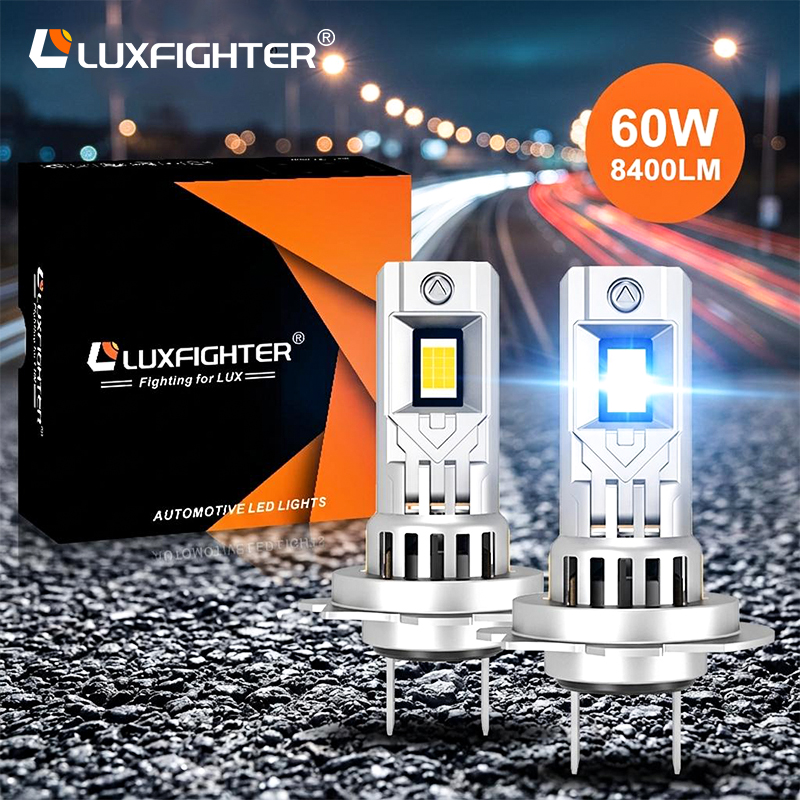
A heat sink looks like a dumb lump of metal, but its real job is to manage a moving gradient of thermal resistance. In a budget design, that gradient gets squeezed at the wrong places: the base is stamped thinner, the fins are spaced tighter than the airflow can reach, and the surface finish is left rough enough to trap microscopic air pockets. The result isn't a cooler that fails on day one—it's one that starts quietly losing headroom as soon as the first load cycle hits.
What actually kills cheap heat sinks early is the interface. Low-grade thermal paste dries into a chalky layer within months, and if the mounting pressure is uneven, the paste pumps out from the center toward the edges. Aluminum bases paired with copper heat pipes expand at different rates during repeated hot-cold swings; that mismatch slowly warps the base and loosens the screws. Once the contact pressure drops, the heat can't move across the boundary fast enough, and the same CPU that idled at 40°C now spikes past 90°C under ordinary workloads.
Cheap designs also tend to hide behind one impressive number in a review chart. A tall fin stack with a noisy fan will post a decent delta in an open test bench for ten minutes. But put it in a case with a dusty filter and a year of thermal cycling, and the story changes: fan bearings wear, dust clogs the tightly packed fins, and the degraded interface has to work against a film of oxidized metal. The failure isn't sudden, which is why it fools so many people. It looks like a thermal solution right up until the moment it isn't.
Beam Pattern and Color Temperature Need to Match OEM Behavior Not Marketing Hype
Aftermarket lighting often fails because manufacturers chase impressive numbers on a spec sheet instead of studying how the original lamp actually behaves on the road. A beam pattern is not just about lumen output or a clean cutoff line glowing against a garage door. It is about where the light falls at 200 meters, how the hot spot transitions into the foreground, and whether the edges of the beam create glare for oncoming traffic or leave dark holes in critical zones. The original equipment beam was tuned through thousands of hours of simulation and real-world testing to work with a specific reflector or projector. When a replacement bulb shifts the light source position by even a millimeter, the entire pattern collapses: you get bright patches close to the bumper, a weak center, and scattered light above the cutoff that looks bright but does not help you see. Color temperature is equally misused. A 6000K or 8000K bulb may look modern and aggressive in a parking lot, but it often reduces contrast on wet asphalt and increases eye strain over long drives. OEM systems typically stay between 4300K and 5000K for a reason: that range balances perceived brightness with actual visual acuity and keeps the beam color consistent with the reflector’s design. Marketing hype pushes bluer light because it photographs well, but a true upgrade means matching the OEM’s intended color point, not drifting away from it.
The real difference between a quality replacement and a downgrade shows up in how the light behaves in rain, fog, and uneven road surfaces. OEM beam patterns are deliberately asymmetric, with a lifted right-side cutoff in left-hand traffic countries or a stepped cutoff to illuminate road signs without blinding others. Many aftermarket bulbs destroy this asymmetry because their light emitting area is longer, shorter, or positioned differently. You end up with a beam that looks bright against a wall but throws a flat, unfocused wash on the highway. Worse, a bluer color temperature scatters more in moisture and haze, creating a wall of glare in front of the vehicle rather than penetration. If you are replacing a bulb, the goal should be to preserve the original beam’s shape and the original color temperature, not to “upgrade” to something that only looks impressive in a showroom photo. A true premium bulb is one that disappears into the housing and makes the driver forget it was ever changed, because the light behaves exactly as the vehicle’s engineers intended.
That is why the benchmark for any replacement lamp cannot be a lumen number or a color chart on the box. It must be a side-by-side comparison against a known good OEM bulb in the same housing, measured with a lux meter at multiple points on a standardized wall, and then verified on a dark road with real traffic. If the new beam has a sharper hot spot but the foreground is dimmer than OEM, that is not an upgrade. If the color temperature shifts from 4300K to 5500K, the beam may look whiter but you are losing the warm component that makes road markings and pedestrians stand out. The market is full of bulbs that promise “50% more light” while delivering a beam that is unusable beyond 50 meters. Matching OEM behavior is not boring; it is the only honest way to improve night driving without creating new hazards. When a bulb matches the original beam pattern and color temperature, the improvement is felt as reduced fatigue, better reaction time, and no glare complaints from other drivers. That is what real performance looks like.
Sealing Vibration and the Parts You Can't See
Most conversations about vibration control stop at what you can measure on the surface—bracket resonance, damping pads, or rubber isolators. But the real story happens inside the seal interface, where micro-movements between mating surfaces create energy that never shows up on a standard accelerometer. These hidden oscillations travel through seal lips, squeeze films, and even the trapped air pockets inside the groove. If you only tune the visible components, you're leaving the dominant noise source untouched.
Consider the elastomer itself. It's not a solid block; it behaves like a highly damped spring with internal friction that varies with temperature, compression set, and chemical exposure. When a shaft vibrates at just a few microns, the seal lip doesn't simply follow the motion—it sticks and slips in a cycle that generates its own high-frequency chatter. The parts you can't see include the microscopic wear debris accumulating under the lip, the uneven contact patch formed by installation misalignment, and the trapped gas bubbles that compress and expand like tiny pistons. Each of these quietly feeds energy back into the system.
A practical way to address the invisible side is to map the seal's dynamic stiffness under operating conditions, not just on a bench test. Change the groove geometry to reduce air entrapment, use a softer lip material with higher hysteresis to absorb micro-slip, or introduce a controlled leakage path that turns chaotic vibration into a steady film. The next time a machine fails a vibration audit, look past the obvious brackets and housings—the culprit may be hiding inside the seal, where no one thought to point a laser.
Certifications That Matter More Than a Logo on the Box
A real certification has teeth. It means an independent lab ran tests, not that a marketing team picked a nice color for a badge. Look for marks tied to specific standards, like UL for electrical safety or NSF for water filtration, where products are checked against measurable criteria and factories get regular audits.
Some logos exist because a company paid a membership fee or filled out a self-assessment. Those can be useful signals, but they rarely replace on-site inspections or sample-based performance testing. If you cannot find a public test report or a clear standard number behind the mark, it is probably just decoration.
The best certifications also have consequences for failure. They get revoked when a product changes formulation or a facility misses an audit. That ongoing accountability is what separates a badge with substance from a sticker that only boosts perceived value on a shelf.
When a Manufacturer's Warranty Actually Tells You Something
Most warranty booklets read like a list of excuses, but every so often the fine print reveals a manufacturer's own confidence level. When a company voluntarily covers something beyond the legal minimum—say, five years on electronics or a lifetime guarantee on a zipper—it's not generosity; it's a signal. They've already done the math on failure rates and decided the repair costs are worth the trust they'll earn. That's when a warranty stops being legal padding and starts telling you how the product was actually built.
A short warranty doesn't always mean a bad product, though. High-end tools often come with a single year because the expected user is a professional who will push them daily. The real information is in exclusions: if the document carves out bearings, seals, or normal wear with unusual specificity, those are the parts most likely to fail. Reading what's not covered can tell you more than the number of years printed on the box.
There's also the question of transferability. A warranty that follows the product to a second owner says something about longevity—either the maker expects it to outlast the first buyer, or they're willing to absorb the cost of proving it. Either way, that single line in the fine print often separates disposable goods from durable ones far more accurately than the price tag does.
FAQ
Look beyond flashy marketing. Check whether the manufacturer controls thermal management through materials like copper-core boards or aviation-grade aluminum, and whether they publish lumen maintenance curves instead of just peak output. Real quality shows in consistent color temperature across batches and honest IP ratings, not just bold claims on a spec sheet.
Ask for independent photometric test reports like LM-79 and, if possible, third-party goniometer data showing actual beam spread. A trustworthy maker will also describe the optic design, such as a projector lens versus a reflector bowl, because that determines whether the light lands on the road or scatters into oncoming traffic.
For many modern vehicles, yes. But the better question is how the manufacturer achieves it. Cheap brands often use bulky resistors or generic decoders that overheat or throw codes after a few months. A quality supplier designs the driver circuitry to mimic the original halogen load cleanly, and they test across vehicle platforms rather than claiming universal fit.
Don't get stuck only on brand names like Cree or Osram because generic chips can be relabeled. Ask about binning, color temperature tolerance, and whether the chips are automotive-grade with stable output at high junction temperatures. A manufacturer that shares specific chip series and bin numbers is more transparent than one that only says 'high quality LEDs'.
The driver is often where quality quietly fails. Look for sealed, potted drivers with over-voltage, reverse polarity, and short circuit protection. Also check whether the driver is integrated or external. Integrated designs can be sleeker but harder to cool, while external drivers may offer better heat separation but need secure mounting. Ask about operating voltage range; good ones handle 9 to 32 volts without flicker.
Many failures come down to moisture ingress and thermal cycling. Quality manufacturers use real vacuum-sealed housings, not just silicone gaskets, and they test for condensation and salt spray. They also use potting compounds that stay flexible in freezing temperatures, so the internal connections don't crack when the bulb heats up after being cold soaked.
A warranty longer than two years is a good start, but pay attention to the process. A serious manufacturer will offer easy replacement without asking you to ship the failed bulb back first, and their support team should ask about your vehicle's electrical system rather than giving scripted answers. Also check if the brand has been around long enough to honor claims, because warranties from unknown pop-up sellers mean little.
Yes, and that guidance can be a sign of expertise. A knowledgeable manufacturer will explain that yellow around 3000K cuts through rain and snow with less backscatter, while white from 5000K to 6500K matches modern headlights but can reduce contrast in heavy fog. They should offer selectable color or specific color-temperature options rather than pushing one 'universal best' product.
Conclusion
Most buyers start by comparing lumen numbers, but a bulb that looks bright on day one often fades within months. The real benchmark is how well output holds up after hundreds of hours, not just the spec sheet. That depends heavily on heat management. Cheap designs use undersized heat sinks or poor thermal interfaces, causing the LED junction to overheat and degrade early. A manufacturer who understands fog lights will also prioritize beam pattern and color temperature that mirror the original halogen or factory LED behavior. Extra scatter or an overly blue tint might look impressive in a parking lot, but it reduces usable vision in rain, dust, or fog. You want a focused cutoff with minimal glare, and a color temperature in the 3000K to 5000K range rather than the 6000K-plus marketing trend.
Beyond the visible parts, sealing and vibration resistance separate durable bulbs from short-lived ones. Fog light housings sit low, face road spray, and endure constant vibration, so internal driver potting, connector seals, and mounting tolerances matter far more than a fancy bezel. Look for real certifications like E-mark or SAE compliance, not just a printed logo. A manufacturer willing to detail their test methods, IP ratings, and validation data is usually more credible than one relying on generic claims. Finally, read the warranty language carefully. A lengthy warranty with clear terms, such as coverage for lumen depreciation or moisture ingress, signals confidence in the product. If the warranty excludes common failure modes or requires unreasonable return shipping, that tells you a lot about expected reliability.
Contact Us
Contact Person: Gavin Chen
Email: [email protected]
Tel/WhatsApp: (+86)756-6831079
Website: https://www.luxfighter.com/