

Mold Steel for Precision Manufacturing: A Complete Guide to Grade Selection and Performance
2026-07-09
In the world of precision manufacturing, the choice of mold steel can make or break your project. From injection molding to die casting, every grade tells a different story of hardness, toughness, and wear resistance. But how do you navigate the sea of options to find the perfect match for your application? That’s where expert insight comes in. At Jiangsu Baowu New Materials, we’ve spent years refining steel solutions that balance performance with cost. In this guide, we’ll walk you through the essentials of mold steel selection, so you can skip the guesswork and get straight to precision.
Why Mold Steel Selection Can Make or Break Precision Parts
Selecting the right mold steel isn’t just a materials checklist—it’s a decision that directly shapes part accuracy, tool longevity, and your rejection rate. In precision manufacturing, even micro-scale dimensional shifts from thermal cycling or wear can scrap entire batches. The steel grade dictates how well a mold holds fine details during high-volume runs, resists galling, and handles complex cooling geometries without distortion.
Key properties like hardness, toughness, and corrosion resistance play off each other in ways that simple datasheets rarely capture. A steel that’s extremely hard might offer great wear resistance but could be too brittle to survive repeated mechanical or thermal shocks. Conversely, a tougher grade might extend tool life but compromise surface finish on delicate features. The real skill lies in matching these properties to the part’s geometry, material, and expected production volume—often through iterative testing rather than generic guidelines.
Getting this wrong isn’t just costly—it’s a domino effect. Poor steel selection leads to premature gate wear, unpredictable shrinkage, or even catastrophic cracking, which manifests as flash, warping, or dimensional drift in the parts. These flaws might pass initial inspection only to fail later in assembly or end-use, triggering expensive recalls or line stoppages. That’s why veteran toolmakers treat steel grade as a design parameter equal to part geometry, not an afterthought.
Key Properties That Define High-Performance Mold Steels
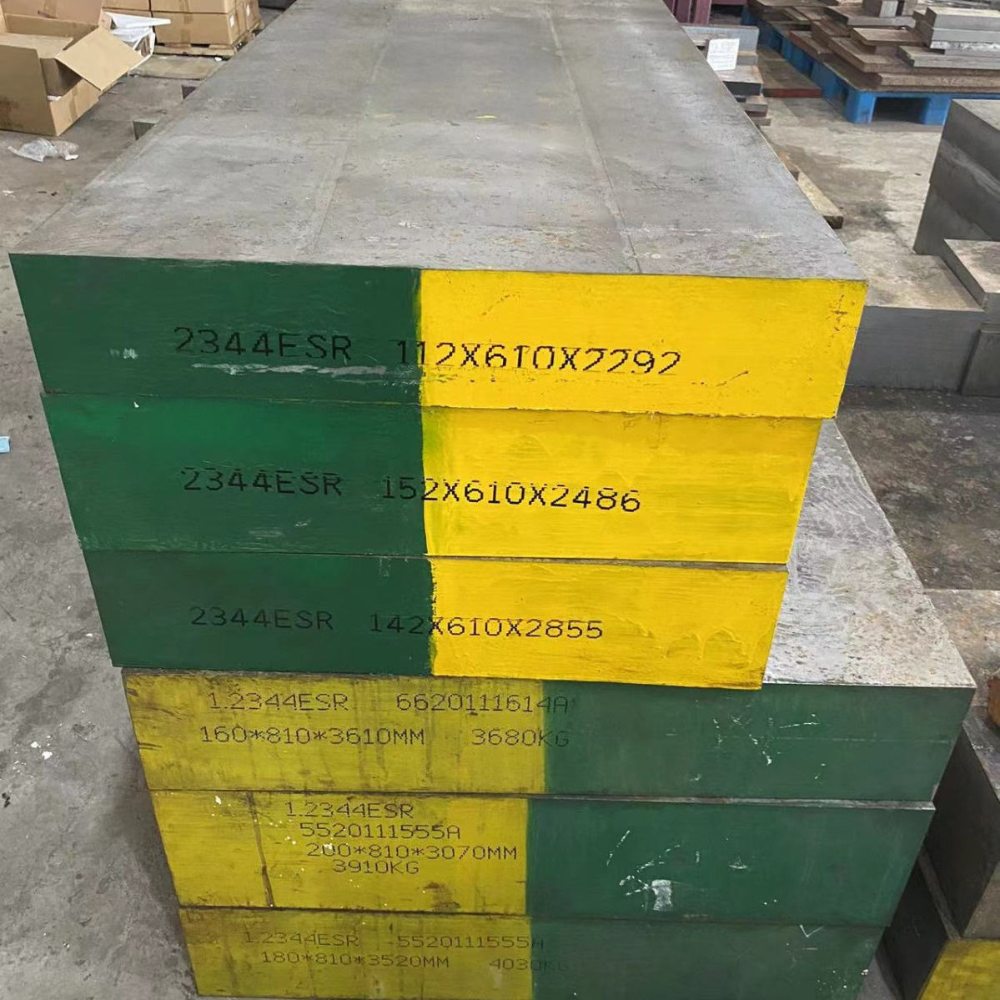
Outstanding mold steels don’t just withstand repeated cycles—they actively enhance part quality and process stability. The most critical attributes start with a refined microstructure that balances hardness and toughness, so the tool resists cracking under thermal shock while holding a sharp edge or precise surface detail. Uniform carbide distribution, often achieved through powder metallurgy or advanced remelting techniques, minimizes localized weakness and ensures predictable wear patterns. Beyond mechanical strength, high thermal conductivity pulls heat out of the cavity quickly, reducing cycle times and preventing hot spots that distort finished parts. When you combine this with excellent machinability in the annealed state, you get steels that cut tooling lead times without sacrificing long-run durability.
Corrosion resistance is often overlooked but becomes non-negotiable when molding aggressive resins or operating in humid environments. A truly high-performance steel will form a passive layer that guards against pitting and stress-corrosion cracking, all while maintaining its polishability for optically clear surfaces. The best grades achieve this without relying on coatings alone—it’s intrinsic to the alloy. Equally important is dimensional stability during heat treatment: top-tier mold steels move predictably and minimally, allowing for near-net-shape machining before hardening. This predictability slashes finishing work and ensures interchangeability of inserts across multiple tools.
What separates a reliable mold steel from an exceptional one often comes down to how these properties play together under real operating conditions. A high-hardness grade that chips at the first sticky ejection loses to a slightly softer material with superior temper resistance and compressive yield strength. The key is matching the steel’s profile—wear resistance, thermal fatigue limits, ductility—to the specific molding method and polymer. For example, high-wear glass-filled engineering plastics demand a different balance than fast-cycling packaging molds. In the end, the defining property of a high-performance steel isn’t a single number on a datasheet, but how consistently it delivers the same result over millions of cycles with minimal intervention.
A Closer Look at Popular Grades and Their Real-World Uses
Grades like 304 and 316 stainless steel often become go-to choices for good reason, but their real-world roles go far beyond a simple label. Take 304, for instance—it thrives in kitchen environments, not just because it resists rust, but because it handles the daily wear of acidic foods and constant cleaning without breaking down. You’ll spot it in everything from countertops to brewing tanks, where its toughness and non-reactive surface keep flavors pure. Meanwhile, 316 steps up in coastal construction and marine gear, where the added molybdenum gives it an edge against saltwater corrosion, making it the quiet hero behind handrails and boat fittings that endure years of harsh spray.
Then there are the less flashy but equally vital grades, each carved out for specific demands. Grade 430 finds its niche in decorative trims and appliances, offering a sleek, magnetic surface without the premium price, though it avoids heavy chemical exposure. On the other end, duplex grades like 2205 blend austenitic and ferritic strengths, tackling chemical processing plants where temperatures swing wildly and stress corrosion is a constant threat. These aren’t random picks—they’re the result of matching metal characteristics to the exact rhythms of an industry, from food safety to offshore rigging.
What ties this all together is how these grades adapt rather than just exist. A fabricator choosing 410 for a turbine blade values its hardenability under heat treatment, while a medical device maker leans on 316L’s low carbon content to avoid weld decay in surgical instruments. It’s a world where the same steel family can shape a bridge beam or a delicate implant, proving that the real story isn’t about a single grade being best, but about how each one fits into the hands of those who form, weld, and rely on it daily.
Heat Treatment and Surface Engineering for Extended Tool Life
Every workshop eventually faces the dilemma of tool wear—edges rounding, surfaces galling, or outright fracture under load. While selecting a premium alloy helps, it's rarely enough for demanding runs. Heat treatment steps in to fundamentally alter the metal's inner architecture. Through precise quenching and tempering cycles, martensitic structures emerge, balancing hardness with enough resilience to avoid brittle failure. The result isn't merely a harder tool; it's a cutting edge that withstands micro-chipping and deformation far longer than off-the-shelf stock.
When abrasion or corrosion pushes past what heat treatment alone can handle, surface engineering picks up the slack. Processes like nitriding or physical vapor deposition don't just layer a coating—they diffuse into the outermost grains, creating a gradient of protection. A punch that previously lasted a few thousand cycles can suddenly endure tens of thousands, because the surface now laughs off the same wear mechanisms that once sidelined it. The trick is matching the treatment to the damage pattern: high-speed steel taps might thrive on a hard nitride case, while a forming die in a humid plant demands a low-friction, corrosion-resistant film.
Bringing both approaches together often yields results that feel almost unfair to the competition. Cryogenic treatment after tempering can transform retained austenite into fresh martensite, while a subsequent PVD coating locks in dimensional stability. The synergy means fewer tool changes, less machine downtime, and—despite the upfront cost—a cost-per-part that drops like a stone once you run the numbers. It's not magic, just a deep respect for how metals behave at the atomic level when you push them to their limits.
Common Missteps When Choosing Mold Steel for Tight Tolerances
A narrow focus on hardness often overshadows equally critical factors like toughness and dimensional stability. When chasing Rockwell numbers, it's easy to select a steel that's brittle and prone to micro-cracking under machining stresses, undermining the very precision you're trying to achieve. For tight-tolerance molds, the synergy between wear resistance and the ability to absorb minor impacts without distorting is what truly preserves part accuracy over long runs.
Heat treatment distortion gets overlooked far too frequently. Even vacuum hardening and cryo treatments won't fully eliminate size changes, and failing to anticipate how the chosen grade moves during quenching can render precision grinding useless. A seasoned approach involves not just leaving controlled stock, but also stress-relieving steps before final machining to settle the material into a stable state.
Compatibility between the steel and your machining strategy is another blind spot. Some alloys friction-stress so easily during milling or EDM that they warp microscopically, making it impossible to hold tenths. The fix isn't always a fancier steel—it's often about pairing the right grade with gentle cutting parameters and sequential roughing/finishing passes that respect the material's internal stress pattern.
Emerging Trends in Mold Steel Alloys for Next-Gen Manufacturing
The landscape of mold steel alloys is undergoing a quiet revolution, driven by demands for lighter components, higher precision, and more aggressive production cycles. One notable shift is the growing adoption of maraging steels in additive manufacturing, where their ultra-low carbon content and exceptional weldability allow for complex conformal cooling channels that simply cannot be produced by traditional machining. This is not just about incremental improvement—it's about fundamentally rethinking how heat is managed during injection molding, resulting in faster cycle times and dramatically reduced warpage in parts.
Beyond chemistry, the processing routes are being reconsidered. Powder metallurgy (PM) grades, once reserved for niche applications, are becoming mainstream as manufacturers chase cleanliness and isotropy. The near-absence of segregation and uniform carbide distribution in PM steels translates directly into longer tool life and higher polishability, which is critical for optical and medical components. We're also seeing experiments with oxide dispersion-strengthened (ODS) alloys that incorporate nanoscale yttria particles, keeping the microstructure stable at temperatures that would soften conventional tool steels—a development that could reshape high-temperature molding of engineering thermoplastics.
On the sustainability front, work is quietly progressing on steels designed for recyclability and reduced cobalt content, a move driven less by regulation than by supply chain volatility. Some mills are developing cobalt-free maraging alternatives that maintain toughness through clever use of molybdenum and titanium precipitates. Meanwhile, surface engineering is converging with bulk metallurgy: duplex treatments that combine low-temperature plasma nitriding with physical vapor deposition (PVD) coatings are achieving a kind of synergy where the hard case and tough core work together in ways that exceed the sum of their parts. These trends point toward a future where mold steels are not just passive materials but active, engineered systems tuned for the rhythms of modern manufacturing.
FAQ
Precision manufacturing demands exceptional dimensional stability and surface finish, so mold steels are formulated with tighter alloy control and often undergo vacuum degassing. This minimizes inclusions and ensures uniform hardness after heat treatment, which directly affects the ability to hold micron-level tolerances.
Start by clarifying the production volume, material being molded, and surface finish requirements. For abrasive plastics, a hardened tool steel like D2 might work, but for high-polish optical lenses, a precipitation-hardening stainless steel such as NAK80 is often chosen because it combines corrosion resistance with excellent polishability without through-hardening distortion.
Pre-hardened steels are supplied ready to machine at a given hardness, usually around 30-45 HRC, so you avoid post-machining heat treatment and the associated dimensional changes. Through-hardened grades are machined in the annealed state, then hardened and tempered to higher working hardness, which gives better wear resistance but requires careful planning for size changes during heat treatment.
When molding plastics that off-gas corrosive byproducts like PVC or when running in high-humidity environments, even micro-pitting can ruin cavity surfaces. Stainless mold steels like 420SS or special grades like Buderus M340 prevent this, maintaining the surface integrity far longer than non-stainless alternatives, which might need frequent repolishing or even recoating.
Thermal conductivity dictates how quickly heat is drawn out of the molded part. High-conductivity steels like AMPCO® alloys or Cu-Be can slash cycle times by 20-40%, but they are softer. The trick is balancing wear resistance with heat transfer—sometimes a hybrid insert design uses a high-conductivity core with a wear-resistant shell.
Finer grain structures, often achieved through secondary refining processes, allow for better reproduction of micro-textures and sharp edges. If you're doing micro-optics or medical device components, you'll want an electroslag remelted (ESR) steel, which has fewer non-metallic inclusions and a uniform fine grain that holds detail much better during polishing and in service.
A highly machinable steel reduces cutter wear and programming time, while good weldability means design changes or repairs can be done without preheating and with minimal risk of cracking. For example, P20 modified grades are popular because they balance both, keeping the per-hour machining cost low and allowing safe weld repair even in the hardened condition, reducing downtime.
Conclusion
The success or failure of precision parts often hinges on mold steel selection. When tolerances are measured in microns and surface finish demands are unforgiving, the material must withstand extreme pressure, thermal cycling, and corrosive environments while maintaining dimensional stability. What truly defines high-performance mold steels is a balance of interdependent properties: hardness and toughness require a careful compromise, wear resistance must not come at the expense of machinability, and corrosion resistance becomes non-negotiable in medical or optical tooling. Overlooking these intrinsic characteristics means even the most sophisticated machining struggles to deliver consistent, high-quality output at scale.
In everyday practice, P20 pre-hardened steel finds broad use in medium-volume plastic molds thanks to its machinability and cost-effectiveness, while H13 hot-work steel dominates high-temperature die casting due to its resistance to thermal fatigue, and S136 stainless steel is the go-to for optical lenses and medical devices. Heat treatment unlocks a material’s full potential—vacuum quenching, cryogenic processing, and precise tempering each reshape the microstructure, and surface engineering like PVD coatings further extends tool life. Yet missteps abound: many select steel based solely on macro hardness, ignoring micro-deformation under repeated thermal shock, or they chase advanced alloys without evaluating whether their machining setup can handle them. Emerging trends are breaking long-standing barriers; powder metallurgy steels offer a cleaner, more uniform microstructure that transcends conventional limits, while additive manufacturing enables designs like conformal cooling channels that were once impossible, opening new dimensions for next-generation precision manufacturing.
Contact Us
Contact Person: Zoe Liang
Email: [email protected]
Tel/WhatsApp: 86 189 2128 6299
Website: https://www.baowuchina.com