

OEM 380V Vibrator Motor Selection Guide for Heavy-Duty Industrial Applications
2026-11-16
When a heavy-duty industrial application stalls due to an underperforming vibration motor, the ripple effects hit uptime, maintenance budgets, and operator confidence. The OEM 380V vibrator motor market is flooded with generic options, but true reliability in punishing environments demands more than a datasheet promise. This guide cuts through the noise, zeroing in on what actually matters—torque curves, insulation class, bearing life under eccentric loads—and why engineers are increasingly specifying Guangling as their default choice for severe-duty screening, feeding, and compacting. Whether you’re retrofitting a legacy setup or designing a next-gen system, the following selection framework will help you sidestep costly mismatches before they happen.
Matching Motor Specifications to Extreme Work Cycles
Selecting a motor for extreme duty cycles goes far beyond nameplate horsepower and speed. The real challenge lies in understanding how repeated peaks, sustained overloads, and rapid reversals accumulate stress on windings, bearings, and insulation systems. A motor that appears oversized on paper can fail prematurely if its thermal time constant doesn't match the actual load pattern, while an undersized unit may never reach steady-state temperature but will break down from frequent inrush currents. The key is to map the exact torque profile over time, paying close attention to the duration and frequency of accelerations, decelerations, and dwell periods.
Insulation class and temperature rise ratings take on heightened significance when cycles push the motor into constant thermal flux. Rather than simply checking that the maximum temperature stays below the limit, you need to evaluate how many times per hour the windings expand and contract, which gradually degrades the varnish and can lead to turn-to-turn shorts. For intermittent reversal applications, rotor construction deserves equal scrutiny—high-resistance rotors improve starting torque and reduce heating during plugging, but may sacrifice efficiency during steady runs.
End-users often overlook the impact of the operating environment on extreme cycles. A motor sealed against dust and moisture may retain heat much more aggressively than an open design, altering the duty cycle capability. Similarly, elevation and ambient temperature derate the motor's ability to shed heat, effectively making a standard intermittent duty rating unusable. The most reliable approach involves working with measured load data rather than assumptions, and confirming that the motor's mechanical structure—shaft material, bearing type, and frame stiffness—can endure the cumulative fatigue from thousands of harsh starts and stops without developing misalignment or cracks.
Why 380V Three-Phase Systems Outperform in Harsh Environments
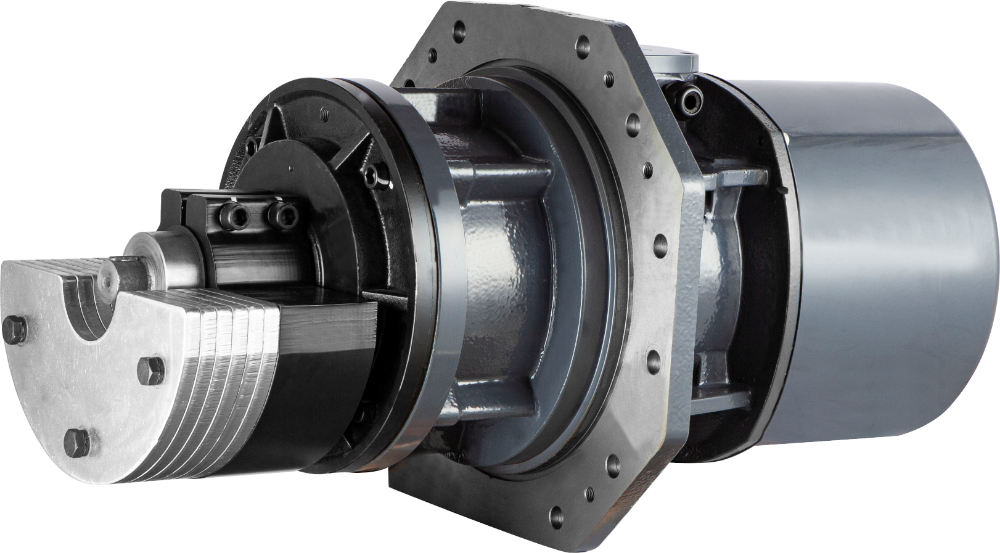
In environments where dust, moisture, and extreme temperatures are the norm, the 380V three-phase setup brings a level of electrical resilience that’s hard to beat. The higher voltage means lower current for the same power output, which directly reduces heat buildup in cables and connections—a common failure point in tough conditions. This isn’t just theoretical; on offshore platforms or in desert pumping stations, thinner wiring runs cooler and survives longer against insulation degradation, giving the whole system a longer lease on life without constant intervention.
Beyond heat management, the three-phase delivery itself shuns the pulsing torque you get with single-phase motors. That smooth, continuous power rotation spares bearings and shaft couplings from repeated stress spikes, so motors driving heavy-duty ventilators or crushers don’t shake themselves apart prematurely. And because 380V falls safely below the 1000V threshold that triggers strict arc-flash protocols, maintenance crews can work with standard protective gear, sidestepping the sky-high equipment costs and procedural delays that higher voltages demand.
Perhaps the least appreciated advantage is how naturally this voltage level dodges harmonic headaches. In a gritty factory or mining site, variable frequency drives and rectifier loads throw ugly distortion onto the line. The 380V’s common neutral configuration invites a delta-wye transformer upstream, which traps triplen harmonics before they circulate back and overheat motors or capacitors. It’s a passive but powerful filtering effect—one that keeps production rolling while higher or lower voltages struggle with nuisance trips and distorted waveforms.
Cracking the Code of Force, Speed, and Eccentric Moment
Force, speed, and eccentric moment don't simply add up—they converse in the physics of every movement, from a sprinter's explosive start to the controlled deceleration of a landing jet. When we treat these variables as independent dials, we miss how they co-regulate performance under the hood. Eccentric moment isn't a standalone quirk; it's the rotational twist that emerges the instant force and velocity don't align dead-center, reshaping load paths and stability margins in real time. Understanding this triad means reading the dynamic dialogue, not just checking the gauges.
Think of a tennis serve: shoulder internal rotation velocity spikes while the body decelerates forward momentum, creating an off-axis torque that challenges soft tissue and joint integrity. Many training models fixate on peak force or peak speed, leaving the eccentric moment as an afterthought. But it's precisely where injuries hide and where efficiency is won or lost. The code cracks open when you map how a subtle change in the timing of force decay actually amplifies the eccentric load on a ligament—often without any visible warning in a velocity graph.
Reconciling these three isn't about chasing bigger numbers, but about finding the rhythm where force and speed travel on the same centerline, shrinking the eccentric moment to its usable minimum. In engineering, we'd call it aligning the pressure center with the mass centroid; in human movement, it's the difference between a grinder and a glider. The real mastery lies in designing environments—whether in rehab, sprint drills, or equipment—that let the body organically discover that alignment, long before conscious correction steps in.
Decoding Enclosure Ratings for Dust, Moisture, and Corrosion
Those cryptic two-digit codes stamped on electrical enclosures do more than satisfy a spec sheet—they tell a survival story. The first numeral maps out how well the box shuts out solid objects, from stray fingers to fine, abrasive dust that can quietly choke a circuit. When you move from a 5 to a 6, you’re essentially guaranteeing that not a single grain of talcum-fine powder finds a way inside, which matters far more in a gritty cement plant than in a tidy office closet.
The second digit shifts the battle to water, but the test conditions behind each number often surprise people. A rating of 4 might withstand splashing from any direction, while a 7 means temporary immersion—yet a 7 doesn’t automatically imply it passed the jetting tests of a 5 or 6. That’s why you sometimes see enclosures marked with both, like IP65/IP67, signaling dual certification rather than a linear step-up. The trick is matching the real-world mess, whether it’s a washdown hose in a food plant or a flooded manhole, to the precise kind of wet exposure the enclosure was built to laugh off.
Then there’s the often-overlooked threat that doesn’t show up in a standard IP code: corrosion. A high-rated enclosure can still degrade fast if the material and finish are wrong for an environment thick with salt mist, sulfur, or cleaning chemicals. That’s where supplementary standards like NEMA 250 or the ISO 9227 salt spray test come into play, clueing you into whether that stainless steel box needs an extra passivation layer or if the gasket material can handle repeated cycles of condensation and chemical attack without turning brittle.
Custom Mounting Geometries for Non-Standard Machinery
Every non-standard machine starts with a fundamental challenge: off-the-shelf mounting brackets and pre-drilled patterns rarely align with the unique frame structures, vibration profiles, or spatial constraints of custom equipment. When a CNC retrofit demands a motor flange that clears an oddly positioned coolant manifold, or a packaging line upgrade forces a sensor array to hang from an overhead truss with no existing mounting points, standard geometry becomes an obstacle rather than a solution. Designing custom mounting geometries means rethinking the interface from first principles—calculating load paths, accommodating thermal expansion gaps, and integrating alignment features that eliminate the need for shims or field modifications. The result is a connection that feels native to the machine, not an afterthought bolted on.
Precision in these interfaces goes beyond simple dimensional accuracy. A mounting geometry for a high-speed textile loom, for example, must not only hold a sensor firmly but also preserve the machine’s factory balance by matching the exact moment of inertia of the original component. This often requires collaboration between mechanical designers and vibration analysts to sculpt pockets, ribs, and asymmetric cutouts that shift resonance frequencies away from operating speeds. For equipment destined for cleanrooms or washdown environments, the geometry must also promote drainage and eliminate crevices where bacteria or product residue could accumulate—designing sloped surfaces and standoff bosses that are rarely found in catalog parts.
Material choice and fabrication method directly shape what geometries are achievable. A cast aluminum bracket can flow into organic curves that reduce stress concentrations, while a waterjet-cut stainless steel plate lends itself to bold, faceted outlines with tight internal radii. Additive manufacturing pushes this further, allowing internal lattice structures to act as tuned mass dampers within the mount itself. The key is matching the geometry’s complexity to the available manufacturing technology without over-engineering a part that will be produced only a handful of times. Often, the most elegant solutions arise from hybrid approaches—a laser-cut backbone welded to machined bosses, for instance—where each process contributes what it does best to create a mounting geometry that performs flawlessly in its specific, non-standard role.
Thermal Behavior and Duty Cycles You Can’t Overlook
Thermal behavior isn't just a background specification—it dictates how long a device can operate before throttling kicks in. When engineers talk about steady-state temperatures, they're usually referencing a neat lab environment, but real-world applications pile on insulation, enclosure traps, and unpredictable ventilation. Those conditions can push junction temperatures well past what a datasheet's single-number rating suggests. Once you cross that threshold, performance doesn't drop linearly; it often comes in sudden, steep stair-steps that catch system designers off guard.
Duty cycles magnify every cooling limitation because they stack heat pulses one after another. A 20% duty cycle on paper might sound forgiving, but if each on-cycle dumps more energy than the off-cycle can shed, the device never returns to its original temperature. This thermal ratcheting effect turns short-term ratings into fiction after a few minutes of operation. Rather than relying on average power calculations alone, it's worth tracking peak temperature drift over a hundred cycles or more—that's where margin truly disappears.
What gets overlooked most is that thermal cycling ages components differently than constant high heat. Solder joints, bond wires, and thermal interface materials all suffer from expansion mismatches during rapid swings. A design might pass a steady-state stress test easily while failing after weeks of irregular, high-current pulses simply because peak junction values were hidden in the fine print of transient thermal impedance curves. Matching the real duty profile to the device's transient behavior early prevents field returns that no amount of firmware tuning can fix later.
FAQ
Three-phase 380V systems deliver higher torque with lower current draw, which reduces cable size and heat buildup in continuous-duty applications like feeders, screens, and hoppers. This voltage is widely available in industrial grids, making it the practical backbone for OEM machinery across manufacturing and mining.
Start by calculating the weight of the vibrating mass and the desired amplitude. A common rule is to target a working moment that delivers about 3-5 G's for bulk handling, but always verify with the equipment's structural limits. Over-specifying force just adds stress to bearings and welds without improving material flow.
Flange mounting ties the motor directly to the vibrating structure, giving a stiffer transmission of force and eliminating coupling losses. It also simplifies guarding and alignment on high-cycle equipment where foot bolts would inevitably loosen from shear stresses.
Paired counter-rotating motors are almost always required for linear motion on screens above a few square meters. One motor alone produces a circular pattern that can stratify material unevenly and punish the suspension. The pair gives you a straight-line throw and lets you adjust the angle by rotating both units together.
IP66 is the baseline for long-term reliability. Pay extra attention to the terminal box—condensation and fine dust intrusion through cable entries are the top killers. Some sites also benefit from tropicalized windings if humidity swings are extreme.
Set them once and lock them tight—routine re-adjustment suggests a process change, not a maintenance task. Misaligned weights on dual-motor systems create a chaotic vibration pattern that can crack sideplates and bracket welds within days.
Spherical roller bearings with a C3 or greater internal clearance are standard because they handle the combined radial and thrust loads without seizing. Grease quality matters more than the arrangement; a lithium-complex, high-viscosity grease with extreme-pressure additives extends relubrication intervals even under 24/7 running.
Hand over the total vibrating mass, the required amplitude range, the supply voltage and frequency, the ambient temperature and dust profile, and the start-stop cycle per hour. Without these numbers, any recommendation is a guess that could end up either too weak to move the load or so forceful it breaks the frame.
Conclusion
Selecting a 380V OEM vibrator motor for heavy-duty industrial use means going far beyond a catalog spec. The first hurdle is matching motor capabilities to extreme work cycles that demand relentless stop-start operation without thermal runaway. This is where 380V three-phase architecture truly proves itself: it handles brutal power surges with cleaner current delivery, maintains torque under fluctuating loads, and shrugs off conditions that would choke single-phase units. In foundries, mines, and cement plants, that inherent robustness keeps material flowing when ambient heat, conductive dust, and vibration conspire to break weaker designs. Pairing that electrical resilience with a scatter-proof force and eccentric moment calculation turns guesswork into a precise science—you balance centrifugal force, working moment, and stroke to move stubborn bulk material without shaking the entire structure apart.
Equally critical is reading between the lines of enclosure ratings. An IP66 housing handles high-pressure washdowns and fine dust, but true corrosion resistance hinges on sealed windings, stainless hardware, and coated rotors, not just a number on a plate. Non-standard machinery often defies bolt-hole templates, so custom mounting geometries—flared feet, extended flanges, or clamp-on brackets—become the difference between a drop-in fit and a failed retrofit. Yet all of that engineering falls short if thermal behavior is an afterthought. Continuous stall-proof duty cycles, embedded temperature sensors, and oversized cooling fins allow the motor to survive sustained overload without screaming for maintenance. Tying these threads together transforms a commodity vibrator into a workhorse that reliably feeds screens, hoppers, and compaction tables year after year.
Contact Us
Contact Person: ZHUO
Email: [email protected]
Tel/WhatsApp: 86-576-86320988
Website: https://www.cnguangling.com