

Spiral Freezer Supplier: How to Choose the Right One for Your Needs
2026-05-07
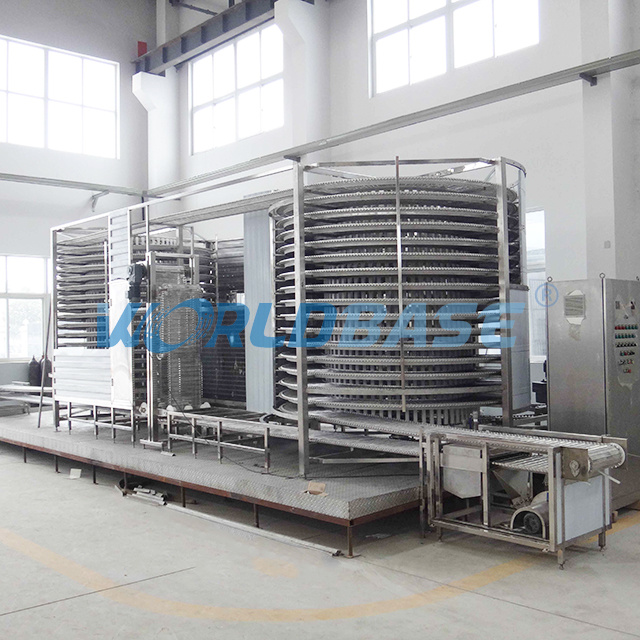
Choosing a spiral freezer supplier is a decision that directly affects your production efficiency and product quality. It’s not simply about hardware—it’s about aligning with a partner who grasps your specific workflow and cold chain demands. From energy consumption to footprint and hygiene standards, the variables are complex. That’s where a focused approach makes the difference. In this article, we’ll highlight what truly matters in the selection process and how Worldbase turns those insights into reliable, customized freezing solutions.
Pinpointing Your Production Bottlenecks Before You Buy
Before committing to new equipment or software, it's worth taking a hard look at where your current process actually stumbles. Many operations have hidden choke points—a machine that's constantly waiting on materials, a manual step that everyone works around, or a quality check that backs up every afternoon. Spending a few days observing the flow without jumping to solutions can reveal these pressure points in ways that a spreadsheet never will.
A practical way to dig deeper is to gather the people who live with the process daily. They often know exactly where the delays live but have never been asked. Map out the real steps, not the ideal ones, and trace how work actually moves. You might find that a supposedly fast piece of kit is actually starved most of the time because the upstream feeder is unreliable. Pinpointing these specific bottlenecks before you invest means you can target your budget at the true constraint, rather than buying a shinier version of a part that wasn't the problem.
Simulating or even manually stress-testing the bottleneck can also tell you if a proposed fix will genuinely help. For instance, if the identified constraint is a coating stage that can't keep pace during peak demand, see what happens when you temporarily relieve the pressure with overtime or a small process tweak. The data you gather clarifies whether you need a bigger machine, a second shift, or just a better scheduling approach. This kind of hands-on investigation turns a buying decision from a guess into a targeted improvement.
Reading Between the Lines of the Freezer Specs
Freezer capacity numbers can be deceiving. That advertised cubic footage often includes space you can't really use—like the areas blocked by cooling coils, shelving supports, or the compressor hump. Instead of fixating on the total volume, open the door and imagine your weekly grocery haul inside. Will those oddly shaped frozen pizza boxes fit vertically? Can you slide a sheet cake in without tilting it sideways? The usable space is what matters, not the math on the sticker.
Energy efficiency ratings are another playground for creative marketing. An Energy Star badge doesn't always mean low consumption if the unit is oversized for your needs. Check the yellow energy guide label for the estimated annual kilowatt-hours and multiply it by your local rate—that’s your real cost. Also, listen carefully to the hum: some “quiet” models still produce a high-pitched compressor whine that grates on you in an open-plan kitchen. Decibel ratings rarely capture the tonal nuisance that makes you want to shut the appliance off at night.
Feature lists love to boast about “fast freeze” buttons and “adaptive defrost,” but look deeper. A fast freeze function is only useful if it drops the temperature quickly enough to prevent large ice crystals from forming in your food—many just run the compressor continuously without reaching the optimal sub-zero sweet spot. Manual defrost freezers, while less convenient, often maintain more stable temperatures and cost less to run. If you’re opting for auto-defrost, ask whether it uses a heating element or a simple off-cycle method; the former can spike your electricity bill and cause freezer burn through temperature fluctuations.
Why Ambient Conditions Shape Your Spiral's Performance
Even a seemingly minor shift in humidity can throw off a spiral’s cut point. When moisture clings to feed particles, it alters their surface charge and bulks up fines, making them behave more like coarse grains. Suddenly, the same slurry that ran clean at dawn turns sluggish by midday, dragging valuable heavies into the tailings stream.
Temperature swings don’t just affect the water’s viscosity—they change how the spiral bed settles. On a cold morning, the increased fluid drag holds lighter particles in suspension longer, while a scorching afternoon thins the film so much that riffling patterns start to skip. Without adjusting for these swings, you’re basically running a different circuit every few hours.
Ambient pressure, often overlooked in plant design, quietly dictates whether air bubbles form in the flowing film. Lower barometric readings can encourage nucleation, creating micro-turbulence that disturbs particle stratification. It’s the kind of invisible variable that separates a steady recovery curve from a baffling set of shift reports.
The Hidden Costs of a 'Cheap' Installation
Choosing the lowest bid often feels like a smart move at first, but those initial savings can evaporate once the project gets underway. A cut-rate installation might rely on substandard materials or overlook critical prep work, setting the stage for premature wear and tear. You might not notice the compromises right away—perhaps the fasteners are a bit flimsy or the waterproofing steps were skipped—but over time those shortcuts reveal themselves through peeling surfaces, warped edges, or persistent drafts that bump up your energy bills.
Beyond the obvious physical flaws, a bargain installation frequently lacks proper documentation and support. When problems arise, you may find the installer is suddenly hard to reach or unwilling to stand behind their work. Missing permits or failure to follow local building codes can also surface later, turning what seemed like a simple project into a tangled and expensive mess. In some cases, a subpar initial job makes it harder for future contractors to work on the area, meaning you pay extra just to bring everything up to an acceptable baseline before improvements can even begin.
Perhaps the most overlooked cost is the knock-on effect on your own time and peace of mind. Dealing with frequent repairs, chasing warranties that don’t hold up, and living in a space that never quite feels finished can drain your enthusiasm. Replacing or redoing a flawed installation almost always ends up costing more than getting it right the first time, turning the original “bargain” into a lesson in false economy.
Questions to Test a Supplier's Real-World Experience
Asking for a walkthrough of a supplier’s most challenging past project can quickly reveal how they handle pressure and adapt. Dig into the specifics: What unexpected obstacles came up, and how were they resolved? Follow up by exploring how their team’s decisions shaped the final outcome, not just that they delivered on time.
Another approach is to request a side-by-side comparison of an initial project plan and what actually happened on the ground. This uncovers whether their promises align with reality—look for discrepancies in timelines, budget, or resource allocation. A supplier with genuine depth will provide concrete examples and even admit where they misjudged, then explain what they changed to prevent repeat issues.
Finally, ask about their interactions with subcontractors or clients during a tough phase. A seasoned supplier will share nuanced stories of negotiation, scope management, or creative problem-solving that go beyond textbook answers. Pay attention to how they describe collaboration under stress: true experience surfaces in the details of conflict resolution and risk mitigation, not just smooth project delivery.
Ensuring Your Freezer Doesn't Become Tomorrow's Headache
It's easy to overlook your freezer until something goes wrong—a strange smell, a layer of ice that just won't quit, or a mysterious package that's been there for months. Ignoring these small signs can lead to bigger problems down the road, from spoiled food to a massive energy bill. Taking a little time now to check in on your freezer can save you from a major headache later.
Start by giving your freezer a thorough cleaning every few months. Defrost it if ice has built up beyond a thin layer, and wipe down the interior with a mix of warm water and baking soda to keep odors at bay. While you're at it, inspect the door seal for cracks or wear—even a tiny gap can let warm air in, forcing the compressor to work overtime and shortening the appliance's lifespan.
Organization matters more than you might think. Keep items in clear, labeled containers or bags so you don't have to hunt around with the door open, and try to rotate older items to the front. Keeping the freezer about three-quarters full strikes a good balance between efficiency and airflow, but avoid stuffing it to the brim. A little attention now means you won't be stuck with a thawed-out mess and a panic call to a repair technician later.
FAQ
It's not just about years in business. Ask if they've handled projects similar to yours—same production volume, product type, or even specific hygiene demands. A supplier familiar with dairy, for example, might not automatically excel with raw poultry. Request case studies that mirror your operational reality rather than generic portfolios.
Request detailed specs on materials like stainless steel grades, belt construction, and insulation foam density. Don't just rely on sales photos—push for a factory visit or a live video tour of a recent installation. Pay attention to weld seams, control panel organization, and how easily components can be accessed for cleaning.
Move beyond brochure numbers. Inquire about the specific drive system—is it a direct gear drive or a friction drive? What's the actual kW consumption at your expected freezing load? Ask for performance data from an existing customer running a similar product, and whether the airflow design minimizes cold air loss during entry and exit.
Pin them down on response times—get it in writing. Find out if they stock critical spare parts locally or have to ship from overseas. Ask to speak directly with a current client about their last service experience. Also, check if remote diagnostics are part of their standard support package.
Absolutely, but the depth of customization varies. Some only adjust belt width or tier height within fixed frame sizes. Others can engineer a truly bespoke layout—even integrating the freezer into an existing production line with odd angles. Share your floor plan early and see how flexible their design team really is.
Look beyond certifications. Discuss clean-in-place system design, potential bacteria trap points, and whether they offer sanitary belt options with features like sealed edge caps. A supplier who immediately suggests a compliant design rather than just adding a washdown sticker is usually the safer bet.
Neither is automatically superior. A local shop might offer faster service calls but could lack deep technical expertise. An international brand may have advanced technology but lead times and travel costs can inflate the total price. Weigh their installed base in your region and talk to those users about real-world reliability.
Conclusion
Choosing a spiral freezer supplier begins with a clear-eyed assessment of your own operation. Many buyers rush toward spec sheets before truly understanding where their current process breaks down. Is the bottleneck at the freezer during peak production, or is it upstream in prep or packaging? Pinpointing this prevents you from buying a machine that simply shifts the constraint elsewhere. Once you know your throughput and headroom needs, you can dig into the details that matter: not just rated capacity, but how the freezer performs with your specific product dimensions, belt loading pattern, and target core temperature. Factory specs often assume ideal conditions, so dial in ambient factors like seasonal heat and humidity in your plant. A freezer that works perfectly in a climate-controlled test bay can struggle when air temperatures climb on the production floor, forcing longer dwell times and undercutting efficiency.
Price is a tempting lens, but the true cost of ownership often hides in the installation and the years that follow. A low bid can come with surprises: overlooked structural reinforcements, inadequate drainage, or refrigerant piping that doesn’t match your existing infrastructure—any of which can balloon your project budget. Press potential suppliers on their field experience with sites like yours, not just their sales history. Ask for detailed references and, if possible, talk to their service engineers. A freezer that works flawlessly out of the crate still depends on a supplier who responds when something goes sideways. From ensuring spare parts availability to offering preventative maintenance, the right partner turns your spiral freezer from a potential headache into a reliable pillar of your production line.
Contact Us
Contact Person: Mr Yang
Email: [email protected]
Tel/WhatsApp: +8613809083091
Website: https://en.worldbase.cn