
Strongest Laser Therapy for Rhinitis: Which Type Delivers the Best Results?
2026-05-25
If you’re battling the constant sniffles, sneezes, and stuffiness of rhinitis, you’ve probably wondered: what is the strongest laser therapy that actually works? With so many options claiming to be the best, it’s easy to feel lost. That’s where GUANG TAI steps in—backed by advanced technology that targets nasal discomfort at its source. In this guide, we’ll cut through the noise and compare the top laser types, so you can finally find lasting relief without the guesswork.
How Different Lasers Attack Rhinitis Symptoms
Different types of lasers tackle rhinitis symptoms by targeting the underlying issues in the nasal passages. For instance, a diode laser gently heats and reduces the swollen tissue, which opens up the airway and eases that stuffed-up feeling. Meanwhile, a CO2 laser can precisely remove layers of inflamed mucosa, cutting down on congestion and the constant drip. Each wavelength interacts with the tissue in a unique way, so the choice often depends on whether the goal is to shrink tissues, seal blood vessels, or calm nerve endings that trigger sneezing.
Some lasers, like the Nd:YAG, go deeper to coagulate blood vessels that cause chronic nasal obstruction, making them particularly useful for patients whose congestion stems from vascular engorgement. Others, such as the holmium laser, excel at fine sculpting of the nasal lining without excessive heat damage, preserving healthy tissue while smoothing out irregularities. The key is matching the laser’s energy absorption to the water or hemoglobin content in the target area, so that the attack on rhinitis is both effective and sparing of surrounding structures.
What Makes a Laser "Strong" for Nasal Relief?
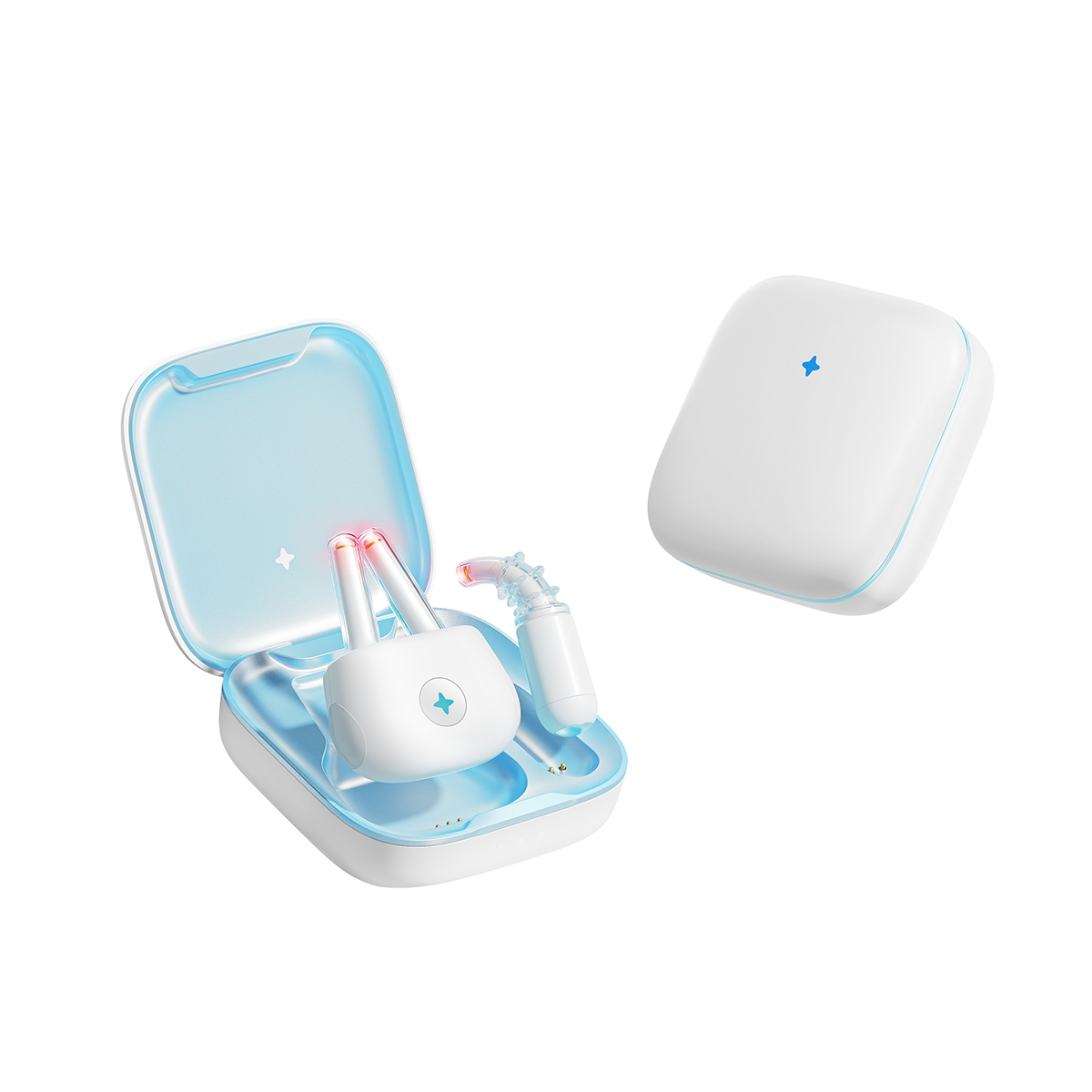
When people talk about a laser being “strong” for nasal relief, they’re rarely referring to raw power output alone. A high-wattage beam that cuts through tissue is overkill for delicate sinus membranes. Instead, the real measure is photochemical efficiency—the laser’s ability to deliver the right wavelength and energy density to trigger healing without causing thermal damage. Wavelengths in the red to near-infrared range (roughly 630–940 nm) penetrate tissue at just the right depth to reach inflamed nasal passages, stimulating cellular repair and reducing inflammation.
But wavelength is only half the story. The pulse structure makes a critical difference, too. Continuous-wave lasers often produce unwanted heat buildup, while pulsed or modulated outputs keep tissue cool and comfortable. A truly effective device alternates between on and off phases quickly, allowing the tissue to dissipate any minor heat between pulses. This lets you deliver a higher effective dose without the sting or irritation that weaker, poorly designed units cause.
It’s also worth ignoring the marketing hype around milliwatt ratings and focusing on energy fluence—the total joules delivered per square centimeter over the treatment session. Two lasers with identical power can feel and act completely different if one spreads its beam too wide or stays in one spot too long. The strongest nasal relief comes from a device that balances precise optical design, the right wavelength, and a pulsing pattern that respects your body’s natural response time.
Real Patient Experiences with Diode vs. Nd:YAG
Many individuals who have undergone laser treatments for various skin concerns often share contrasting stories when comparing diode and Nd:YAG lasers. One patient, dealing with persistent leg veins, recalled that the diode laser sessions felt like a quick snapping sensation, but the results were gradual and required multiple visits. In contrast, another person who chose Nd:YAG for deeper facial veins described a more intense momentary heat, yet noticed clearer skin after just a couple of treatments. These real-life accounts highlight how the choice between the two can shape not only the comfort during the procedure but also the timeline for visible improvements.
For those with darker skin tones, the narrative often shifts. A user shared that diode laser hair removal on her olive complexion led to noticeable redness and initial discomfort, eventually replaced by smooth, stubble-free skin without the pigmentation issues she had feared. Meanwhile, a different individual with a similar skin type opted for Nd:YAG, praising its ability to target hair follicles effectively while leaving her skin tone unharmed, though she mentioned that the sessions felt slightly warmer. These experiences reinforce the idea that real-world outcomes depend heavily on skin type and the specific concern being addressed.
The Role of Wavelength in Lasting Results
Wavelength isn’t just a technical detail—it’s the deciding factor in whether a treatment delivers temporary relief or lasting transformation. In light-based therapies, the wavelength determines how deeply energy penetrates tissue and which structures absorb it. Select one that’s slightly off-target, and you’ll get a surface-level response that fades within days. Choose the precise wavelength that resonates with deeper chromophores, and you stimulate a cascade of repair processes that continue weeks after the session ends. The science is clear: longevity of results depends less on intensity and more on the spectral match between the light and the biological target.
But the principle goes beyond laser devices. In any long-term collaboration—be it coaching, team dynamics, or personal growth—staying on a compatible "wavelength" fosters sustained progress. When communication frequencies align, ideas don’t just bounce off; they embed themselves and catalyze change from within. The result isn’t a quick fix that unravels under stress, but a deep recalibration that holds. Whether you’re calibrating an instrument or a relationship, finding that resonant wavelength transforms fleeting attempts into enduring outcomes.
Why One Session May Not Be Enough
Progress often moves in waves, not straight lines. A single session can spark insight or provide immediate relief, but lasting change rarely takes root in an hour. True transformation requires time to unpack complex emotions, challenge deeply held patterns, and practice new skills between meetings. Rushing the process can leave underlying issues untouched, like treating symptoms without addressing the cause.
Building trust is a gradual dance. For many, it takes multiple conversations to feel safe enough to share the vulnerable layers that really matter. A therapist or coach might only glimpse the surface in an initial meeting, while the core struggles remain hidden beneath politeness or guardedness. Depth emerges when the relationship has room to breathe, and that can't be forced into a single encounter.
Integration is where the real work happens. After a session, insights need to be tested in everyday life, and that often surfaces new questions or stumbling blocks. Follow-up meetings allow for course correction and deeper exploration, turning fleeting realizations into durable shifts. One-off experiences can be powerful, but they tend to fade if there’s no structure to anchor the learning into daily habits.
Making the Choice That Suits Your Nose
Your glasses are more than a visual aid—they’re the first thing people notice, and how they rest on your nose can dramatically shift your overall look. The bridge width isn’t just a number on the frame; it’s the difference between a confident, anchored fit and a constant slide down the nose. When the bridge is too wide, the frames droop, pinching the nose or leaving red marks. Too narrow, and they perch awkwardly, exaggerating the nose’s length. Spend a moment feeling where your nose naturally flares—this is where the pads or molded bridge should settle without pressure. It’s a subtle dance of pressure and comfort that directly shapes how your face presents to the world.
Beyond the bridge, the frame depth plays a quiet but powerful role. Deep, bold frames can actually shorten the appearance of a long nose, drawing the eye horizontally rather than vertically. Conversely, a petite nose can vanish behind massive acetate, so lightweight rimless or semi-rimless designs let your features breathe. Consider the nose pad too: adjustable silicone pads give you millimeter-level control to keep frames perfectly horizontal, while fixed pads demand a precise fit from the start. If you’ve ever caught yourself pushing up loosened frames, you already know how a poor fit steals your focus. The right choice just dissolves into the background, letting your eyes—and your natural nose shape—do the talking.
FAQ
It's a minimally invasive treatment that uses focused light energy to reduce swollen nasal tissues, often providing relief from chronic congestion, sneezing, and postnasal drip without the need for traditional surgery.
The most frequently used lasers include diode lasers, CO2 lasers, and Nd:YAG lasers, each with different tissue penetration and precision levels. Diode lasers are often preferred for their balance of effectiveness and comfort.
Studies suggest that diode and Nd:YAG lasers tend to offer longer-lasting symptom relief compared to CO2 lasers because they can target deeper tissue layers while leaving the surface relatively intact, promoting faster healing.
Strongest isn't just about raw power—it's about the right combination of wavelength, penetration depth, and tissue interaction. Nd:YAG lasers are technically more powerful in terms of energy output, but for rhinitis, doctors often favor diode lasers for their controlled, predictable results.
The procedure is usually done in an outpatient setting. A local anesthetic spray numbs the nose, then a thin fiber optic probe delivers laser energy to the problematic tissue. Most people feel only a mild warming sensation and can resume normal activities within a day.
Common temporary side effects include mild swelling, crusting, or a slight increase in nasal discharge. Serious complications are rare when performed by an experienced specialist, but there's a small risk of scarring or altered sense of smell.
Many patients enjoy significant improvement for 1 to 3 years. Some may need occasional touch-ups, but the results generally last much longer than medication and avoid the downtime of traditional surgery.
Ideal candidates are those with chronic allergic or non-allergic rhinitis who haven't found enough relief from antihistamines or steroid sprays, and who want to avoid more invasive procedures like turbinate reduction surgery.
Conclusion
Laser therapy for rhinitis targets the nasal mucosa with focused light energy to reduce inflammation and unblock stuffy passages, but not all lasers work the same way. Diode lasers gently coagulate swollen tissue with minimal discomfort, while Nd:YAG penetrates deeper to shrink turbinates and curb nerve hypersensitivity—patients often debate which one truly feels stronger. Wavelength plays a quiet but decisive role: longer wavelengths like those in Nd:YAG systems reach deeper layers, potentially offering more lasting relief, yet the diode's precision can be ideal for superficial surface issues with quicker recovery. Real-world stories show that while some find immediate breathing improvements after a single session, many discover that one round just scratches the surface; persistent symptoms often demand a short series of treatments spaced weeks apart to fully retrain the nasal response.
What makes a laser “strong” isn't just the energy output, but how well it matches your specific trigger pattern—whether you battle allergic swelling, non-allergic triggers, or a mix of both. The strongest outcome hinges on combining the right wavelength, power settings, and realistic expectations: a patient with thick, boggy turbinates might lean toward deep-penetrating Nd:YAG, whereas someone with surface vessels and contact-point issues may feel the diode's finesse is stronger for them. Ultimately, choosing what suits your nose means weighing immediate sensation against long-term relief, and accepting that the most powerful protocol is often a tailored blend of technology and timing, not a one-size-fits-all zapping.
Contact Us
Contact Person: Leon Yi
Email: [email protected]
Tel/WhatsApp: +86 17363316873
Website: https://zzgt.en.alibaba.com/