

Top 10 High Pressure Mixer Truck Washing Machines That Deliver Powerful Cleaning Results
2026-08-13
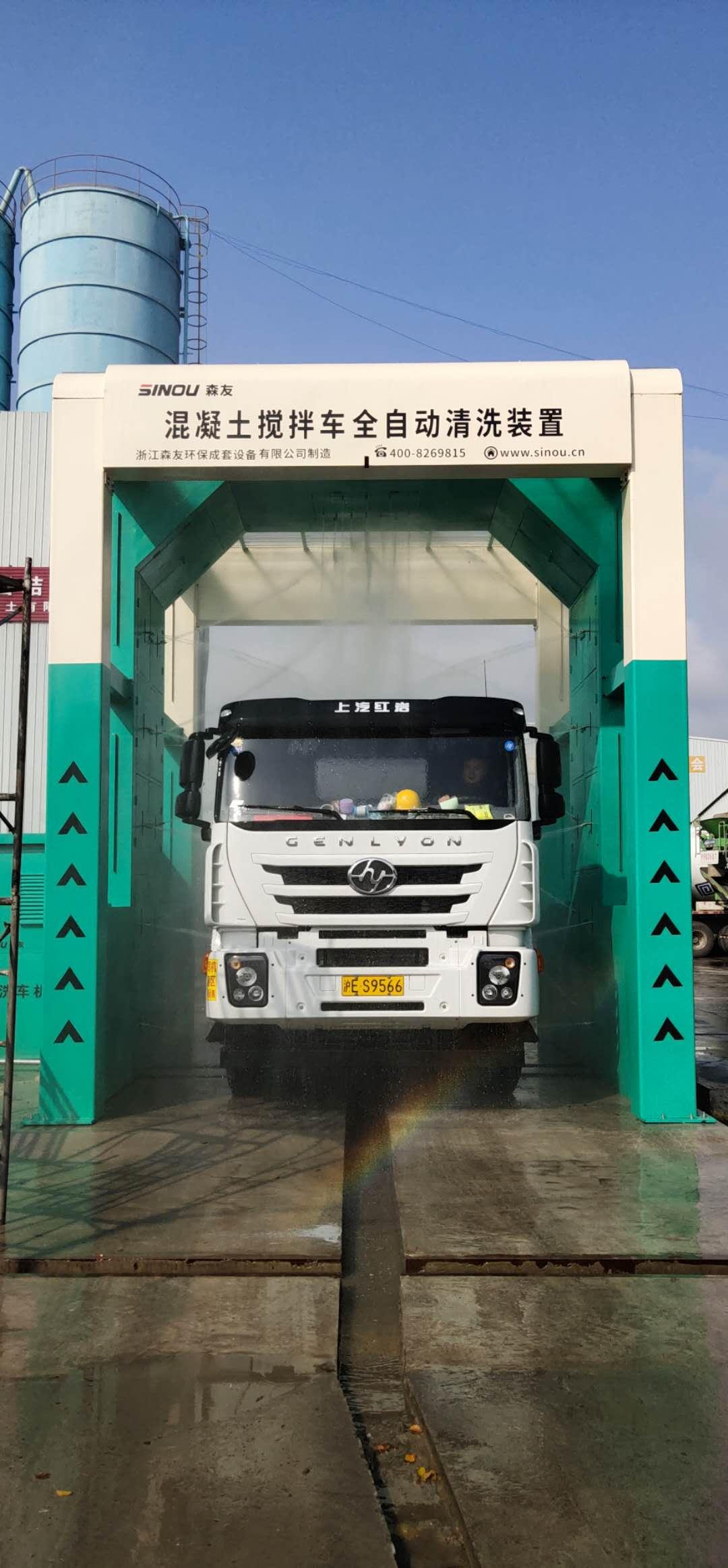
Keeping a mixer truck clean is one of those jobs that looks simple until dried concrete starts piling up in every corner. High pressure washing machines built for this kind of work don't just spray water; they cut through buildup that would otherwise shorten equipment life and slow down your fleet. In this roundup, we're looking at ten standout options that deliver serious cleaning power. Whether you're upgrading a wash bay or tired of hand-scraping drums, there's something here worth a closer look. And if you want a brand that understands mixer truck washing from the ground up, Sinou has been making reliable, job-ready equipment for exactly this challenge.
Why Mixer Trucks Demand More Than a Standard Pressure Wash
A standard pressure wash handles loose dirt and road film, but it barely touches the real problem on a mixer truck: concrete that has already begun to set inside the drum, chutes, and hopper. Portland cement is highly alkaline and bonds aggressively to steel, so even a thin skin of residue left after a basic rinse hardens into a rough, weight-adding layer. The next batch then has to scrape against that crust, which slows discharge, alters slump, and eventually shortens drum life. You're not just washing off mud; you're stopping a chemical reaction before it welds material to the truck.
The geometry of a mixer also defeats a typical wand. The drum's interior is curved, ribbed, and only accessible through a small opening, while the hopper, collection chute, and rear pedestal trap slurry in corners that a flat spray can't reach. Without hot water, the right nozzle pressure, and occasionally a mild acid-based descaler, cement paste stays in the spiral blades and hardens into ridges. Those ridges reduce mixing efficiency and add dead load that fuel bills notice long before the driver does.
Finally, runoff rules change the job. The wash water from a mixer is not ordinary dirt—it carries high pH, suspended solids, and sometimes admixture residue. Letting that flow into a storm drain creates compliance headaches and can poison nearby soil. That's why proper mixer cleaning often pairs pressure and temperature control with containment, vacuum recovery, or a closed-loop wash pad. Skip that, and you're trading a quick rinse for premature drum replacement and a conversation with an environmental inspector.
Breaking Down the Core Components That Separate Top Performers
Top performers rarely stand out because they logged more hours. The real separator is how they approach repetition. Where average players chase comfort, elite ones lean into the rep that feels slightly beyond their current edge. They break a skill into messy, awkward pieces, drill the failure points, and refuse to let early embarrassment become a reason to stop. That tolerance for productive discomfort shows up in everything from how they practice conversations to how they review losing trades.
Another piece that gets overlooked is the speed of their in-the-moment sorting. Under pressure, top performers don't freeze or overthink; they compress decisions by leaning on patterns built from deliberately varied experience. They have seen enough slightly different versions of the same problem that their intuition fires before conscious analysis. This isn't magic. It's years of exposing themselves to scenarios where the stakes were real but survivable, so their nervous system learned what noise to ignore.
The quiet engine behind most elite output is a ruthless feedback loop. Top performers treat every outcome as data, not identity. They log what they tried, what broke, and what they'll change next time, often in plain notebooks or voice memos. Crucially, they also practice unlearning; when a method stops working, they don't double down out of pride. They strip it away and rebuild from a simpler base. That combination of honest self-audit and willingness to abandon a previous strength is what keeps them ahead long after raw talent fades.
Portable or Fixed: Matching the Washer to Your Jobsite Reality
On a cramped urban infill project, dragging a portable pressure washer up three flights of scaffolding isn't just inconvenient; it eats time and tests patience. Yet that same mobility becomes a lifesaver when crews rotate between multiple floors or need to clean equipment at the street level without hauling a heavy unit. The first question isn't about horsepower or flow rate—it's about how often you'll move the machine before lunch. If the answer is more than twice, a compact, wheeled model with a solid frame will outperform a beefy stationary unit that's bolted to a trailer.
Fixed washers earn their keep when jobs demand constant, high-volume output and a stable water supply. Think concrete cutting, large-scale surface prep, or fleet washing where the machine stays parked for eight hours straight. Here, a skid-mounted or trailer-based system with a larger tank and hot water capability makes sense. The trade-off is setup time and space: you need a level spot, clear hose runs, and someone who knows how to bleed the pump before starting. On sites where power sources are scattered, a fixed unit tied to a generator may actually limit your workspace more than a portable one would.
The real test comes during the first week of a job. Track how many minutes the crew spends relocating, refilling, or untangling hoses versus actually spraying. If relocation and setup consume more than 20% of total washer time, the machine doesn't match the site's rhythm. Contractors who pick based on spec sheets alone often discover a 4,000 PSI monster is useless if it can't fit through a standard doorway or drain fast enough between tasks. Portability isn't a downgrade—it's a design choice that keeps the tool where the work is, not where the truck happens to be parked.
The Role of Nozzle Geometry and Flow Rate in Concrete Removal
In practice, the shape of the nozzle governs how water or air energy is focused on the concrete surface. A straight-bore nozzle tends to produce a concentrated, high-velocity stream that cuts deep but covers a narrow path, making it suitable for localized spalling or keyhole work. By contrast, a fan or angled tip spreads the jet over a wider area, which reduces impact pressure at any single point and is often preferred when the goal is to remove a thin layer without damaging the underlying reinforcement. Operators quickly learn that switching from a 0° to a 15° or 25° fan pattern can mean the difference between crisp breakout edges and a rough, unpredictable surface.
Flow rate adds another layer of control. Higher flow rates deliver more water or abrasive mass per minute, which helps flush away loosened aggregate and prevents the nozzle from clogging, but they also raise the risk of over-removal and water pooling in low spots. Lower flow rates conserve water and give finer control, yet may require slower travel speeds to achieve the same depth. Balancing the two is not simply a matter of cranking up pressure; experienced crews adjust both nozzle geometry and flow rate together, using the nozzle to shape the spray and the flow to carry away debris at a steady pace.
Field results often show that a moderate flow rate paired with a slightly wider fan angle can outperform a maximum-pressure, zero-degree setup on real concrete, because the wider spray removes material more uniformly and leaves fewer ridges between passes. This combination also reduces the chance of unintended damage to adjacent sound concrete, especially around edges and embedded fixtures. Over time, the interaction between nozzle choice and flow becomes a practical judgment call based on concrete hardness, aggregate size, and the required surface profile for the next repair or coating.
What Fleet Managers Actually Say After a Season of Heavy Use
After running the new trucks through a full winter of salt, mud, and constant stop-and-go routes, the maintenance guys kept waiting for the usual brake and suspension headaches. They didn't come. One manager mentioned he'd budgeted for at least two major repairs per vehicle by March, but ended up only doing oil changes and a couple of tire rotations. That alone changed how he plans next year's fleet budget.
Drivers were the first to point out the difference in cab comfort. Nobody complained about the seat bolsters or the pedal placement, which is rare. A few drivers said the HVAC actually kept the windshield clear on those -20 degree mornings without blasting the defroster on high. It's the kind of small thing that doesn't show up on a spec sheet, but it means fewer route delays and less driver turnover chatter.
The most repeated comment? Visibility. Fleet managers assumed the new mirror design would take weeks to get used to, but most drivers adjusted within a day. One operations lead said his night-shift crew stopped calling in about blind spots altogether. After a season of heavy use, that's the kind of feedback that makes you reconsider what actually matters when ordering the next batch.
Simple Upkeep Routines That Preserve Pressure and Extend Lifespan
A quick rinse of the nozzle after each use does more than you'd think. Hard water deposits and tiny bits of grit tend to settle in the spray tip, and if left alone they gradually choke off the flow. When output drops, the pump works against a restriction and internal pressure builds in a way it wasn't designed for. Spend ten seconds running clean water through the tip or using a fine wire to clear the orifice, and you keep that pressure steady without any complicated tools.
Don't skip the oil check either. Pumps on most pressure washers need clean oil at the right level to cushion the moving parts and carry away heat. Change it once a season or after every 50 hours of runtime, whichever comes first. While you're at it, give the inlet filter a look and replace the high-pressure hose if you notice any soft spots or bulges. These small habits keep the seals tight, the pressure consistent, and the machine running long past the point where neglected units start leaking or losing kick.
FAQ
The best units combine high flow rates with moderate pressure, typically 3,000 to 5,000 PSI and 4 to 8 GPM, so concrete residue lifts off without damaging drum surfaces. They also feature heavy-duty frames, anti-vibration mounts, and quick-connect nozzles for varied spray patterns.
The roundup includes the Hotsy 1700 Series, Landa VNG4-3000, Mi-T-M HDS Series, Hydro Tek SC Series, Alkota 5300 Series, Easy-Kleen Magnum Pro, Pressure Pro EcoMax, and Cam Spray 1500 Series. Each earned its place through real-world cleaning speed and long-term reliability.
Focus on flow rate more than raw PSI. 5 GPM at 3,000 PSI will clear dried cement faster than 4,000 PSI at 3 GPM because the extra water volume carries away debris. For stubborn buildup, pair the machine with a zero-degree nozzle or turbo lance.
Yes, especially if trucks carry admixtures or polymer-modified concrete. Hot water breaks down grease, oil, and certain curing compounds far faster than cold water, reducing wash time by up to 40 percent on heavily coated drums.
Flush the pump with clean water after every shift, inspect and replace seals and O-rings monthly, check inlet filters weekly, and use a water softener if your supply is hard. Also run the machine with the trigger open for 30 seconds before shutting down to release trapped heat.
Absolutely. Look for a unit with adjustable pressure and multiple nozzle tips. A 15-degree tip works well for the exterior barrel, while a 25-degree or 40-degree tip is safer for hopper gaskets and control linkages. A telescoping wand helps reach the top of the drum without scaffolding.
A thermal relief valve, unloader bypass, GFCI-protected electrical components, and a trigger lock are non-negotiable. For hot water units, ensure the burner has a flame-out shutdown. Anti-tip bases and insulated wands also reduce operator fatigue and burn risks.
Conclusion
Anyone who has watched dried concrete harden on a mixer drum knows a standard pressure washer barely scratches the surface. The top 10 high pressure mixer truck washing machines earn their place not just through raw PSI, but by combining heat, flow, and nozzle design that turns stubborn buildup into slurry. Fleet managers repeatedly mention the same deciding factors after a full season: pump longevity, quick-connect fittings that survive daily abuse, and the ability to adjust from a wide fan for rinsing to a zero-degree jet for chipping away at cement lips. Portable units with onboard tanks work well for scattered pours, while fixed skid or stationary systems make sense for batch plants where trucks return daily. What separates top performers is not a single spec, but how the core components—unloaders, heating coils, and hose reels—hold up under continuous cycles. Nozzle geometry matters more than most assume: a 15-degree tip at 4 gallons per minute strips residue far better than a 40-degree tip at higher pressure, because impact force depends on both flow and angle. Owners who stick to simple upkeep, like flushing the pump after each shift and checking inlet screens, report far fewer pressure drops come month six.
Real-world feedback from fleet managers surfaces a common lesson: the machine that cleans fastest is rarely the one with the highest advertised PSI. Instead, the best systems balance heat, detergent injection, and hose length so operators can reach the entire drum without repositioning. After a season of heavy use, the models that hold their value are those with brass or stainless steel manifolds rather than plastic, and with pressure switches that do not chatter when the trigger is released. Portable or fixed, the washing machine must match the jobsite reality—if the truck returns caked in aggregate, a cold-water portable unit will cost hours each week. Adding a downstream chemical injector for concrete dissolvers reduces reliance on heat alone. Likewise, simple routines like draining tanks in freezing weather and replacing seals at the first sign of weeping keep pressure consistent. In the end, the top 10 list is less about ranking and more about identifying machines that combine robust build, smart nozzle choices, and low-friction maintenance into one predictable, powerful clean.
Contact Us
Contact Person: HaiYan
Email: [email protected]
Tel/WhatsApp: +86 18957325588
Website: https://www.senyoubeton.com/