

Top 10 Vacuum Load Break Switches for Reliable Power Distribution
2026-10-07
Power distribution rarely makes headlines—until something goes wrong. Vacuum load break switches are a quiet but critical line of defense, isolating faults and keeping circuits safe without drama. Yet not all switches are created equal. In this roundup of the top 10 vacuum load break switches for reliable power distribution, we cut through spec-sheet noise to focus on what actually matters: interrupting capacity, mechanical endurance, and real-world performance. If you're tired of claims that fall apart on site, this list is for you. And if you haven't yet explored Deepwill's line of switchgear, you might find a serious contender that doesn't show up in every mainstream catalog.
What Separates a True Vacuum Load Break Switch from a Basic Disconnect
At first glance, a basic disconnect and a vacuum load break switch might look like cousins in the same electrical family—both open a circuit and provide visible isolation. But once you dig into how they behave under load, the differences become impossible to ignore. A disconnect is really just an air-gap switch. It’s designed to be operated only when current is zero, which means you have to shut down the downstream load first. Try opening one while current is flowing, and you’ll get a sustained arc that can damage contacts, melt parts, or worse. A true vacuum load break switch, on the other hand, is built to interrupt current safely. It uses sealed vacuum interrupters where the arc is extinguished almost instantly—typically at the first current zero—because there’s no ionizable gas to keep the arc alive.
This single design choice changes everything about how the switch performs in the field. Vacuum interrupters are sealed for life, so contact erosion is minimal even after thousands of operations. You don’t need to replace arc chutes or deal with oxidized contacts the way you would with air-break devices. A load break switch rated to thousands of mechanical and electrical operations can be automated, used for loop sectionalizing, or placed in a remote location without constant maintenance. A basic disconnect, by contrast, is a manual isolation point. It excels at providing a visible break for lockout/tagout, but it’s not meant to be switched under load, and it won’t last long if you try.
The difference also shows up in arc containment and safety. In a vacuum interrupter, the arc is completely contained inside a ceramic or glass envelope. No flame, no hot gases, no external arc flash during normal load switching. That’s a huge deal in compact switchgear or underground vaults where space is tight and safety margins are thin. A basic disconnect, with its exposed blades and air gap, relies on physical distance and sometimes arc horns to manage any unexpected arc. It works fine for what it is, but it was never intended to be a load-breaking device. So if your application involves load currents, frequent operation, or remote automation, the vacuum load break switch isn’t just an upgrade—it’s a completely different category of equipment.
Breaking Capacity Ratings You Cannot Afford to Misread
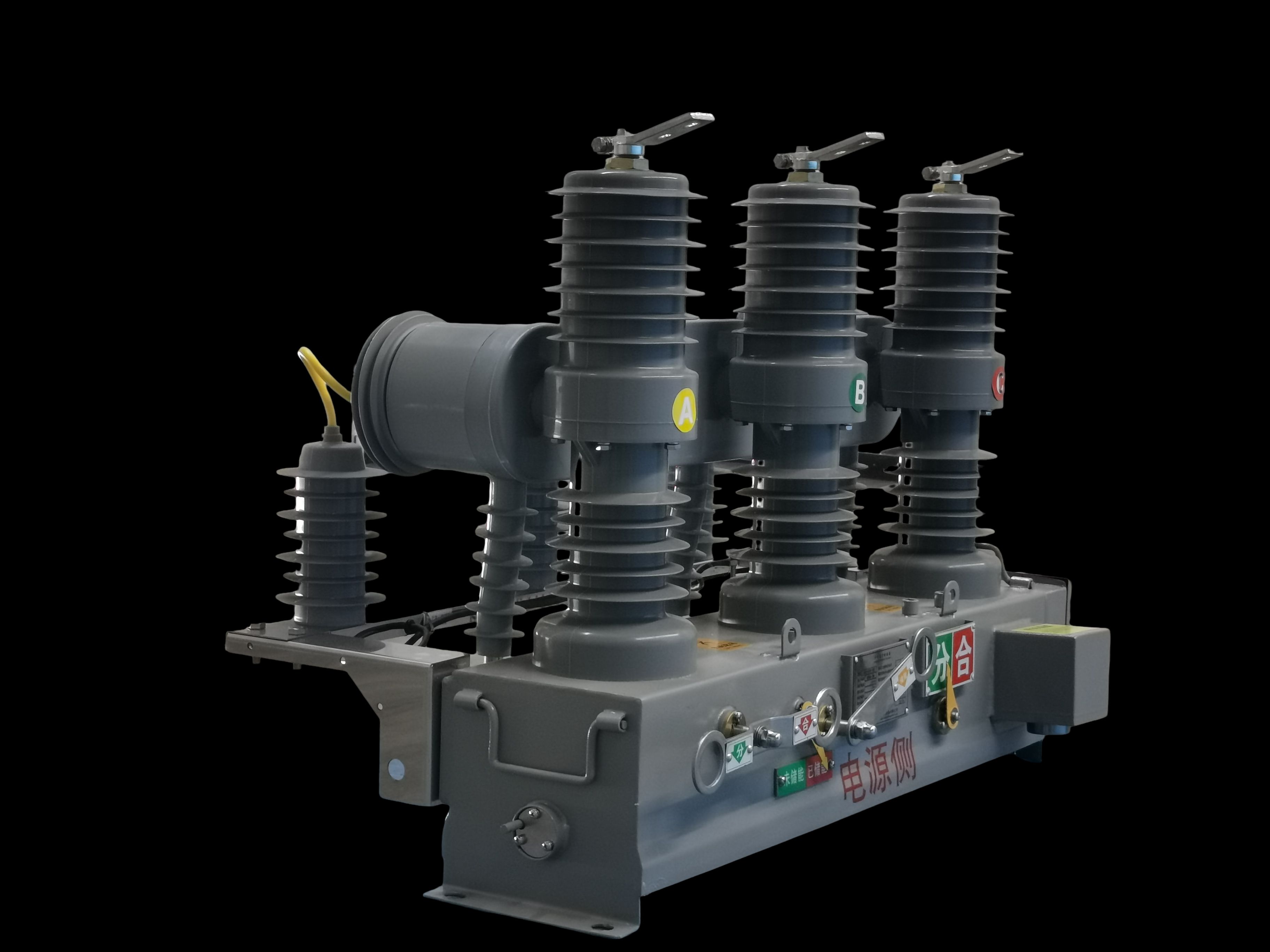
When you look at a breaker or fuse, the interrupting rating isn't just another number stamped on the nameplate. It tells you the maximum fault current the device can safely clear without turning into shrapnel or welding itself shut. Misjudge this value by even a few thousand amps, and a routine short circuit can escalate into an arc flash that no one in the room survives. The calculations behind available fault current at a specific point in your system aren't optional—they're the difference between a coordinated shutdown and a catastrophic failure.
Many engineers fall into the trap of assuming that a higher interrupting rating always means better protection. That's only true if the upstream impedance and transformer size actually produce fault currents that approach that ceiling. Oversizing the rating without verifying the system's real fault contribution can lead to a false sense of security. Meanwhile, a breaker with a rating lower than the available fault current might trip once, then fail permanently—leaving the circuit energized and unprotected the next time a fault occurs.
The real danger often hides in older installations where new equipment has been added downstream or the utility has upgraded its transformer. A panel that was properly rated ten years ago can become dangerously underrated overnight without anyone noticing. Checking the interrupting rating against a current short-circuit study isn't a one-time task; it needs to happen every time the system changes. Ignoring this detail doesn't just violate code—it puts every downstream device and every person working on that equipment at risk.
How Contact Material Choices Shape Arc Extinction and Switch Life
The lifespan of an electrical switch often hinges on a microscopic battle fought every time the contacts separate. Arc extinction is not just a matter of quenching a spark; it is a material science problem where the contact surface itself determines how rapidly the arc cools and deionizes. Silver-cadmium oxide, long a workhorse in high-current applications, works because the cadmium oxide decomposes under arc heat, absorbing energy and preventing the contacts from welding. But as the industry shifts away from cadmium, silver-tin oxide and silver-zinc oxide have gained ground, each altering the arc dynamics in subtle ways that ripple through switch endurance.
Material choice also dictates how erosion accumulates over thousands of operations. A contact that erodes evenly keeps its geometry stable, reducing arc re-ignition and contact bounce. Silver-nickel, for example, excels in moderate DC switching because its high melting point resists material transfer, yet it struggles under severe overload conditions where silver-tungsten holds up better. These trade-offs mean a switch designed for one load profile can fail prematurely if the contact material is swapped without reconsidering the entire extinction mechanism. The arc is not a simple spark; it is a feedback loop between contact surface, vaporized metal, and plasma temperature.
Ultimately, the longest-lived switches pair the right material with the right extinguishing geometry. A high-arc-resistance alloy can still produce excessive wear if the contact gap opens too slowly or the venting path is restricted. Conversely, a fast-opening mechanism with a mediocre contact material may outperform a premium alloy in a poorly designed chamber. Engineers who treat contact material as a standalone specification miss the bigger picture: arc extinction is a systems problem where every milligram of contact material and every millimeter of travel defines how gracefully the switch ages.
Real-World Installation Scenarios Where Vacuum Switching Prevents Downtime
In a busy automotive assembly plant, a single unexpected power interruption can halt the entire production line, costing thousands of dollars per minute. When a short circuit occurs on the main bus, traditional air-break circuit breakers may take several cycles to clear the fault, allowing voltage sags to propagate through sensitive robotics and PLCs. Vacuum switching technology, with its rapid arc extinction and high dielectric recovery, isolates the faulted section almost instantaneously, keeping the rest of the plant fully operational. Maintenance teams have reported that since retrofitting vacuum contactors on critical motor feeders, nuisance trips and equipment damage from transient overvoltages have dropped to near zero.
Hospital power systems demand uncompromising reliability, especially in operating rooms and intensive care units. A momentary loss of supply to life-support equipment is simply not an option. Vacuum interrupters are commonly installed in automatic transfer switches and generator paralleling gear because they can interrupt load currents without producing external arcs or hot gases. During routine generator testing or real utility outages, the vacuum switch transitions between sources in under 100 milliseconds, so downstream equipment never sees a gap in voltage. Facility engineers appreciate the sealed-for-life design, which means no contact erosion or oxidation even after decades of switching under load.
Data centers present another compelling case: air-conditioning compressors and large UPS systems create frequent inrush currents and harmonic stress on switchgear. Conventional breakers may require periodic maintenance and contact replacement, but vacuum switching handles these demanding operations with minimal wear. A hyperscale colocation provider installed vacuum circuit breakers on all 480 V distribution feeders and observed a 40 percent reduction in planned downtime for switchgear maintenance over a three-year period. Because the vacuum bottles are hermetically sealed, there is no need to clean arc chutes or replace contacts, and switching operations remain whisper-quiet even during fault clearing, which also reduces acoustic disturbance in occupied server halls.
The Maintenance Reality Behind Sealed Interrupter Claims
Sealed interrupters are often marketed as a fit-and-forget solution, but field experience tells a different story. The enclosure may keep out dust and moisture under ideal conditions, yet thermal cycling, vibration, and rough handling during installation gradually compromise the seals. Once the internal atmosphere changes, contact wear accelerates and the unit can fail long before its claimed service life ends.
Routine maintenance on these devices is rarely as simple as wiping down the exterior. Technicians still need to check bolt torque on terminations, inspect the operating mechanism for binding or sluggishness, and verify that the vacuum or gas pressure inside remains within design limits. Small leaks or micro-cracks in the housing are easy to miss until a fault occurs, so relying solely on the sealed label is a gamble.
Some manufacturers claim that their interrupters never need internal inspection, but that position ignores how real-world conditions accumulate stress. Contaminants from nearby equipment, high humidity, and frequent switching operations all contribute to gradual degradation. A short visual and mechanical check every few years costs far less than an unplanned outage, and it gives you actual data instead of relying on a sales brochure.
Smart Monitoring Add-Ons That Make Legacy Switchgear More Predictable
Retrofitting legacy switchgear with compact wireless sensors that track partial discharge, temperature, and humidity gives maintenance teams a real-time view of insulation health. Instead of waiting for scheduled shutdowns or relying on spot checks, these add-ons feed continuous data into a central dashboard, flagging subtle changes before they become failures.
The predictability comes from pattern recognition. By comparing live readings against historical baselines for the same breaker or bus section, the system can distinguish harmless load fluctuations from developing faults. Alerts arrive with enough lead time to schedule repairs during low-demand windows, reducing emergency outages.
Installation is usually non-invasive: clamp-on CTs, surface acoustic wave temperature probes, and small radio modules mount in spare compartments without altering the original protection scheme. This keeps older gear in service longer while adding a layer of intelligence that was never part of the original design.
FAQ
A vacuum load break switch uses sealed vacuum interrupters to make and break load currents. Unlike circuit breakers, it doesn't clear faults but handles routine switching of lines, transformers, or capacitor banks. Vacuum extinguishes the arc almost instantly because there are no gas molecules to ionize, which keeps contacts clean and minimizes wear.
Vacuum interruption offers several practical benefits: no risk of SF6 leaks or handling restrictions, extremely fast arc extinction, and a compact design that fits smaller enclosures. You also get longer contact life since the vacuum environment prevents oxidation. Maintenance usually boils down to occasional visual checks and testing vacuum integrity rather than gas refills or oil changes.
Start with rated voltage and continuous current, but pay close attention to short-time withstand current and making/breaking capacity. Look for a switch that matches your system's fault level, not just normal load. Also check the electrical endurance class—how many load operations it can perform before contact replacement. A higher class saves long-term costs in frequently switched circuits.
Most modern vacuum interrupters are sealed for life, so you won't be topping up gas or oil. A practical schedule includes annual visual inspections for dust, moisture, or signs of overheating at terminations. Every few years, perform a contact resistance test and a high-potential test across open contacts to verify vacuum integrity. If the switch has a built-in wear indicator, use that to judge contact life.
Yes, many models come in outdoor-rated enclosures with IP ratings for rain, dust, and UV exposure. However, check the manufacturer's environmental specifications for temperature range and humidity. In coastal or heavily polluted areas, consider stainless steel enclosures or additional anti-corrosion treatment. Always keep the operating mechanism dry and ensure cable entry points are sealed correctly.
Look for positive contact position indication and a robust mechanical interlock that prevents opening under load if not rated for it. Some switches include visible isolation gaps or earthing positions for safe maintenance. Also verify that the mechanism has anti-pumping protection to avoid repeated closing on a fault. Field operators often prefer switches with easy manual operation plus a clear trip-free feature.
Build a shortlist based on required ratings first, then compare mechanical endurance (number of operations), warranty terms, and availability of spare parts in your region. Ask for references from utilities with similar operating conditions. Don't ignore ergonomics—if field crews find a switch awkward to operate, adoption suffers. Finally, check whether the manufacturer offers local support for commissioning and fault analysis.
Conclusion
Selecting a true vacuum load break switch goes far beyond a basic disconnect; the defining difference lies in its ability to interrupt load current reliably under normal and fault conditions, while a disconnect merely provides visible isolation. Reading breaking capacity ratings carefully is non-negotiable, as misinterpreting kA values or duty cycles can lead to catastrophic failure. The choice of contact material—typically copper-chromium or tungsten-copper alloys—directly shapes arc extinction efficiency and mechanical endurance, with superior materials reducing contact erosion and extending switch life. In real-world installations, from underground distribution vaults to overhead pole-top reclosers, vacuum switching prevents unplanned downtime by containing arcs inside sealed interrupters, making it ideal for harsh or confined environments. However, the maintenance reality behind sealed interrupter claims is more nuanced: while vacuum bottles are maintenance-free in theory, periodic checks of mechanical linkages and insulation resistance remain essential. Smart monitoring add-ons, such as partial discharge sensors and temperature monitors, can retrofit legacy switchgear with predictive diagnostics, turning reactive maintenance into a planned strategy. Taken together, the top vacuum load break switches combine robust breaking capacity, durable contact systems, proven field performance, and retrofit-friendly intelligence to deliver dependable power distribution without surprises.
A practical evaluation of the leading models reveals that no single spec sheet tells the whole story. Engineers should prioritize switches with clearly documented interrupting ratings at system voltage, paired with contact materials proven through type tests rather than marketing claims. Installations in renewable generation tie-ins, industrial feeder circuits, and utility network reconfiguration all benefit from vacuum technology’s arc-containment advantage, especially where space is tight or environmental sealing is critical. While sealed interrupters reduce routine maintenance, they do not eliminate the need for thermal scanning and operating mechanism lubrication. The most future-proof choices offer modular smart monitoring that integrates with existing SCADA or IoT platforms, allowing gradual upgrades instead of full replacement. By blending verified performance data, honest maintenance expectations, and incremental digital enhancements, operators can build a resilient distribution network around the top vacuum load break switches—without falling for overhyped simplicity or ignoring the operational realities of field service.
Contact Us
Contact Person: Julion
Email: [email protected]
Tel/WhatsApp: 8617351370631
Website: https://www.deyunelectric.com