

Top Road Roller Manufacturer Options That Deliver Reliable Performance
2026-10-20
Choosing a road roller isn't just about horsepower or drum width—it's about trusting a machine to deliver consistent density pass after pass, job after job. Yet with so many manufacturers claiming top-tier performance, narrowing the field can feel overwhelming. In this guide, we cut through the noise to highlight options that actually hold up under real-world conditions. Among them, Dynamic stands out for its focus on precision compaction and uptime, offering a compelling case for contractors who can't afford rework. Read on to see which manufacturers earn their place on your shortlist—and why reliability should never be an afterthought.
What Keeps a Road Roller’s Compaction Consistent Across Long Shifts
Maintaining uniform compaction on a road roller throughout an extended shift hinges less on operator vigilance alone than on how the machine manages heat, vibration, and ground contact over time. The drums soak up thermal energy from continuous use, and if cooling isn’t balanced against the work rate, metal expansion can alter the effective contact width by a few millimeters. That sounds minor, but on a twelve-hour shift it translates into soft spots that never quite reach the specified density. Experienced crews keep an eye on drum temperature, not because the manual says so, but because a hot drum on cool subbase behaves differently than a warm drum on hot asphalt.
Then there’s the vibration system. Most rollers use eccentric weights that spin at a set frequency, but the actual amplitude at the drum surface drifts as hydraulic fluid heats up and loses viscosity. A drop of two or three Hertz can go unnoticed at the controls while the compaction energy delivered to the ground falls off steadily. Operators who chase consistency often learn to listen for the hum changing under load—a sign that the system is compensating rather than holding a true steady state. Some newer models self-adjust, but on older units the best practice is to pause and recalibrate after the first hour when fluid temperatures have settled.
Finally, the human factor: monotony and fatigue lead to overlapping passes too tightly in the middle and too loosely at the edges. A compacted mat with a subtle crown develops not because the roller lacks capability but because the operator’s line-up drifts as the shift wears on. Pairing a simple edge-guide—a painted string line or a laser reference—with scheduled short breaks can preserve pass spacing far better than asking someone to “stay focused” for eight hours straight. Compaction that stays consistent is rarely about one grand fix; it’s the sum of small, repeated adjustments to a machine’s physics and a person’s rhythm.
Signs a Manufacturer Builds for the Real World, Not Just the Spec Sheet
Look past the polished datasheet and one of the clearest signs appears in the testing regime. A builder serious about the field will run prototypes through mud, salt fog, voltage spikes, and vibration patterns that don't show up in a standards manual. They'll publish photos of units pulled from real customer sites, caked in dust or scorched by a near-miss lightning strike, and explain what failed and what they changed. That kind of transparency is rare—and it's exactly what separates a tool made for the job from a component that only survives on a bench.
Another giveaway is how the product behaves when it's worn in, not fresh out of the box. Real-world builders design for thermal drift, connector fatigue, and battery degradation. They'll derate a power supply at 50°C even if the spec sheet says 85°C, because they've measured it under load in a sealed enclosure. They also make field repairs straightforward: boards slide out without desoldering, firmware can be rolled back, and mounting points don't require a custom bracket. If the manual reads like it was written by someone who's had to fix the thing on a ladder in the rain, you've found a manufacturer that builds for reality.
Single-Drum or Double-Drum: Matching Roller Type to Your Jobsite
A single-drum roller shines on uneven terrain, its aggressive padfoot or smooth drum digging into soil, gravel, or clay to lock in density where stability matters most. If your jobsite involves subgrade preparation, large fill areas, or road base with a rough, open surface, that single heavy drum gives you the traction and compaction force to punch through loose lifts without getting bogged down.
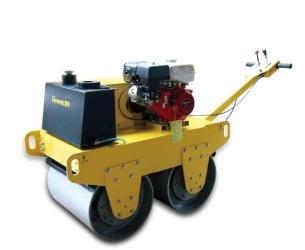
Switch to a double-drum model and you are looking at a machine built for finesse on finished surfaces. Twin smooth drums balanced front and rear deliver uniform pressure across asphalt mats, thin overlays, or granular bases that need a crisp, even finish. Because there is no drive tire chewing up the material, you avoid surface marks and get a tighter, smoother result in fewer passes. Think parking lots, driveways, or any paving job where the top layer is the final product.
The real trick is knowing what the ground demands before you commit. Tight curves, soft edges, or steep grades may push you toward a single-drum’s maneuverability and punch, while long, straight stretches of fresh asphalt reward the double-drum’s balance and polish. Match the roller to the task, not the other way around, and you will spend less time fighting the machine and more time closing out the job.
How Drum Width and Vibration Settings Change Finished Density
Drum width mainly controls how much downward force reaches each square inch of the material. A narrower drum concentrates the machine's weight into a smaller contact strip, so the unit pressure spikes and particles lock together faster. The trade-off is that compaction near the drum edges can lag behind the center, leaving faint loose streaks. A wider drum spreads that force thin, which slows the initial density gain per pass but produces a more even surface profile. In practice, operators often compensate for a wide drum by adding passes or boosting vibration energy.
Vibration settings work through frequency and amplitude, and they don't act the same way on every material. High frequency with low amplitude shakes fine particles just enough to expel trapped air and settle them into place, which is useful for thin lifts or granular soils. Low frequency with high amplitude shoves the drum harder into the layer, sending energy deeper—helpful for thick lifts or cohesive mixes. But if the amplitude is too aggressive, surface particles bounce loose instead of densifying, and the finished density can actually drop.
When drum width and vibration are adjusted together, the density response is rarely linear. A wide drum paired with high-frequency vibration tends to work well for thin finishing layers, while a narrow drum with low-frequency, high-amplitude vibration suits deep compaction. Moisture content and gradation also shift the ideal combination, so field test strips usually give a more reliable answer than any universal chart.
Parts Networks and Dealer Support That Prevent Downtime on Paving Days
When a paver stalls halfway through a fresh mat, the difference between a minor hiccup and a day-long shutdown often comes down to who answers the phone. A well-built parts network doesn't just stock filters and screed plates—it positions them within a few hours of your job site, backed by dealers who know which hydraulic fitting fails at 2 p.m. on a hot afternoon. That kind of support turns a would-be disaster into a quick swap and a cold drink by the roller.
The best dealers treat your paving schedule like their own. They track your fleet's wear patterns, pre-stage wear parts before peak season, and keep a local technician on call who can walk your crew through a belt tension adjustment over video chat. It's not magic—it's inventory discipline and a genuine understanding that asphalt doesn't wait for a backordered sprocket.
Real downtime prevention also means honest advice. Sometimes the right part is a $12 seal, not a $4,000 motor, and a dealer who tells you that earns the next ten years of your business. Pair that with overnight drop shipments to rural laydown yards and you get what paving contractors actually need: a support network that works as hard as the screed does.
Comparing Lifetime Costs Beyond the Initial Price Tag
The sticker price rarely tells the whole story. A budget-friendly appliance might seem like a steal until you factor in its thirst for electricity, while a pricier model with a better energy rating quietly pays you back month after month. Look beyond the checkout screen and consider how often you'll replace parts, how much maintenance it demands, and whether it'll still be running efficiently five years down the road.
Think of it as renting versus owning the long-term burden. That cheap printer with the expensive ink cartridges, the bargain laptop that needs a new battery every year, or the entry-level car with steep depreciation can all end up costing far more than a slightly higher upfront investment. When you add up energy use, consumables, repairs, and resale value, the "cheaper" option often becomes the pricier one over time.
Smart buyers map out the full cost curve before swiping their card. They compare not just the initial outlay, but the per-year cost of ownership across a realistic lifespan. Whether it's a water heater, a phone, or a pair of work boots, the real question is simple: what will this actually cost me by the time I'm done with it?
FAQ
Caterpillar, Bomag, and Hamm typically top that list. Their drums, frames, and hydraulic systems are engineered to handle continuous compaction on harsh aggregates without breaking down. Volvo and Dynapac also have strong reputations, especially for asphalt work where consistent vibration frequency matters.
Start with the material. For cohesive soils like clay, a padfoot or sheepsfoot roller gives better kneading action. For granular soils and asphalt, smooth drum rollers are the standard. If you are working on both, look for a model with interchangeable drum shells rather than buying two separate machines.
Look at hydraulic oil cooling capacity, drum shell thickness, and vibration bearing design. Many operators overlook the eccentric weight system, but it is the part that fails first on cheaper rollers. Also check whether the manufacturer offers sealed bearings and whether the service points are actually reachable without removing panels.
Yes, and that often matters more than the initial price. Caterpillar and Volvo have dense dealer networks, so wear parts like scraper blades, drum seals, and vibration mounts are usually in stock. Bomag and Hamm are strong in Europe and growing in North America. XCMG and SANY can be cheaper to buy, but you may wait weeks for a simple hydraulic hose if the local distributor is thin.
Rental companies tend to run Bomag and Dynapac because the controls are simple and the safety interlocks are forgiving. Hamm also shows up often, especially on larger sites. Cat rollers are tough but some rental managers say their electronic controls can be confusing for first-time users, so they gravitate toward more mechanical designs.
Watch for very low curb weight relative to drum width, because that usually means thinner steel and lighter frames. Also check vibration frequency ranges: if the roller only offers one or two fixed frequencies, it may struggle on mixed lifts. A good sign is when the manufacturer publishes expected bearing life and service intervals instead of hiding them in fine print.
A well-maintained roller from a top brand can reach 10,000 to 15,000 hours before major overhaul. Hamm and Caterpillar regularly exceed that in rental fleets. The key is not just the initial build but how easy it is to do daily greasing and oil checks. If a roller makes those tasks quick, operators will actually do them.
Conclusion
Choosing a road roller manufacturer that delivers dependable performance means looking past glossy catalogs and focusing on how the machine holds up when the paving crew is pushing through a long shift. Consistent compaction doesn’t happen by accident—it comes from well-matched drum dimensions, stable vibration systems, and build details that minimize drift in frequency or amplitude as hydraulic fluid heats up. The best manufacturers design single-drum and double-drum models around specific site conditions, so a compact tandem roller isn’t just a scaled-down version of a heavy soil compactor but a purpose-built tool for hot-mix asphalt or tight repair work. That kind of real-world thinking shows up in reinforced frames, accessible service points, and controls that don’t require constant adjustment after the first hour of operation. A roller that needs constant babysitting will rarely hit the density spec on schedule.
Drum width and vibration settings matter just as much as raw centrifugal force. A wider drum can reduce the number of passes on open lots, but it may sacrifice edge clearance around curbs and manholes, so the smart choice often depends on the finish detail more than the total area. Likewise, amplitude and frequency presets that stay predictable across several hours keep density uniform without over-compacting the surface. Beyond the machine itself, a reliable manufacturer backs its product with parts inventories and dealer technicians who understand paving timelines—downtime during a hot-mix laydown isn’t just an inconvenience, it can ruin the mat. When comparing lifetime costs, the purchase price is only one line item; fuel burn, wear-part replacement intervals, and resale value tell a more honest story about what a roller will actually cost per compacted ton.
Contact Us
Contact Person: Annie
Email: [email protected]
Tel/WhatsApp: 8613391442963
Website: https://www.dynamic-eq.com