

Tricresyl Phosphate Factory A Behind the Scenes Look at Production and Safety
2026-10-29
Step inside a tricresyl phosphate plant and you quickly realize it’s not just about mixing chemicals—it’s a balancing act between precision engineering and uncompromising safety. From raw material handling to final quality checks, every stage hides details that rarely make it into public view. In this behind-the-scenes look, we walk the production floor with Fortune to uncover how modern facilities manage risk, maintain consistency, and keep workers protected in an industry where the margin for error is razor-thin.
Unloading the Unknown: Raw Materials Meet the First Checkpoint
The forklift groans as it reverses away from the dock, leaving behind a stack of pallets wrapped in dusty plastic. Nobody here has seen these crates before—their labels are smeared, their strapping rusted in places, and the air around them carries a faint smell of damp clay. For the crew on the floor, this is the moment the unknown stops being an abstract worry on a shipping manifest and becomes something they have to touch, lift, and trust. The first checkpoint isn't a formality; it's where raw materials earn their keep.
A young inspector circles the load with a clipboard pressed against her chest, her eyes moving from corner dents to the way one pallet leans slightly to the left. She snaps a photo, then another, before peeling back a corner of the wrap. The material beneath is darker than expected, with a texture that reminds her of old brick rather than the promised aggregate. She doesn't say anything yet—just jots down a note and checks the moisture reading. Around her, the usual rhythm of the warehouse has slowed. People are watching without watching, curious but not wanting to break protocol.
What happens next shapes the next three weeks of production. If this batch passes, it moves to the grinding line and disappears into the daily grind of outputs and deadlines. If it fails, someone has to make a call—send it back, negotiate a discount, or blend it with known stock and hope the variance doesn't show up later. None of that is decided in the first ten minutes, but the evidence collected here sets the tone. The unknown doesn't stay unknown for long once the first checkpoint does its job.
Inside the Reactor's Grip: Where Heat and Pressure Forge the Product
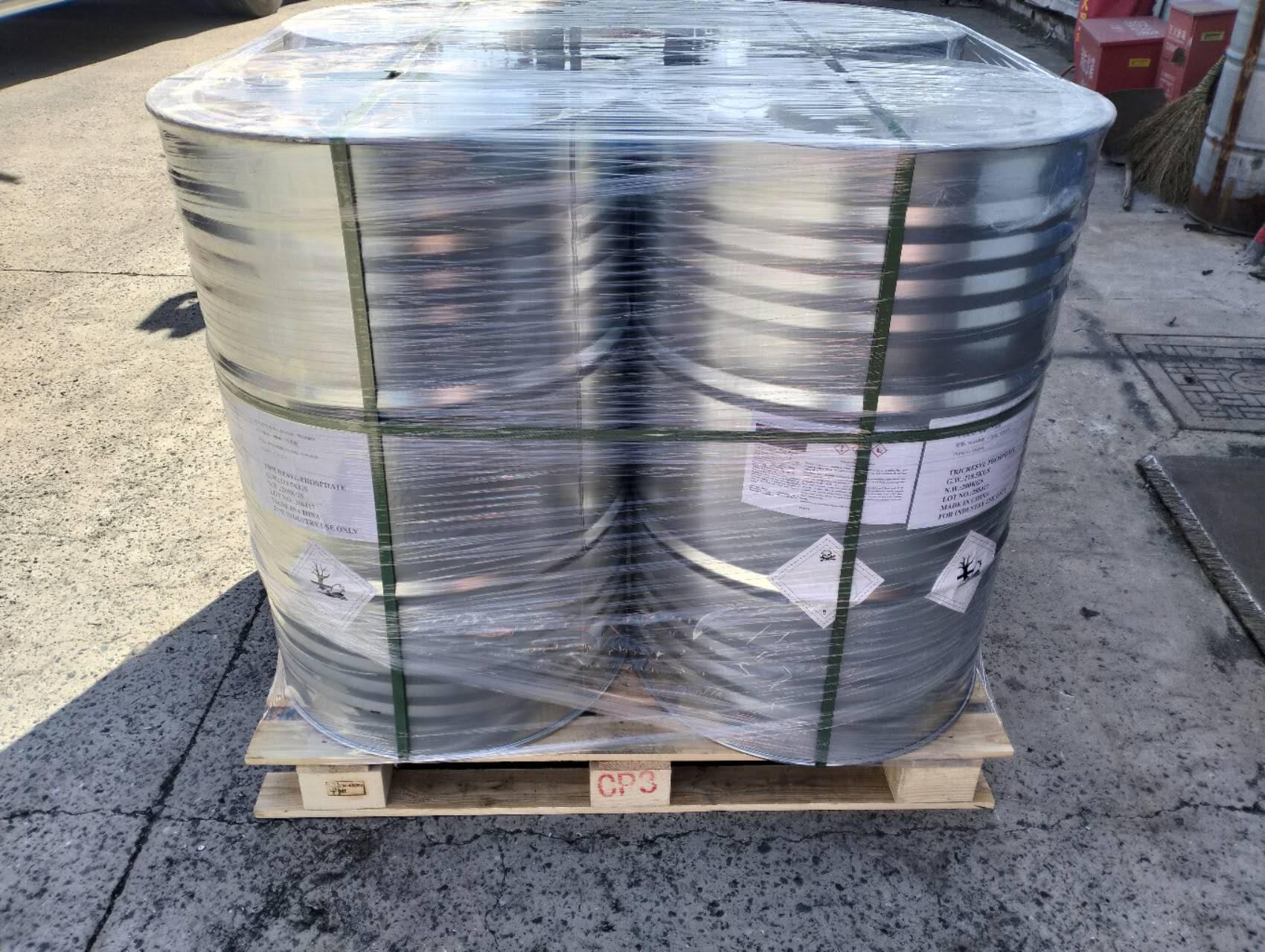
The reactor doesn't just hold a reaction—it owns it. At the core, feed streams collide with catalyst beds while thermal oil circulates through jacket coils, pushing the mixture past its activation energy. Temperature probes read 340°C, and the pressure regulator holds 28 bar. That's not by accident. It's the precise window where long-chain molecules crack into the desired fraction, and anything outside that window means wasted feedstock.
Inside that steel shell, pressure isn't just a number on a gauge. It compresses the vapor phase, forcing reactants into closer contact with the catalyst surface. Think of it as a crowded room where every collision can turn productive. The heat, meanwhile, keeps the whole system kinetically alive—too little and the reaction stalls, too much and side products start stealing yield. Operators learn to read the sound of the compressor and the subtle drift in pressure drop across the bed.
What emerges from this grip isn't just a chemical. It's a product with a history: born from a narrow band of operating conditions, shaped by turbulent mixing, and quenched at the exact moment to lock in purity. The reactor doesn't care about the theory; it respects only the physical limits of what heat and pressure can do. That's where the real product is forged.
The Invisible Threat: Leak Detection Beyond the Obvious
Most people picture a leak as a dripping faucet or a puddle on the floor, but the most destructive failures rarely announce themselves. Underground pipes can weep for months through hairline cracks, valve seats degrade just enough to release trace gases, and building envelopes allow moisture to migrate behind finishes without a single visible stain. These quiet losses accelerate corrosion, promote mold growth inside wall cavities, and erode soil around foundations long before anyone suspects a problem.
Traditional visual inspections miss almost all of these conditions because the signs are subtle: a faint pressure drop on a gauge, a slight increase in humidity near a riser, an unexplained spike in water usage spread across weeks. Advanced detection now relies on acoustic sensors that pick up high-frequency hissing from escaping gas, thermal imaging that reveals temperature anomalies behind sealed surfaces, and tracer gas methods that map the path of even the smallest breach. The challenge is not just having the tools but knowing where to look when nothing appears broken.
Treating leak detection as a reactive task—waiting for water to appear or an alarm to trip—means accepting damage that has already been done. A smarter approach treats the building or pipeline as a living system with a normal baseline, then watches for deviations: a drift in pressure trends, a change in acoustic signature, a cold spot that shouldn't exist. These invisible threats reward the teams that question what "normal" really means, because by the time a leak becomes obvious, its cost has already multiplied far beyond the price of early intervention.
Safety as Muscle Memory: Drills, Routines, and the Human Factor
You can hand someone a rulebook thick enough to stop a door, but safety doesn't live in print. It lives in the hands that reach for the kill switch without looking, in the feet that find the brake pedal a half-second before the brain finishes spelling 'danger.' Drills do that. Not the kind where everyone shuffles through the motions and signs a sheet, but the kind that simulates a real failure—the power cut mid-lift, the sudden hiss of a leaking valve, the clatter of a dropped tool in a place where dropping things gets people hurt. Run those often enough, and the response stops being a decision. It becomes a reflex, as automatic as flinching from a hot surface.
Routines matter more than bursts of vigilance. A morning check that takes four minutes, a hand on the rail before every ascent, a verbal call-and-response before startup—these small, unglamorous repetitions build a layer of protection that no amount of willpower can sustain. The human factor is the wildcard: fatigue, distraction, overconfidence, the guy who's done this a thousand times and thinks he can skip step seven today. That's why the best safety cultures treat drift as an enemy, not a character flaw. They build drills that account for tired minds and bored hands, and they rotate routines just enough to keep the edge from dulling.
Muscle memory fails when the drill becomes theater. If the evacuation walk feels like a coffee break, if the harness check is a box-tick, then you've trained people to move slowly in an emergency and to trust gear they haven't actually inspected. The goal isn't to memorize a sequence; it's to make safe behavior the path of least resistance. That means practicing the ugly scenarios—the ones where the usual exit is blocked, the backup tool is missing, the nearest coworker is the one who panics. When the body already knows what to do, the mind stays calm enough to handle the unexpected. That's the whole game: turning a conscious choice into an unthinking habit, so that on the worst day, the right move is simply the one you've made ten thousand times before.
Cooling, Crystallizing, and the Long Road to Purity
In most purification workflows, cooling is not simply a matter of lowering the temperature. It is a controlled intervention that forces dissolved impurities out of the liquid phase before the desired product has a chance to solidify. By adjusting the cooling rate, you shift the balance between nucleation and crystal growth. A rapid drop in temperature tends to create many tiny, imperfect crystals that trap mother liquor within their lattices. Slowing the process down allows larger, more ordered structures to emerge, but it also tests your patience and your ability to keep the system clean.
Crystallization itself rarely delivers a pure compound on the first pass. What forms in the vessel is a compromise between what you want and what the solution is willing to give up under those conditions. Even after filtration, the crystals carry a thin film of the original mixture, along with inclusions that formed when growth outpaced the rejection of foreign molecules. Recrystallization, sometimes repeated three or four times, is the long road most chemists accept. Each cycle discards a portion of the yield in exchange for incremental gains in purity, and the decision to stop is based on analytical data rather than visual inspection.
That long road becomes shorter only when you learn to read the signs at each stage. A cloudy solution that fails to clear after filtering may signal an impurity with a similar solubility profile. A crystal habit that changes between batches can point to a new polymorph or a shift in solvent composition. Purification by cooling and crystallizing is less a fixed recipe than a conversation with the material itself, one where you adjust, observe, and wait until the solid phase finally agrees to let go of what does not belong.
The Last Gate: Batch Records, Tests, and the Final Stamp
By the time a batch reaches the last gate, most of the work is already done—or so it can seem. In reality, this is where the entire production story gets checked against the written record. Batch records are pulled, line by line, and compared with what actually happened on the floor. Test results from raw materials, in-process samples, and finished product are gathered into a single file. Nothing moves forward until every entry has a signature, every deviation has an explanation, and every result falls within the specified limits.
The final stamp is not a formality. It is the point where quality becomes a legal and commercial fact. A reviewer might spend hours tracing a single temperature excursion or reconciling a missing time entry. If the batch record says a step took forty minutes, the log must show it. If a test was repeated, the reason for the repeat has to be written down. Only after these details line up does the authorized person press the stamp or apply the electronic signature that releases the batch for shipment.
That stamp carries weight because it says someone stood behind the data. It tells the next person in the chain—whether a pharmacist, a patient, or a regulator—that the batch was made and tested as claimed. Companies that treat this final check as a burden often pay for it later in recalls or audit findings. The ones that respect it understand that the last gate is not just about closing a folder; it is about keeping a promise.
FAQ
The process typically starts with mixed cresols and phosphorus oxychloride. A base such as sodium hydroxide or pyridine is often used to neutralize the hydrochloric acid released during the reaction.
The exothermic esterification is usually kept between 80°C and 120°C by circulating cooling water or oil through the reactor jacket. Operators watch for hot spots because runaway heat can degrade the cresol and form unwanted side products.
The biggest concerns are exposure to phosphorus oxychloride fumes, which are corrosive and can cause severe respiratory irritation, and potential skin contact with liquid TCP. Good ventilation, sealed transfer lines, and full impermeable PPE are standard.
The ortho-cresol isomer produces tri-ortho-cresyl phosphate, a known neurotoxin. Factories monitor feedstock and final product isomeric ratios closely to keep ortho content below strict limits, reducing the risk of delayed nerve damage.
Beyond the control room, operators do hourly rounds to check pump seals, sample the reactor, and log pressure drops across filters. One unexpected routine is sniffing around flange joints for a faint sweet cresol odor, which often signals a small leak before instruments detect it.
The HCl gas is scrubbed with water in an absorption tower, producing technical-grade hydrochloric acid that can be sold or neutralized. If the scrubber pH drifts too low, it can send acidic mist into the stack, so operators titrate the scrubber liquor every couple of hours.
Dedicated storage tanks, separate filter presses, and documented line-flush procedures are used. A plant making both TCP and triphenyl phosphate might flush transfer lines with hot toluene or methanol, then verify cleanliness with a total phosphorus residual test before switching.
Conclusion
At a tricresyl phosphate plant, the process starts long before any reaction begins. Bulk deliveries of cresol and phosphorus oxychloride arrive under strict documentation, and each tanker is sampled before unloading to catch off-spec material at the first checkpoint. Once accepted, the raw materials move into a tightly controlled reactor where heat and pressure are pushed high enough to drive esterification. Operators monitor temperature ramps and pressure curves rather than relying on guesswork, because even a small drift can alter the isomer balance. Leak detection goes beyond visual inspection; portable photoionization detectors and fixed sensors sweep for traces that the human nose might miss, especially around flange joints and pump seals.
Safety here is not a poster on the wall but a drilled habit. Teams run monthly release scenarios, and the response becomes muscle memory through repetition of shutdown sequences and evacuation routes. After the reaction mass cools, crystallization and repeated washing strip away unreacted acids and colored impurities until the phosphate ester meets a tight purity profile. Nothing leaves the site without a final batch record review, lab tests for acidity and clarity, and a signature from quality control. That last gate is what turns a hazardous chemical process into a product that can be shipped with confidence.
Contact Us
Contact Person: WANG SIHAI
Email: [email protected]
Tel/WhatsApp: +86-13815295628
Website: https://www.fortunechemtech.com/index_en.html