

Wafer Butterfly Valve Company: Key Factors to Evaluate Before You Buy
2026-08-14
Picking a wafer butterfly valve company isn’t just about the lowest bid—it’s about avoiding costly failures down the line. Many buyers overlook critical factors like seat material compatibility, pressure ratings, and after-sales support until it’s too late. In this post, we’ll break down what to actually check before you commit, and why brands like DRIFCO have set a benchmark worth measuring against.
Materials That Stand Up to Corrosive Media Without Fail
Not every material earns a place in aggressive chemical service. The ones that do share an uncommon refusal to surrender at the surface. High-performance alloys like Hastelloy C-276 and titanium grade 7 hold their structure against hydrochloric acid, seawater, and oxidizing chlorides that would pit ordinary stainless steel within hours. Their secret isn't a single magic ingredient but a carefully balanced chemistry—molybdenum, chromium, and nickel working together to form a passive layer that repairs itself the instant it's scratched.
Then there are the engineered plastics and ceramics. PTFE shrugs off nearly everything except molten alkali metals, while silicon carbide stands firm in boiling sulfuric acid where metals dissolve. These materials don't rely on a thin oxide film; they are inherently inert, with bonds so tight that corrosive ions simply can't find a foothold. In real plants, that means pump impellers and valve bodies run for decades without a whisper of wall loss.
The real differentiator, though, is predictability. Materials that handle corrosive media without fail are chosen because their degradation curves stay flat even at elevated temperatures and under stress. A zirconium heat exchanger in acetic acid service, a graphite block in a phosphoric acid evaporator—these aren't guesses. They're the result of matching the exact corrosion mechanism to a material that doesn't just tolerate it but ignores it entirely.
Hidden Stress Points: Checking Pressure and Temperature Limits Early
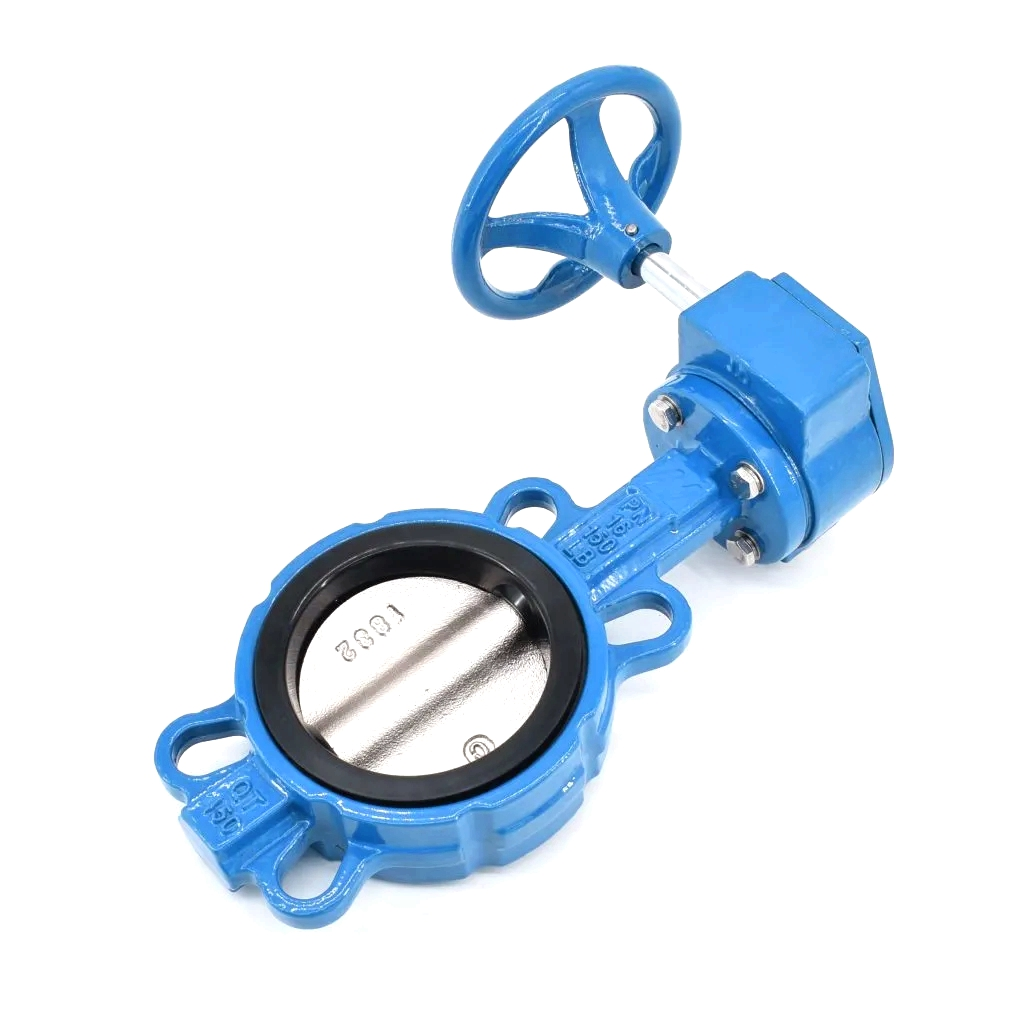
Most failures don't start where the gauge reads highest. They begin at the elbows, flanges, and welds that quietly carry stress concentrations long before a pressure or temperature alarm triggers. Checking these limits early means walking the system with a different eye—looking for the thin-walled sections, the thermal gradients across a valve body, and the spots where expansion gets restrained. A pressure rating on a nameplate is not a safeguard if the surrounding supports have shifted or a gasket has aged unevenly.
Temperature limits hide their own traps. A pipe that handles steam at 200°C may still see cold spots near supports or condensation pockets that cycle far below the design minimum. Repeated thermal cycling works like a slow hammer, opening micro-cracks where two materials with different expansion rates meet. Early checks should map these mismatch zones and compare actual operating swings against the assumed steady-state values. If the real temperature delta exceeds what the joint was designed to flex through, you’ve found a hidden stress point before it becomes a leak.
Pressure gets the most attention, but it’s often the rate of change that does the damage. A quick valve closure or pump start can spike pressure locally even when the average stays within limits. Checking early means instrumenting a few key locations—downstream of fast-acting valves, at dead legs, and on small-bore connections—to catch transient peaks that never show up on a standard log. Once you know where the system actually pushes beyond its comfortable range, you can adjust operating sequences or add supports to move the stress away from the weakest link.
Why Factory Testing Matters More Than a Flashy Brochure
A glossy catalog may promise repeatability within 0.02 mm and whisper about 'German engineering,' but none of that means much until you watch the machine cycle at the factory. Factory testing lets you see the real tolerances, listen for unusual bearing noise, and check how hot the spindle gets after a two-hour run. Those are things a marketing team cannot photoshop.
I have yet to visit a factory where a test didn't turn up at least one issue worth fixing before shipment. Sometimes it's a miswired sensor, a software parameter that didn't match the order, or a loose fitting that would have caused a leak on day three. Catching those problems on the test bench costs an afternoon; catching them at your loading dock can cost a week of downtime and an angry phone call. That alone makes factory testing more valuable than any brochure.
A factory test report is evidence, not adjectives. It shows the measured runout, the actual cycle time, the temperature after continuous operation. Brochures are full of words like 'robust' and 'high precision' that mean nothing without numbers. When you stand next to a machine that just passed a 24-hour endurance run, you know exactly what you are buying — and that confidence is something no printed page can deliver.
Customization Done Right: Avoiding Field Modifications
The fastest route to a broken upgrade path is editing core fields directly. When you change a label, data type, or picklist value inside a standard object, every integration, report, and automation that references it silently drifts out of sync. Instead, treat the out-of-the-box schema as a contract: create a new custom field, map it through a flow or formula, and leave the original untouched. This keeps your business language flexible while preserving the integrity of managed packages and future releases.
A common trap is renaming a field to match internal jargon, only to discover six months later that a third-party connector was keyed to the old API name. The better pattern is to add a custom label or a lightweight UI extension that displays your terminology without altering the underlying metadata. If you must retire an outdated field, don't delete it—remove it from page layouts, mark it deprecated in your data dictionary, and enforce validation rules to prevent new data entry. Historical records stay queryable, and no hard dependency breaks overnight.
Think of field modifications like editing a library's catalog cards with a permanent marker. The moment you write over the original, every borrower holding an old reference is lost. A clean customization layer—built with separate fields, flows, and visibility controls—lets you reshape the user experience without corrupting the source of truth. This discipline feels slower at first, but it pays back tenfold during the next major update, when teams that hacked the schema are untangling merge conflicts and you're simply deploying.
Reading Between the Lead Time Quotes: Who Actually Stocks What They Sell
Lead times quoted by suppliers often hide more than they reveal. A vendor may promise four weeks, but that number can mean four weeks until their own raw materials arrive, not until your order leaves the dock. Comparing quotes at face value tends to reward whoever types the smallest number into the spreadsheet, not whoever actually has parts on a shelf.
The more useful question is whether a distributor carries inventory or simply passes along a manufacturer’s schedule. A company that holds stock can absorb demand spikes and ship from what it already owns. One that orders on your behalf is really just adding another link in the chain, and its quoted lead time is often a guess dressed up as a commitment.
Pressing for details helps. Ask where the item sits right now, whether it is allocated to your order, and what happens if the factory slips. Honest answers tend to be specific: a part number, a bin location, a real ship date. Vague reassurances usually mean the inventory exists only on a purchase order.
Support After Installation: When a Vendor Becomes a Long-Term Partner
Once the equipment is up and running, the real test of a vendor begins. A reliable partner doesn't disappear after the final signature—they stay within reach, answering questions that surface days or even months later. It's not about constant hand-holding, but about knowing that when a machine stutters or a process needs fine-tuning, there's a human being on the other end who actually remembers your setup. That sense of continuity turns a simple purchase into a working relationship.
The best support feels less like a service contract and more like an extension of your own team. Instead of generic troubleshooting scripts, you get specific advice: a technician who recalls that your line runs a slightly unusual material blend, or an engineer who suggests a small adjustment based on the humidity in your region. This kind of attention isn't flashy, but it quietly prevents downtime and builds trust. Over time, you stop thinking of them as "the supplier" and start calling them when you're planning a new line, not just when something breaks.
Long-term partnership also means they grow with you. When you expand capacity or shift to a new product category, a committed vendor offers practical upgrades rather than pushing a full replacement. They might visit once a year—not to sell, but to walk the floor and ask what's been annoying you. That proactive stance changes the math: the true cost of a machine includes the years after installation, and a partner who stays engaged makes those years smoother, cheaper, and far less lonely.
FAQ
Look at whether they actually machine or assemble the valve body and disc in-house, and whether they keep test records for every batch. A good sign is when they can walk you through their pressure-testing procedure without hesitation.
Ask for the exact seat and disc material combination, not just a generic "EPDM" note. For instance, if you're running weak acids or hot water, the seat compound and disc coating matter more than the casting itself, and a serious company will have a compatibility chart ready.
Yes, because some manufacturers follow API 609, some follow ISO 5752, and a few cut corners with shorter body lengths. If your pipeline already has existing flanges, a mismatched length can ruin installation day.
Reputable suppliers don't hide behind vague "suitable for most systems" language. You want to see a clear pressure-temperature curve, maximum working pressure at ambient temperature, and the rated temperature range for each seat material.
They matter if your project requires them, but don't treat a certificate as a magic stamp. Ask whether the certification covers the exact size and pressure class you're ordering, and whether the factory has been audited recently.
Request a sample torque chart, installation instructions, and a spare parts list before you buy. If they can't provide these quickly, that's a warning sign for later maintenance issues.
It depends on your application. A concentric design is fine for basic on/off service, but if you deal with high cycling or need better sealing, a double-offset or triple-offset design might be worth the extra cost. A competent company will ask about your duty cycle before recommending anything.
Ask both for the same valve size and pressure class, then compare the valve weight, disc thickness, and stem diameter. Cheaper valves often hide cost in thinner stems or lighter bodies, and those differences show up long before a failure.
Conclusion
Evaluating a wafer butterfly valve supplier starts with how the actual product holds up under your process conditions. Not every stainless or lined valve handles aggressive chemicals the same way, so ask for specific corrosion data against the media you pump, not a generic material chart. Pressure and temperature limits deserve equal attention because the weak link often isn't the disc or body but the seat and stem seals at the edges of the rated envelope. A company that glosses over these numbers is hiding something. Factory testing matters more than any polished catalog. Request witnessed hydrostatic and pneumatic tests, cycle testing under your operating parameters, and torque verification. If they hesitate, walk away. Off-the-shelf valves might look cheaper, but field modifications to make them fit your piping or actuator usually introduce leaks and void warranties. A supplier willing to machine brackets, choose oddball flange drillings, or adjust seat materials before shipment is worth far more than one that ships a box and hopes you make it work.
Lead time quotes often hide the truth. Many distributors list valves they don't physically stock; they order from the factory only after you pay. Ask for current bin locations or warehouse photos and ask what actually leaves the dock in 48 hours. If the answer is vague, expect your project schedule to slip. After installation, the real test is how the vendor responds when a seat tears or an actuator misaligns. A wafer butterfly valve company that keeps spare seats, stem kits, and even complete valves on hand, and can send a tech to walk your maintenance crew through a rebuild, changes from a one-time supplier into a long-term partner. Before you issue a purchase order, call two or three of their existing customers who run similar media and ask whether the valves leaked early, whether promised lead times held, and whether the vendor answered the phone six months later. Those conversations reveal more than any datasheet.
Contact Us
Contact Person: George
Email: [email protected]
Tel/WhatsApp: 13863633883
Website: https://www.es-fire.com